When you pick up a prescription, do you ever wonder if there’s a cheaper, equally effective version available? For many patients, the answer is yes-and a pharmacist is the one who can help them find it. That’s where medication therapy management (MTM) comes in. It’s not just about filling prescriptions. It’s about making sure every drug a patient takes is necessary, safe, and affordable. And when it comes to generic drugs, pharmacists play a critical role in cutting costs without sacrificing effectiveness.
What Is Medication Therapy Management?
Medication Therapy Management, or MTM, is a structured service where pharmacists sit down with patients to review all their medications-from prescriptions to over-the-counter drugs and supplements. The goal? To fix problems before they cause harm. These problems might include taking duplicate medications, missing doses, or paying way too much for a drug that has a cheaper, identical alternative.
MTM isn’t new. It became a formal part of Medicare Part D in 2006, and since then, it’s grown into a cornerstone of patient care. Today, over 12 million Medicare beneficiaries receive MTM services each year. But it’s not just for seniors. Employers, health systems, and private insurers now offer MTM to millions more.
Unlike a quick pharmacy counter interaction that lasts about 1.7 minutes, an MTM session typically takes 20 to 40 minutes. Pharmacists don’t just check for drug interactions. They ask: Why are you taking this? Is it working? Can we make it cheaper? And that’s where generic drugs come in.
Why Generic Drugs Matter in MTM
Generic drugs are not second-rate. They’re exact copies of brand-name drugs in active ingredient, dosage, strength, and how they work in the body. The FDA requires them to meet the same strict standards. In fact, generics make up 90% of all prescriptions filled in the U.S. But here’s the catch: many patients still believe generics are weaker, less safe, or less effective.
That misconception is one reason why 26% of people skip doses or don’t fill prescriptions-because they can’t afford the brand-name version. Pharmacists in MTM programs fix this by identifying opportunities to switch to generics that are proven to work just as well.
Here’s what that looks like in practice:
- A patient takes a $400-a-month brand-name inhaler. The pharmacist checks the FDA’s Orange Book and finds an approved generic with the same active ingredient-costing $15.
- A senior on multiple medications is taking two different blood pressure pills from the same class. The pharmacist consolidates them into one generic option, cutting costs and reducing pill burden.
- A patient with diabetes is prescribed a costly brand-name insulin. The pharmacist recommends switching to a biosimilar generic, which saves $300 a month with no loss in effectiveness.
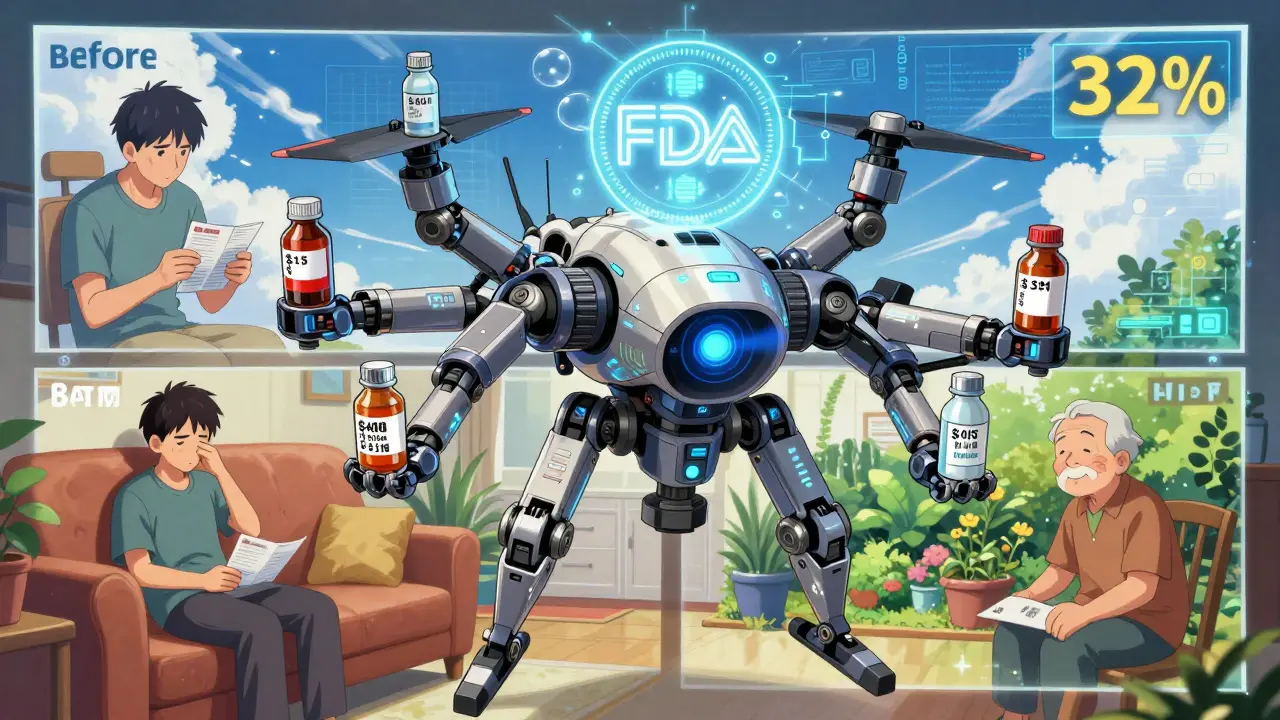
Studies show MTM interventions that focus on generic substitution lead to an average monthly savings of $214 per patient. In one HealthPartners study, pharmacists helped patients cut their drug costs by 32% just by optimizing generic use.
The Pharmacist’s Expertise: More Than Just a Dispenser
Pharmacists are the only healthcare providers trained specifically in pharmacotherapy-the science of how drugs work in the body. They know which drugs have narrow therapeutic windows (like warfarin or levothyroxine), where even tiny differences in absorption can cause problems. They also know which generics are truly equivalent and which ones might need closer monitoring.
During an MTM session, pharmacists use tools like the Medication Appropriateness Index (MAI), which evaluates 10 key factors: Is the drug right for the condition? Is the dose correct? Is it affordable? Is the patient taking it as prescribed?
They also check the FDA’s Orange Book, which rates generics as “A” (therapeutically equivalent) or “B” (not equivalent). A pharmacist won’t suggest a “B” rated generic unless there’s a clear clinical reason-and even then, they’ll coordinate with the prescriber.
And they don’t just make recommendations. They explain them. A patient might say, “I’ve always taken the brand. What if it doesn’t work?” The pharmacist responds with data: “This generic has the same active ingredient, same release mechanism, and was tested in over 1,000 patients. It’s been used by 2 million people. Only 1% reported any difference.”
How MTM Beats Traditional Pharmacy Services
Traditional pharmacy work is transactional: scan the barcode, count the pills, hand over the bag. MTM is transformational.
Research shows that during a single MTM session, pharmacists identify an average of 4.2 medication-related problems per patient. These include:
- Unnecessary drugs (polypharmacy)
- Incorrect dosing
- Drug interactions
- Cost-related non-adherence
- Failure to use generics when appropriate
When pharmacists fix these problems, outcomes improve dramatically:
- Medication errors drop by 61%
- 30-day hospital readmissions fall by 23%
- Adherence rates rise by 18.7 percentage points on average
And here’s the kicker: 37% of the total cost savings from MTM come directly from switching patients to appropriate generics. That’s not a side benefit-it’s a core part of the service.
Barriers to Widespread MTM Use
Despite the proven benefits, MTM isn’t as common as it should be. Why?
First, reimbursement is inconsistent. Medicare pays $50 to $150 per Comprehensive Medication Review. Commercial insurers? Often $25 to $75. Many pharmacies can’t afford the time and staff to offer MTM unless they’re paid fairly.
Second, patient awareness is low. Only 15% to 25% of eligible Medicare beneficiaries actually participate in MTM. Most don’t know it’s free, or that it’s offered right at their local pharmacy.
Third, not all states let pharmacists practice MTM without a prescriber’s oversight. Only 42 states have clear rules allowing pharmacists to adjust or switch medications independently in MTM settings. In the other eight, they need to call the doctor for every change-even if the change is switching to a generic.
And while 63% of MTM programs now use telehealth, many community pharmacies still lack the electronic health record (EHR) integration needed to share findings with doctors. Only 38% have seamless EHR connections, which slows down care coordination.

Real Stories, Real Impact
One patient, a 72-year-old woman on six medications, was spending $680 a month out of pocket. Her MTM pharmacist found three drugs with generic equivalents that were just as effective. After the switch, her monthly cost dropped to $190. She didn’t have to choose between her meds and groceries anymore.
A 58-year-old man with asthma was using a brand-name inhaler that cost $420 per month. His pharmacist switched him to a generic-same active ingredient, same device, same delivery. His cost? $18. He started refilling his prescription on time. His ER visits dropped from four a year to zero.
On Reddit, a pharmacist shared: “A patient cried because she thought switching to a generic meant her treatment was ‘downgraded.’ I showed her the FDA data, the manufacturer’s bioequivalence studies, and the 15-year track record. She left with a smile and a $385 monthly savings.”
What’s Next for MTM and Generic Drugs?
The future of MTM is bright-and getting smarter. New tools are emerging:
- Pharmacogenomics: Some pharmacists now test how a patient’s genes affect drug metabolism. This helps determine whether a generic or brand-name drug is better suited for their body.
- Digital platforms: Apps and telehealth tools let patients upload their pill bottles, and pharmacists review them remotely in real time.
- Standardized reporting: Starting in 2024, the American Pharmacists Association will require all MTM programs to track and report generic substitution outcomes-making it easier to prove value to insurers and policymakers.
By 2025, 78% of health systems plan to expand pharmacist roles in MTM. And if the Pharmacist Medicare Benefits Act passes, an additional 38 million Americans could gain access to these services.
One thing is clear: as drug prices keep rising, the need for smart, cost-conscious medication management will only grow. And pharmacists, armed with science, training, and a patient-first mindset, are uniquely positioned to lead the way.
Frequently Asked Questions
What is the main goal of Medication Therapy Management (MTM)?
The main goal of MTM is to optimize therapeutic outcomes by ensuring every medication a patient takes is appropriate, effective, safe, and affordable. Pharmacists review all drugs-prescription, over-the-counter, and supplements-to identify and fix problems like unnecessary medications, interactions, or cost barriers that affect adherence.
Are generic drugs really as good as brand-name drugs?
Yes. The FDA requires generic drugs to have the same active ingredient, strength, dosage form, and route of administration as the brand-name version. They must also meet the same strict manufacturing standards. Bioequivalence studies prove they work the same way in the body. The only differences are in inactive ingredients (like fillers) and packaging, which don’t affect how the drug works.
How do pharmacists decide when to switch a patient to a generic?
Pharmacists use the FDA’s Orange Book to check therapeutic equivalence ratings (A or B). For drugs with a narrow therapeutic index-like warfarin or levothyroxine-they may monitor more closely after switching. They also consider patient history, cost, and adherence. If a patient has had trouble with a previous generic, they’ll discuss alternatives before making a change.
Can pharmacists switch my medication without my doctor’s approval?
In most cases, pharmacists can substitute a generic for a brand-name drug under state laws that allow automatic substitution. But if they want to make a more significant change-like removing a drug or switching to a different class-they must consult the prescriber. In MTM, pharmacists document all changes and send summaries to the doctor to ensure coordinated care.
Is MTM free for Medicare beneficiaries?
Yes. Medicare Part D sponsors are required to offer MTM services at no cost to eligible beneficiaries. To qualify, you typically need to take multiple chronic disease medications and spend a certain amount on prescriptions each year. The service is provided by your pharmacy or a contracted MTM provider and includes a full medication review and personalized action plan.

It's fascinating how MTM turns pharmacists from dispensers into clinical decision-makers. I’ve always thought of them as the gatekeepers of the medicine cabinet, but this level of intentional optimization-where they’re actively auditing drug regimens for cost, efficacy, and adherence-feels like a quiet revolution in primary care. We don’t talk enough about how much of modern healthcare’s inefficiency stems from fragmented roles. Pharmacists are uniquely positioned to bridge that gap because they’re the only ones who see the full picture: every pill, every supplement, every over-the-counter habit.
And yet, we still treat them as transactional. A 40-minute MTM session isn’t just ‘extra service’-it’s preventative medicine at its most efficient. Imagine if every GP had that kind of longitudinal insight into their patients’ medication use. We’d cut down on ER visits, hospitalizations, and polypharmacy disasters. The real tragedy isn’t that generics are underused-it’s that we haven’t scaled MTM to meet demand.
Pharmacists are just pushing generics because they get kickbacks from Big Pharma 😏
I’ve seen this firsthand. My mother was on five medications, all brand-name, spending over $800 a month. Her pharmacist sat down with her for 35 minutes, reviewed every drug, checked the Orange Book, and found three generic alternatives that were not only cheaper but also better suited to her kidney function. The change wasn’t just financial-it was emotional. She stopped feeling like a burden to her family. That’s not just pharmacy. That’s dignity.
And yes, generics work. The FDA doesn’t approve them lightly. Bioequivalence studies are rigorous. If a generic failed to deliver, we’d see spikes in adverse events. We don’t. We see savings, adherence, and better outcomes. The fear around generics is manufactured-not scientific.
Pharmacists are the unsung heroes of medication safety and cost containment. Their role in MTM is not just valuable it is indispensable. The systemic underfunding of these services reflects a broader failure to recognize clinical expertise beyond the physician model. We need policy reform not just awareness
Let’s be real-how many of these ‘generic equivalents’ are actually made in China or India? I don’t trust foreign manufacturing. The FDA says they’re equivalent, but what about quality control? What about the fillers? The binding agents? There’s no way they’re testing those the same way they test U.S.-made drugs. This whole MTM thing feels like a cost-cutting scheme dressed up as patient care.
And don’t get me started on telehealth MTM. Someone scans their pill bottles from their couch and a pharmacist in Ohio says ‘switch to this generic’? No. No. No. This is not medicine. This is Amazon Prime for prescriptions.
As someone from India where generics are the norm, I’ve seen how life-changing they can be. My uncle in Delhi takes a generic version of a drug that costs $10/month instead of $400 in the U.S. He’s been stable for 8 years. The science is the same. The only difference? Profit margins.
It’s heartbreaking to see people in the U.S. skipping doses because they can’t afford brand names when the exact same medicine exists for 5% of the price. Pharmacists doing MTM aren’t just saving money-they’re saving lives. Simple as that.
generic drugs r just as good but i think the real problem is big pharma controls the system. they dont want people to know that a pill made in india costs 10 bucks but they sell it for 400 here. its all about profit not health. also why do pharmacists get to make these calls? shouldnt doctors be in charge? i mean i trust my doc more than some guy in a white coat with a computer
U.S. healthcare is a joke. We pay 10x more than other countries for the same drugs because we let corporations own the system. Pharmacists? They’re doing their job. But why should a pharmacist have to fix a broken system? The real issue is that the FDA lets brand-name companies extend patents with tiny tweaks-like changing the coating-and call it a ‘new drug.’ That’s not innovation. That’s greed.
And yes, generics from India are safe. The same FDA inspectors who audit U.S. plants go to those factories. They don’t play favorites. If you think Indian-made meds are dangerous, you’ve never seen what happens in a country without access to generics.
So you’re telling me a pharmacist can just swap out my expensive drug for a generic without my doctor’s say-so? That’s insane. What if I react to the filler? What if the bioequivalence is off? You think they really read all those studies? Nah. They’re just trying to hit their KPIs. I’ve been on my brand-name inhaler for 12 years. It works. Why fix what ain’t broke? And don’t even get me started on those ‘MTM’ calls-they’re just sales pitches in scrubs.
Also, 32% savings? Yeah right. I’ve seen my copay go up every year. They’re just swapping one expensive drug for another expensive drug and calling it a win.
Let me tell you-this is the most important thing happening in American healthcare right now. I cried reading about the woman who went from $680 to $190. That’s not a statistic. That’s freedom. That’s dignity. That’s the difference between choosing between insulin and rent.
Pharmacists aren’t just saving money-they’re restoring humanity to a system that’s turned patients into balance sheets. This isn’t pharmacy. This is moral courage. And if you’re still skeptical about generics? Go read the FDA’s bioequivalence guidelines. Or better yet-ask someone who’s been on a generic for ten years. They’ll tell you the truth: it works. And it works because science doesn’t care about brand names.
generic drugs are just as good dont overthink it
Just want to say thank you to the pharmacists doing this work. 🙏 I used to think MTM was just a buzzword until my grandma got hers. She was on 7 meds. After the review, they removed two, switched three to generics, and found one she didn’t even need. Her pills went from a whole drawer to a single organizer. She started taking them consistently. Her BP dropped. She’s back to gardening. That’s not magic. That’s science. And it’s happening in your local pharmacy.
Ohhhhh, so now we’re trusting pharmacists to be doctors? 🤯 Let me guess-next they’ll be doing MRI readings and prescribing chemo? This is the slippery slope I’ve been warning about! Pharmacists? They’re the ones who hand you your pills and say ‘take two with food’! They’re not medical doctors! They don’t go to med school! They don’t have to pass the USMLE! This is madness!
And let’s talk about those ‘generic’ insulin biosimilars-how do we know they’re not secretly causing auto-immune reactions? Who’s tracking long-term outcomes? Who’s auditing the labs? Nobody! It’s all just corporate greenwashing with a white coat!
And don’t even get me started on the ‘Orange Book’-that’s just a marketing brochure with fancy charts! They don’t test for bioavailability in real-world conditions! They test in labs with 20-year-old men on protein shakes! Real people have diabetes, kidney disease, gut issues-how do we know it works for THEM? We don’t! We DON’T!
My sister switched to a generic for her thyroid med and she started feeling awful. Shaky. Tired. Like her whole body was off. She went back to brand and boom-she was fine. So no, not all generics are the same. Some people are sensitive. And pharmacists? They don’t listen. They just want to make the switch. It’s not about the patient. It’s about the bottom line.
I’ve been there. I know. And I’m not buying the ‘science says it’s fine’ line. Science doesn’t know my body. My body knows.
❤️❤️❤️ This is why I love my pharmacist. She remembers my name. She remembers my dog’s name. She remembered I was worried about my insulin cost last year. And she just… fixed it. No drama. No fuss. Just a quiet, smart, kind person doing the right thing. We need more of this.