Medication Safety Checklist
Your Safety Checklist
Follow these steps when prescribed a medication with a black box warning:
Not just the label - the full prescribing info contains specific risk details
Ask about frequency of monitoring, specific signs to watch for
Family history, existing conditions, and other medications matter
Your experience helps improve safety for others
Your Safety Summary
Steps completed: 0 of 4
Risk level: Low
When you pick up a prescription, you might not notice the thick black border on the label. But that box? It’s not just design. It’s a red flag from the FDA - the strongest safety warning they can give a drug. More than 400 medications in the U.S. carry this warning, and each one signals a risk that could kill you or cause life-changing harm. This isn’t about mild nausea or dizziness. This is about heart failure, suicidal thoughts, liver failure, or sudden death. If you’re taking a drug with a black box warning, you need to understand what it means - and what to do next.
What Exactly Is a Black Box Warning?
A black box warning is the FDA’s highest-level safety alert. It’s not a suggestion. It’s a legal requirement. The warning appears in bold, black-bordered text at the very top of a drug’s official prescribing information. It’s designed to grab attention - because the risks inside aren’t theoretical. They’ve been seen in real patients, sometimes repeatedly, sometimes fatally.
The FDA doesn’t slap this on just any side effect. To earn a black box, a drug must have a risk that’s either:
- Life-threatening - like sudden cardiac arrest or severe bleeding
- Causes permanent disability - such as nerve damage or organ failure
- Can be prevented with strict monitoring - like regular blood tests or avoiding certain other drugs
- Only safe for certain people - meaning it’s banned for others, like pregnant women or those with specific genetic markers
These warnings don’t come from guesswork. They come from data - from doctors reporting bad reactions, from patients filing reports, and from post-market studies that uncover hidden dangers. The FDA reviews about 1.3 million adverse event reports every year. When a pattern emerges - say, 50 people on the same drug develop liver failure - they act.
Why Do Some Drugs Get Black Box Warnings After They’re Already on the Market?
You might think the FDA tests every drug to death before approval. They don’t. Clinical trials involve a few thousand people over months or a couple of years. Real life? Millions of people take the drug for years. That’s when rare, delayed, or interaction-based risks show up.
Take rosiglitazone (Avandia), a diabetes drug. It was approved in 1999. By 2007, studies linked it to a 43% higher risk of heart attacks. The FDA added a black box warning. Prescriptions dropped by 70%. But nearly 4 million people still took it - because for some, the benefit of controlling blood sugar outweighed the risk. That’s the point: the warning doesn’t say “never use.” It says, “Here’s what could go wrong. Decide carefully.”
Another example: fluoroquinolone antibiotics like Cipro and Levaquin. For years, they were go-to drugs for urinary and respiratory infections. Then, reports poured in: tendon ruptures, nerve damage, even aortic aneurysms. In 2016, the FDA added a black box warning. Now, doctors are told to avoid these drugs unless no other option exists.
Most black box warnings - about 70% - are added after the drug is already selling. That’s not a failure. It’s how safety systems are supposed to work. The FDA doesn’t wait for perfection. They watch, learn, and update.
How Do These Warnings Affect Prescribing and Patient Choices?
Doctors don’t ignore black box warnings. They can’t. But they also don’t automatically avoid the drug. They weigh it. Is this the only drug that works for this condition? Are there safer alternatives? Can we monitor the patient closely to catch problems early?
For example, antidepressants like fluoxetine (Prozac) and sertraline (Zoloft) carry black box warnings for increased suicidal thoughts in children and young adults under 25. That doesn’t mean they’re banned for teens. It means doctors screen for depression severity, start with low doses, and schedule frequent check-ins in the first few weeks. The benefit - lifting severe depression - often outweighs the risk when managed properly.
Some drugs come with extra layers. If a black box warning is especially dangerous, the FDA may add a REMS - a Risk Evaluation and Mitigation Strategy. That could mean:
- Only certified doctors can prescribe it
- Patients must enroll in a registry
- The drug can only be dispensed through special pharmacies
One well-known REMS drug is isotretinoin (Accutane), used for severe acne. It can cause birth defects. So, doctors must be certified, patients must use two forms of birth control, and they must take monthly pregnancy tests. It’s strict - but it works. Birth defects from Accutane dropped by over 90% after REMS started.
What Should You Do If Your Medication Has a Black Box Warning?
Don’t panic. Don’t stop cold. Do this:
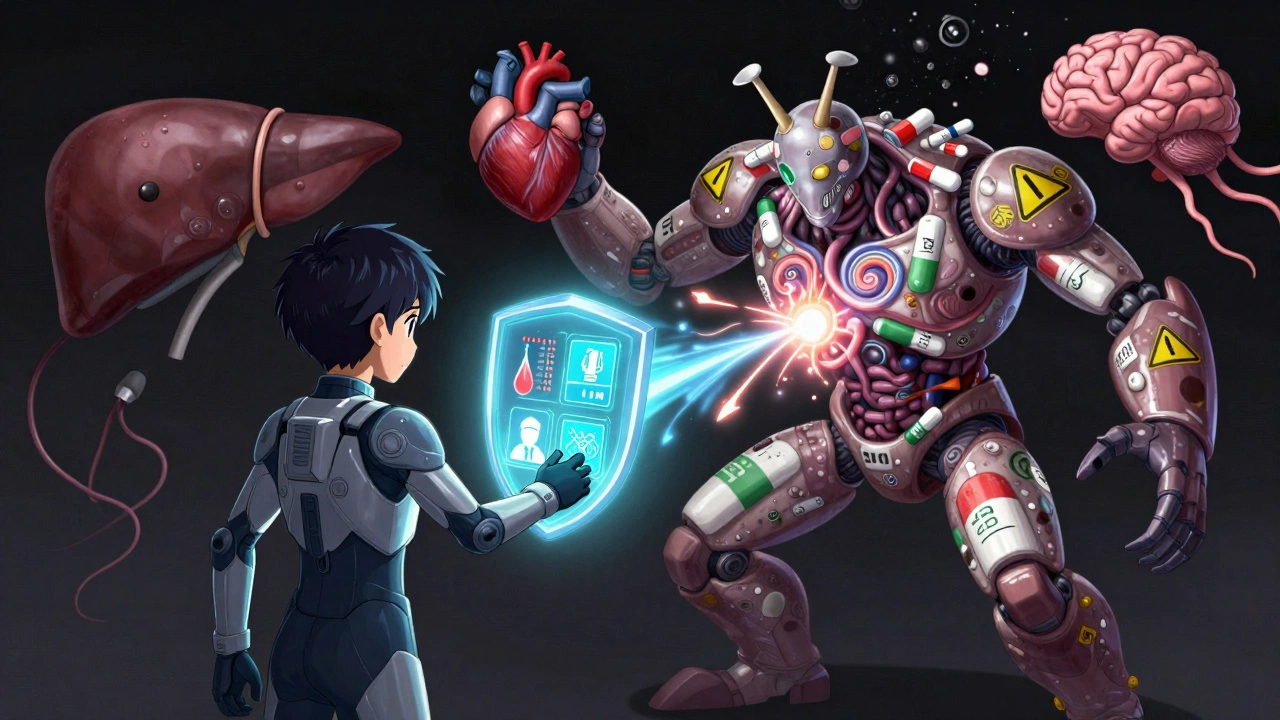
- Read the warning - not just the label, but the full prescribing info. Ask your pharmacist or doctor for a copy. Know exactly what the risk is.
- Ask the right questions:
- What’s the exact risk? (e.g., “Liver failure” vs. “Possible dizziness”)
- How often does it happen? (e.g., “1 in 1,000” vs. “Rare”)
- Are there monitoring requirements? (Blood tests? Scans? Frequency?)
- What are the alternatives? Are they safer? More expensive? Less effective?
- Know your triggers - Do you have a family history of heart disease? Liver problems? Depression? Tell your doctor. Your personal history changes the risk.
- Report side effects - If you feel something’s wrong, tell your doctor. Then file a report with MedWatch, the FDA’s voluntary reporting system. Your report could help save someone else’s life.
Many patients don’t realize they’re on a black box drug. The warning isn’t always on the pill bottle. It’s in the paperwork. Ask: “Does this medicine have a black box warning?” If your doctor hesitates or says, “It’s fine,” push for details. You have the right to know.
Are Black Box Warnings Overblown or Too Scary?
Sometimes, yes. Media coverage can make a black box warning sound like a death sentence. But the FDA’s job isn’t to scare people. It’s to inform. A warning doesn’t mean the drug is bad. It means it’s powerful - and needs respect.
Take clozapine, an antipsychotic for treatment-resistant schizophrenia. It carries a black box warning for agranulocytosis - a dangerous drop in white blood cells. But without it, many patients have no other option. With weekly blood tests, the risk is managed. Thousands live full lives on clozapine. The warning saves lives by ensuring monitoring happens.
On the flip side, some warnings stay too long. Pioglitazone (Actos) has the same black box as Avandia - for heart failure risk. But newer studies show its risk is much lower. Yet the warning remains. Why? Because the FDA requires strong, consistent evidence to remove one. The bar is high. That’s good for safety. But it can mean outdated warnings linger.
The key is context. A black box warning on a cancer drug is very different from one on a migraine pill. One might be life-saving despite the risk. The other might have safer alternatives.
What’s Changing in the Future?
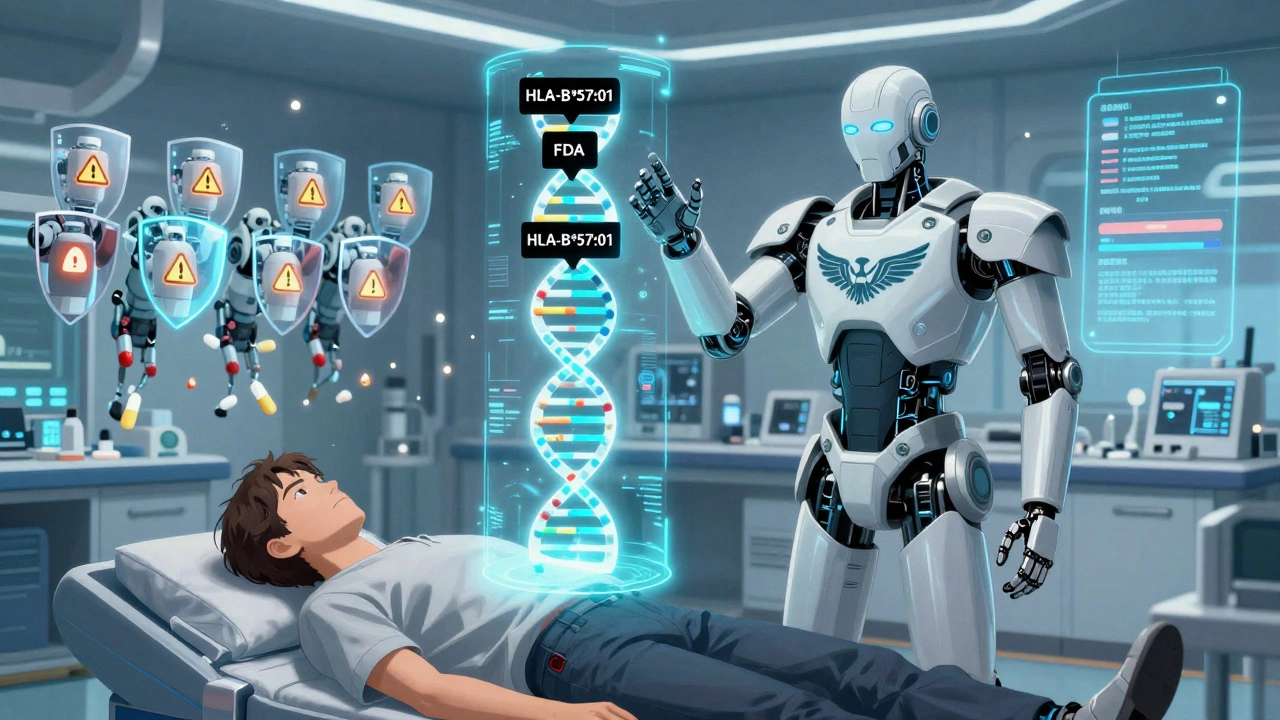
The FDA is moving toward smarter warnings. In 2023, they started exploring pharmacogenomics - using your DNA to predict who’s at risk.
Imagine a drug that says: “Avoid if you have the HLA-B*57:01 gene variant.” That’s already true for abacavir, an HIV drug. People with that gene have a 50% chance of a deadly allergic reaction. Testing for it before prescribing cuts that risk to near zero. The FDA plans to add more genetic markers to black box warnings.
They’re also testing digital labels. In the future, your doctor’s electronic system might pop up a real-time alert: “Patient has kidney disease. This drug is contraindicated. Try alternative X.”
For now, the system isn’t perfect. But it’s the best we have. And it works - when used right.
Bottom Line: Black Box Warnings Are a Tool, Not a Stopping Sign
They’re not meant to keep you from taking medicine. They’re meant to help you take it safely. A black box warning doesn’t mean “don’t use.” It means “use with eyes wide open.”
If you’re prescribed a drug with this warning, ask for clarity. Demand specifics. Know your risks. Know your alternatives. Know how to monitor. And never assume your doctor knows everything - because even they rely on this label to make the safest call.
Medicine isn’t risk-free. But with the right information, you can turn a black box warning from a scare tactic into a roadmap for safer care.
Do all drugs with black box warnings cause death?
No. A black box warning means the drug has a risk that could cause death or serious harm - but only in some people, under certain conditions. For many, the benefits outweigh the risks when used correctly. The warning exists so you and your doctor can make that decision together, not so you avoid the drug entirely.
Can I still take a medication with a black box warning if I need it?
Yes - if your doctor believes the benefits are greater than the risks for your specific situation. Many life-saving drugs, like those for epilepsy, cancer, or severe mental illness, carry black box warnings. What matters is whether you’re being monitored, whether you’re aware of the signs of trouble, and whether you have alternatives. Never stop taking it without talking to your doctor first.
How do I find out if my medicine has a black box warning?
Check the prescribing information that comes with your prescription, ask your pharmacist, or search the FDA’s Drugs@FDA database. You can also use trusted sites like MedlinePlus or the American Academy of Family Physicians’ resources. Don’t rely on the pill bottle alone - the warning isn’t always printed there.
Do black box warnings mean the drug is unsafe?
Not necessarily. It means the drug has serious risks that must be managed. Many drugs with black box warnings are essential and widely used because no safer alternatives exist. The warning is there to ensure those risks are understood and monitored - not to ban the drug.
Can a black box warning be removed?
Yes. If new evidence shows the risk is lower than previously thought - or if better monitoring practices reduce harm - the FDA can remove or revise the warning. It’s rare, but it happens. For example, some warnings have been updated to include genetic testing requirements instead of blanket restrictions.
If you’re taking a drug with a black box warning, your next step is simple: talk to your doctor. Ask what the warning means for you. Write down the answers. And never assume silence means safety.

Look, I get that black box warnings sound terrifying, but they’re not meant to scare you off medicine-they’re meant to make you *think*. I’ve been a pharmacist for 22 years, and I’ve seen people panic and quit life-saving drugs because of them. The warning isn’t the enemy. Ignorance is. If your doctor prescribes something with a black box, ask: What’s the alternative? What are we watching for? How often? That’s the real power here.
As an Aussie who’s had to navigate both the TGA and FDA systems, I can tell you-this is how medicine should work. We don’t wait for bodies to pile up before acting. The FDA doesn’t get it perfect, but the fact that they update warnings based on real-world data? That’s science in motion. In Australia, we had a similar wake-up call with Vioxx. Now we monitor cardiac risks like clockwork. Progress isn’t pretty, but it’s necessary.
so like… if a drug can kill you… why do they even sell it? 🤔 maybe we should just all eat kale and pray 🙏
Stop acting like black box warnings are some kind of moral victory for the FDA. They’re reactive, bureaucratic, and slow as molasses. Look at Avandia-approved in ’99, black box in ’07. People died in the meantime. The system doesn’t protect you-it protects the corporations from lawsuits. Real safety would mean pre-market genetic screening, not post-mortem patch jobs.
OMG. I just found out my anxiety med has a black box. My stomach dropped. I thought I was just getting ‘mild drowsiness’-turns out I’m playing Russian roulette with my liver. I called my doctor immediately. She said, ‘You’re not alone. We’ve got your back.’ And that’s the thing-it’s not about fear. It’s about partnership. You don’t just take a pill. You become a detective. And honestly? I feel more in control now than ever.
Of course the FDA puts these warnings on. They’re controlled by Big Pharma lobbyists who need to maintain the illusion of oversight while quietly allowing drugs that turn patients into vegetables to stay on the market. You think they’d ban clozapine if it wasn’t profitable? Wake up. The black box isn’t a warning-it’s a marketing tool. It makes you feel like you’re being ‘informed’ while they keep selling you poison wrapped in a lab coat.
There’s a quiet dignity in being told, ‘This could hurt you-but here’s how to make sure it doesn’t.’ Most people don’t realize that black box warnings are the only thing keeping us from being guinea pigs. Think about it: we let kids take antidepressants, pregnant women take epilepsy meds, elderly folks take antipsychotics-all with known lethal risks. But because we monitor, test, and adjust? Thousands live full lives. That’s not fearmongering. That’s responsibility.
I’ve been on Accutane. I lost my sister to a black box drug. She was 24. Took the antidepressant. Said she felt ‘better.’ Then one morning… gone. The warning was there. She didn’t read it. I didn’t know how to make her. Now I just… sit here. And wonder if anyone else will listen.
It is an undeniable fact that the FDA's current paradigm of post-market surveillance represents a fundamental abdication of its duty to ensure public safety prior to commercialization. The reliance on adverse event reporting-a system plagued by underreporting, selection bias, and temporal lag-is not merely suboptimal; it is epistemologically unsound. One cannot validate risk through reactive data collection when the cost of failure is mortality.
My dad’s on clozapine. He hasn’t had a psychotic episode in 8 years. Weekly blood tests? Yeah, it’s a pain. But he’s alive. He watches his grandkids play soccer. That’s not a ‘warning.’ That’s a lifeline. People act like black boxes are red lights. They’re not. They’re stoplights with a green arrow if you follow the rules. Stop acting like the FDA is the villain. They’re the only thing between you and a pharmacy aisle full of landmines.
why do they even make these drugs if they’re so dang dangerous?? like i get it, but also… why not just… not??
Look, I don’t care if it’s FDA or WHO or some UN committee-America doesn’t need foreign bureaucrats telling us what pills we can take. We’ve got doctors here. Real ones. Not bureaucrats in D.C. writing warnings because they’re scared of a lawsuit. If you want to take your meds, take ‘em. Don’t let some paper warning scare you out of living. This country’s built on freedom, not fear.