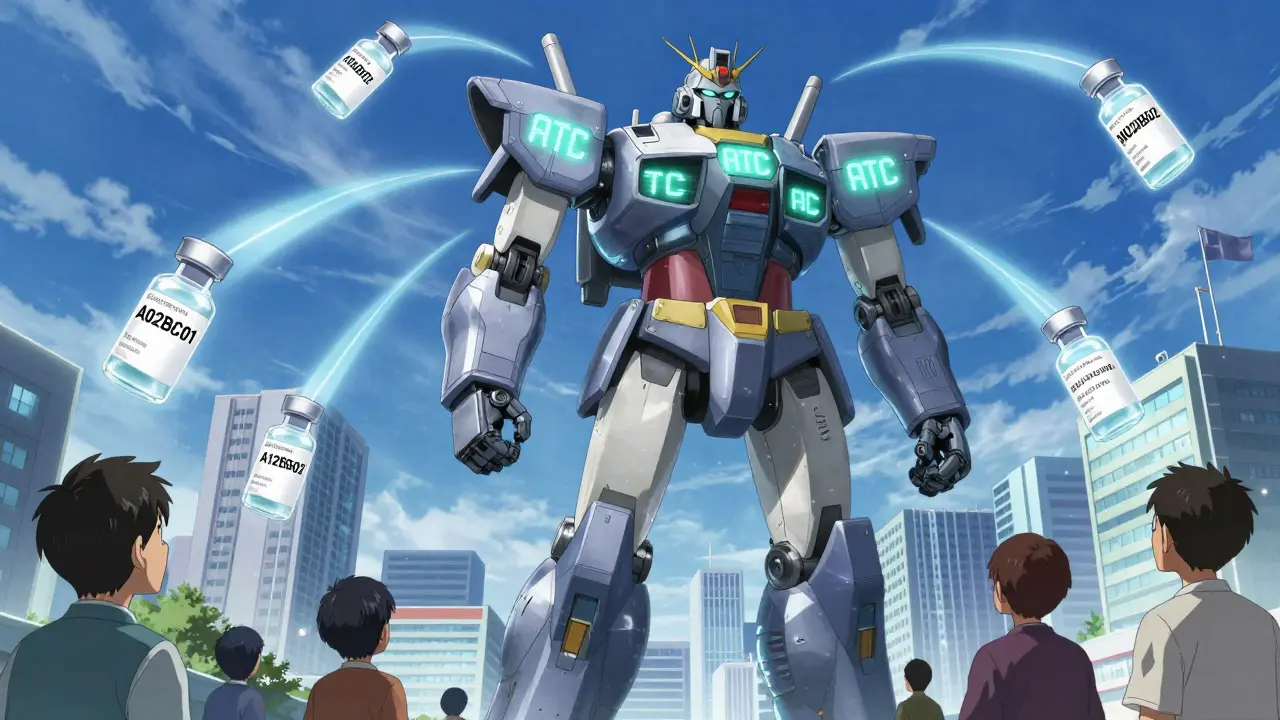
When you pick up a prescription at the pharmacy, you might see a generic version of a brand-name drug. But have you ever wondered how that drug is organized in the system? How do doctors know which one to prescribe? How do insurance companies decide what you pay? The answer lies in generic drug classifications - a set of systems that group medications by what they do, how they work, and what rules apply to them. These aren’t just bureaucratic labels. They shape your treatment, your costs, and even your safety.
Therapeutic Classification: What the Drug Treats
The most common way drugs are grouped is by what they’re used for. This is called therapeutic classification. Think of it like sorting tools by function: you wouldn’t use a hammer to tighten a screw, and you wouldn’t give someone a blood pressure pill to treat a migraine. The FDA and USP (United States Pharmacopeia) use this system to organize drugs into categories like Analgesics (pain relievers), Antihypertensives (blood pressure drugs), and Antidiabetics (diabetes medications).
Each of these broad categories has subgroups. For example, Analgesics split into Non-opioid (like ibuprofen and acetaminophen) and Opioid (like morphine and oxycodone). Cardiovascular Agents include beta-blockers, ACE inhibitors, and calcium channel blockers. Endocrine Agents cover insulin, thyroid meds, and birth control pills. This system is used in over 90% of U.S. hospitals because it’s practical. If a patient has chest pain, a doctor doesn’t need to know the exact chemical structure - they need to know which class of drugs helps with heart issues.
But it’s not perfect. Some drugs do more than one thing. Aspirin, for example, reduces pain, lowers fever, and thins blood. Should it be in the pain category, the fever category, or the blood thinner category? The new FDA Therapeutic Categories Model 2.0, rolling out in 2025, will let drugs have a primary and secondary use, helping solve this confusion.
Pharmacological Classification: How the Drug Works
If therapeutic classification answers “what does it treat?”, pharmacological classification answers “how does it work?”. This system looks at the drug’s biological mechanism - the specific molecular interaction it has in the body.
Take beta-blockers. Drugs like propranolol and metoprolol all end in “-lol”. That’s not a coincidence. The stem “-lol” tells you it blocks beta receptors in the heart and blood vessels. Same with “-prazole” - omeprazole, pantoprazole, esomeprazole - they all shut down stomach acid production the same way. There are over 87 of these naming stems, and they’re built into the generic name itself. This is why pharmacists can often guess a drug’s function just by its name.
More detailed classifications group drugs like “Epidermal Growth Factor Receptor Kinase Inhibitors” or “Purine Analogs”. These are used mostly in research and clinical trials. Oncologists, for instance, rely on this level of detail to match a tumor’s genetic profile with the right targeted therapy. But for most patients and even many doctors, this level is too technical. Still, it’s essential for understanding why two drugs that treat the same condition might work differently in different people.
DEA Schedules: Legal Control and Abuse Risk
Not all drugs are treated the same under the law. The Drug Enforcement Administration (DEA) classifies controlled substances into five schedules based on their potential for abuse and medical use. This isn’t about effectiveness - it’s about risk.
- Schedule I: No accepted medical use. High abuse potential. Examples: heroin, LSD, marijuana (federally).
- Schedule II: High abuse potential, but medical use. Examples: oxycodone, fentanyl, Adderall.
- Schedule III: Moderate abuse potential. Examples: ketamine, buprenorphine, some cough syrups with codeine.
- Schedule IV: Low abuse potential. Examples: Xanax, Valium, sleeping pills.
- Schedule V: Very low abuse potential. Examples: cough meds with under 200mg codeine per 100ml.
This system affects how prescriptions are written, how pharmacies store drugs, and even how refill requests are handled. A Schedule II drug can’t be refilled without a new prescription. A Schedule IV might allow up to five refills in six months. The problem? The system hasn’t kept up with science. Marijuana is still Schedule I federally, even though it’s approved for medical use in 38 states and has FDA-approved derivatives like dronabinol (Schedule II). Critics say this creates confusion and hinders research.

Insurance Tiers: What You Pay Out of Pocket
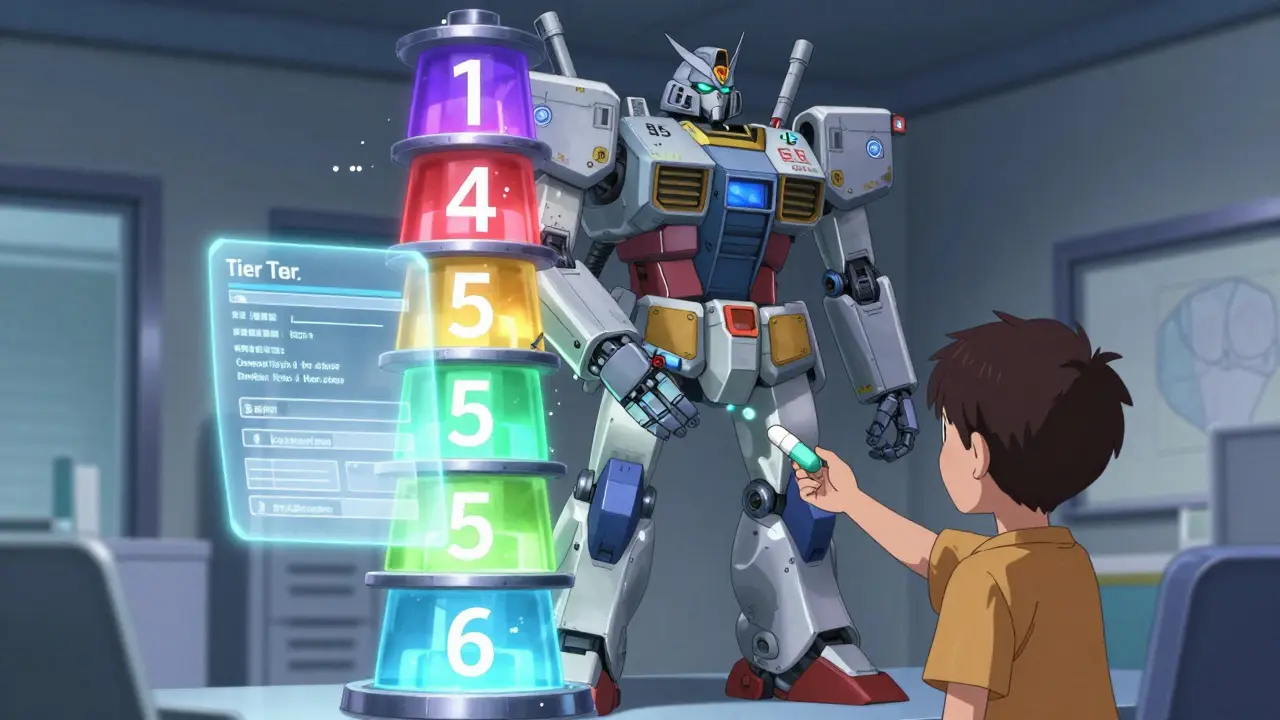
Your insurance company doesn’t care about the FDA or DEA. They care about cost. That’s why they use tiered formularies. Most plans have five tiers:
- Tier 1: Preferred generics - cheapest. Usually 75% of all generic drugs.
- Tier 2: Non-preferred generics - slightly more expensive.
- Tier 3: Preferred brand-name drugs - you pay more than for generics.
- Tier 4: Non-preferred brands - high cost, often require prior authorization.
- Tier 5: Specialty drugs - expensive biologics, cancer meds, rare disease treatments. These make up just 5-7% of prescriptions but 50% of drug spending.
Here’s the catch: two drugs with the exact same active ingredient can be on different tiers. One might be on Tier 1 because your insurer negotiated a better price. The other, even if it’s identical, might be on Tier 2 because it’s made by a different manufacturer. Pharmacists see this daily. Patients get confused - “Why is this pill $5 and that one $35? They’re the same drug!” It’s not about quality. It’s about contracts.
The ATC System: The Global Standard
If you look at a drug label from anywhere in the world - Germany, Japan, Brazil - you’ll likely see an ATC code. That stands for Anatomical Therapeutic Chemical, developed by the World Health Organization. It’s the most detailed and widely used system globally.
The ATC code has five levels:
- Level 1: Anatomical group (e.g., A = Alimentary tract and metabolism)
- Level 2: Therapeutic subgroup (e.g., A02 = Drugs for acid-related disorders)
- Level 3: Pharmacological subgroup (e.g., A02B = Antiulcerants)
- Level 4: Chemical subgroup (e.g., A02BC = Proton pump inhibitors)
- Level 5: Chemical substance (e.g., A02BC01 = Omeprazole)
This system tracks over 5,000 substances. Every new drug gets a unique code. In 2022 alone, 217 new ATC codes were added. It’s used by governments, insurers, and researchers to compare drug use across countries. If you’re studying how many people take statins in the UK vs. Canada, ATC is the common language.
Why Classification Confusion Costs Time - and Money
Doctors, nurses, and pharmacists don’t just juggle one system. They use all of them - sometimes at the same time. A primary care doctor might be thinking:
- Therapeutic: “This patient has diabetes - I need an antidiabetic.”
- Pharmacological: “Should I choose a metformin (biguanide) or a GLP-1 agonist?”
- DEA: “Is this drug controlled? Does it need a special prescription?”
- Insurance: “Is the generic on Tier 1? Will the patient skip it if it’s Tier 3?”
A 2022 AMA survey found that 79% of primary care physicians spend 12 to 18 minutes per patient just navigating these conflicting systems. Nurses report 47% faster medication checks when everyone uses the same classification terms. But when insurance tiers don’t match clinical guidelines, patients get stuck. One Reddit thread from a pharmacist described a patient who couldn’t get a generic blood pressure pill because it was on Tier 2, while a brand-name version with the same active ingredient was on Tier 1 - because of a contract loophole.
These gaps aren’t just annoying. The FDA says 27% of medication errors are tied to classification confusion. A patient might get the wrong drug because two similar-sounding names are misclassified. Or a nurse might miss a dangerous interaction because the system didn’t link two drugs that work the same way.
What’s Changing - and What’s Coming
Classification systems are evolving. The FDA’s Therapeutic Categories Model 2.0, launching in 2025, will let drugs have multiple therapeutic roles. That’s huge for drugs like duloxetine - used for depression, anxiety, and nerve pain. Right now, it’s hard to know which category to list it under. In the future, it’ll show all three.
AI is stepping in too. IBM Watson’s Drug Insight platform, launched in 2023, uses machine learning to predict where a new drug should fit. Early tests showed 92.7% accuracy. That could cut down classification delays for new drugs.
But the biggest change might come from politics. The MORE Act, passed by the U.S. House in 2023, could reclassify marijuana from Schedule I to Schedule III. If it becomes law, it would ripple through every system - DEA forms, insurance tiers, hospital protocols, even pharmacy inventory software.
And then there’s the rise of biologics - drugs made from living cells, not chemicals. These don’t fit neatly into the old “-lol” or “-prazole” naming rules. The WHO’s 2024 ATC update will add 32 new biologic agents, requiring entirely new classification branches.
What You Need to Know
As a patient, you don’t need to memorize ATC codes or DEA schedules. But you should understand this: your medication isn’t just a pill. It’s part of a complex system that decides how it’s prescribed, how much you pay, and whether it’s monitored or restricted. If your insurance denies a generic, ask why. If your doctor switches your drug, ask what changed - was it effectiveness, cost, or just the formulary tier?
Ask your pharmacist: “Is this the same as my old pill?” They’ll know. Ask your doctor: “Is this on Tier 1?” They might not know - but they can find out. The more you understand how drugs are grouped, the better you can navigate your care - and the more power you have to ask the right questions.
What’s the difference between generic and brand-name drug classifications?
There’s no difference in classification. Generic and brand-name drugs with the same active ingredient are grouped the same way - same therapeutic category, same pharmacological class, same DEA schedule, same insurance tier (if the generic is preferred). The classification system doesn’t care if it’s made by Pfizer or Teva. It cares about what’s in the pill. The only difference is cost and sometimes inactive ingredients, which don’t affect the classification.
Why do some generic drugs cost more than others if they’re the same?
It’s all about insurance formularies. Two identical generic drugs can be placed in different tiers based on which manufacturer has a better deal with your insurer. One might be on Tier 1 (low cost), while the other is on Tier 2 (higher cost), even though both contain the exact same active ingredient. This happens because insurers negotiate prices with drugmakers - not based on quality, but on contracts and rebates.
Can a drug be in more than one classification system at once?
Yes - and it’s common. Aspirin is an analgesic (therapeutic), a COX inhibitor (pharmacological), and not controlled (DEA Schedule V or not scheduled). A drug like buprenorphine is both a Schedule III opioid and a partial mu-opioid agonist (pharmacological). The ATC code for it includes multiple levels: N02AB (narcotic analgesics), N07BA (antiaddiction drugs). No single system captures everything - that’s why all of them exist together.
How do I find out what category my drug is in?
Check the drug label or package insert - it often lists therapeutic class. Ask your pharmacist - they have access to databases like Micromedex or Lexicomp that show therapeutic, pharmacological, and insurance tier info. For DEA schedule, look up the drug on the DEA’s Controlled Substance Index. For ATC code, search the WHO’s Drug Statistics Methodology site. Most health apps and pharmacy portals now display this info too.
Will drug classification change with personalized medicine?
Yes. Traditional classification groups drugs by what they treat in general. But personalized medicine treats patients based on their genes, biomarkers, and lifestyle. A drug might be classified not just by its use for diabetes, but by whether it works for someone with a specific genetic mutation. New systems are being tested that combine therapeutic, pharmacological, and genomic data. By 2028, many new drugs will need hybrid classifications - and current systems will struggle to keep up.

It's wild how much of our healthcare is built on arbitrary groupings. I mean, aspirin being lumped under pain relief when it's also an anticoagulant and antipyretic? We're treating biology like a spreadsheet. The FDA's new model trying to let drugs have multiple roles? Finally. We've been forcing square pegs into round holes for decades.
It’s not just about prescribing - it’s about how patients perceive their own meds. If I’m told I’m on a ‘blood thinner’ but my pill says ‘pain reliever,’ I’m gonna question whether it’s working. Classification shapes belief as much as biology.
And don’t get me started on insurance tiers. Two identical pills, different prices, because some corporate lawyer signed a contract with a distributor in 2017. We call this healthcare. It’s a marketplace dressed in white coats.
Oh please. You people act like this system is broken. It’s not broken - it’s PERFECTLY designed. The DEA schedules? Brilliant. Insurance tiers? Genius. The fact that your $5 generic is on Tier 2 while the $35 one is on Tier 1? That’s not a bug - it’s a FEATURE. It keeps the little guy from hoarding pills like they’re gold bars. You think you’re smart for complaining? You’re just mad your pharmacy didn’t give you a discount on your oxy.
This is so fascinating 😍 I never realized how much goes into just one pill. Like, I thought generics were just cheaper versions - but the fact that they’re classified exactly the same? Mind blown. And the ATC system? It’s like a universal language for medicine 🌍 I’m gonna start asking my pharmacist for the ATC code next time I pick something up. Maybe I’ll feel less like a dumb patient and more like a partner in my care.
Also - the part about biologics not fitting into the old naming rules? That’s actually kind of beautiful. Like, science is evolving and the system is finally trying to keep up. 🙌
Interesting read. In India, we mostly see generics and rarely think about classifications. But the tier system you described is similar here too - some brands are cheaper because the government negotiates bulk prices. The DEA schedules don’t apply, but we do have narcotic controls. Still, the global ATC system is useful. I’ve seen Indian pharmacists use it to cross-reference foreign drugs.
So many systems and nobody tells patients how they work. I’ve seen people refuse meds because they think the generic is fake. Or they switch to brand because they think it’s stronger. The system is too complicated for the average person. We need simple labels - like nutrition facts on food. What’s in it. What it does. What it costs. That’s it.
Pharmacists know this. Doctors know this. But nobody fixes it. Why? Because complexity hides profit.
You’re all missing the real scandal. The ATC system? WHO’s baby? That’s a UN bureaucracy pretending it speaks for global medicine. Meanwhile, in the U.S., we’re stuck with five tiers and DEA schedules that haven’t updated since the Reagan era. And you think this is rational? This is a house of cards built by pharmaceutical lobbyists and bureaucrats who’ve never met a patient. The fact that marijuana is still Schedule I while fentanyl is Schedule II? That’s not science - it’s politics in a lab coat. And you’re all just nodding along like it’s gospel.
My wife’s a nurse. She told me about a patient who got prescribed a generic lisinopril but was told it was Tier 2 - so they skipped it. Then they got hospitalized for hypertension. The brand-name version? Tier 1. Same chemical. Same manufacturer. Just different packaging. Insurance didn’t care. The system failed. Not the patient. Not the doctor. The system.
Classifications aren’t just for doctors. They’re for people trying to stay alive. If the system makes people choose between food and medicine, it’s not working. Period.
It is, without a shadow of a doubt, an absolute travesty - a grotesque, labyrinthine, and frankly, Kafkaesque mess - that we have allowed the classification of life-saving pharmaceuticals to be governed by a patchwork of bureaucratic silos, each operating with its own logic, its own priorities, and its own vested interests. The FDA? The DEA? The WHO? The insurance conglomerates? They are not merely failing to communicate - they are actively obfuscating. And the consequences? Catastrophic. A patient, confused, terrified, and financially ruined - not because of illness - but because the system refused to align. This is not healthcare. This is a corporate theater, performed on the stage of human vulnerability. And we - we are all complicit in its continuation.
Here in India, generics are the norm. No one cares about tiers or ATC codes. People just want it to work. If it lowers blood pressure, it’s good. If it’s cheap, it’s better. The real issue isn’t classification - it’s access. If a drug is in any system but not on the shelf, it doesn’t matter how well it’s categorized.
Also, the word ‘pharmacological’ sounds like a fancy way to say ‘how it works.’ Why not just say that?
Stop overcomplicating it. If it’s the same molecule, it’s the same drug. Stop pretending classification means anything. It’s all marketing.