Polypharmacy Risk Calculator
Your Medication Risk Assessment
Enter the number of medications you currently take regularly to see your risk level.
What Your Risk Means
Enter your medication count to see your risk assessment
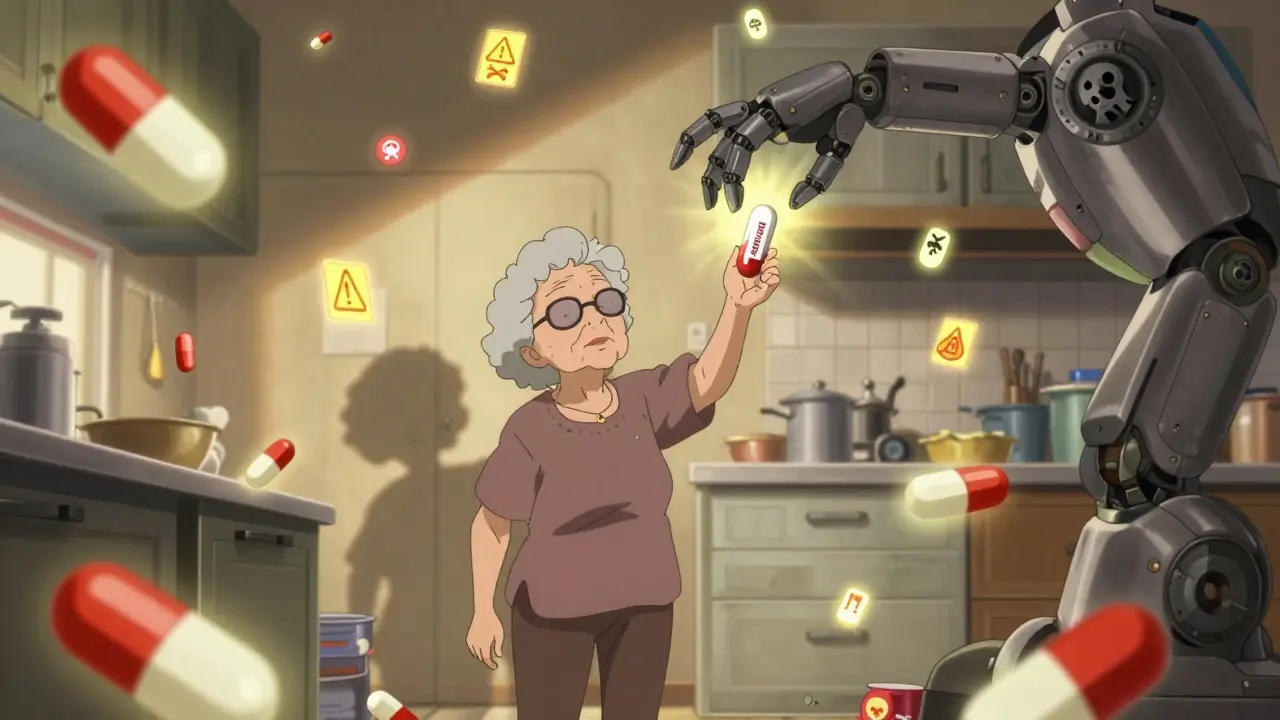
When you’re managing chronic conditions like high blood pressure, diabetes, or arthritis, it’s common to end up with several prescriptions. But what happens when you’re taking five or more medications every day? That’s called polypharmacy-and it’s not just a number. It’s a hidden risk that’s quietly increasing falls, hospital stays, and even death rates in older adults across the U.S. and the UK.
What Polypharmacy Really Means
Polypharmacy isn’t just about having a lot of pills. It’s about taking multiple drugs at the same time, especially when some aren’t truly needed. The medical community usually defines it as five or more medications taken regularly. But here’s the catch: five pills for one person might be life-saving, while for another, it’s dangerous. The difference lies in whether each drug is actually helping-or just adding risk. For example, someone recovering from a heart attack might need four medications: a beta blocker, a statin, an antiplatelet, and an ACE inhibitor. That’s appropriate polypharmacy. It’s backed by evidence, reduces heart-related deaths by up to 60%, and is carefully balanced. But then there’s the other kind. The kind where a patient takes a sleeping pill for insomnia, then a stomach pill for the dizziness it causes, then a muscle relaxer for the stiffness from lying in bed too long. Each new drug is meant to fix a side effect of the last one. That’s a medication cascade, and it’s behind 30-40% of unnecessary prescriptions in older adults.Why More Medications = More Danger
Your body doesn’t handle drugs the same way at 70 as it did at 40. Liver and kidney function slow down. Muscle mass drops. Fat distribution changes. All of this means medications stick around longer, build up in your system, and hit harder. The risks aren’t theoretical. Here’s what happens in real life:- People taking five or more medications are 1.5 to 2 times more likely to fall-and falls often lead to broken hips, long hospital stays, and loss of independence.
- One study found that 42% of patients on seven or more drugs had trouble walking or moving around normally.
- Those on 10 or more medications had a 28% higher chance of dying over a few years compared to those on just one to four.
- Medication side effects caused 48% of seniors to cut back on social activities-staying home because they felt too dizzy, confused, or tired.
The Silent Culprits: Drugs That Shouldn’t Be Taken Together
Some medications are fine alone. But when stacked, they become dangerous. The most common troublemakers:- Anticholinergics (used for overactive bladder, allergies, depression): Cause confusion, memory loss, dry mouth, and constipation. In older adults, they’re linked to higher dementia risk.
- Benzodiazepines (like lorazepam or diazepam for anxiety or sleep): Increase fall risk by 50%. They’re often prescribed long-term, even though guidelines say they should be used for just a few weeks.
- NSAIDs (ibuprofen, naproxen): Great for pain-but they raise blood pressure, hurt kidneys, and can cause stomach bleeding, especially when taken with blood thinners.
Who’s at Risk-and Why
It’s not just seniors. Anyone with multiple chronic conditions is vulnerable. But older adults are hit hardest because:- They’re more likely to see multiple specialists-each prescribing for their own area without talking to the others.
- They often don’t tell their doctor about over-the-counter meds, supplements, or herbal remedies (like St. John’s Wort or ginkgo), which can clash dangerously with prescriptions.
- Many don’t know what each pill is for. One survey found 60% of seniors skip doses because they can’t remember the schedule.
What Can Be Done: The Power of Deprescribing
The solution isn’t to stop all meds. It’s to stop the ones that aren’t helping-or are hurting. That’s where deprescribing comes in. It’s not quitting drugs cold turkey. It’s a careful, step-by-step process to reduce or stop medications that are no longer needed or are causing harm. Here’s how it works in practice:- Review everything. Bring every pill, patch, supplement, and OTC drug to your doctor. Include eye drops, creams, and inhalers.
- Ask: Is this still necessary? For example, if you were prescribed a statin after a heart attack five years ago-and your cholesterol is now normal-do you still need it?
- Check for interactions. Use tools like the Beers Criteria, which lists drugs to avoid in older adults.
- Reduce one at a time. Stopping multiple drugs at once can cause withdrawal or rebound effects. Slow and steady wins the race.
- Monitor closely. After cutting a pill, watch for changes in energy, balance, mood, or sleep. Report them to your doctor.

What’s Being Done to Fix This
Change is happening, but slowly. The American Geriatrics Society launched the “Choosing Wisely” campaign in 2021 to help doctors avoid unnecessary prescriptions. Participating clinics saw a 22% drop in inappropriate meds. The FDA approved a new tool called MedWise in 2022. It scans a patient’s full drug list and flags dangerous combinations. In trials, it cut high-risk interactions by 37%. Medicare now requires pharmacies to review the medication lists of people taking eight or more drugs. And the 2022 SUPPORT Act pushes for better coordination between doctors, pharmacists, and patients. But the real breakthrough will come when patients start asking the right questions:- “Why am I taking this?”
- “What happens if I stop it?”
- “Is there a cheaper or safer alternative?”
The Bottom Line: Quantity Isn’t Quality
Taking more pills doesn’t mean you’re healthier. In fact, the opposite is often true. The goal isn’t to take fewer drugs for the sake of it. It’s to take only what’s truly necessary-and to stop what’s doing more harm than good. If you or someone you love is on five or more medications, don’t wait for a crisis. Schedule a medication review. Bring the whole list. Ask for help. You don’t have to live with dizziness, confusion, or fear of falling. Many of those symptoms aren’t aging-they’re side effects. And they can often be fixed.Frequently Asked Questions
Is polypharmacy the same as taking too many supplements?
Yes, supplements count. Many people don’t realize that herbal products like ginkgo, garlic, or St. John’s Wort can interact with prescription drugs. For example, ginkgo can increase bleeding risk when taken with blood thinners like warfarin. Always include supplements in your medication review-even if you think they’re "natural" and harmless.
Can I stop a medication on my own if I think it’s causing side effects?
Never stop a prescription drug suddenly without talking to your doctor. Some medications, like antidepressants or blood pressure pills, can cause dangerous withdrawal symptoms if stopped too fast. But you can and should report side effects immediately. Your doctor can help you safely taper off or switch to something better.
How do I know if I’m on too many medications?
There’s no magic number, but red flags include: taking five or more prescriptions, feeling dizzy or confused, forgetting to take pills, having frequent falls, or spending over $300 a month on meds. If you’re seeing multiple doctors and no one’s coordinating your care, you’re at risk. Ask for a full medication review at your next appointment.
Does polypharmacy affect younger people too?
Yes. While it’s most common in older adults, younger people with chronic conditions like epilepsy, mental health disorders, or autoimmune diseases often take multiple drugs. The same risks apply: interactions, side effects, and cost burdens. The key is always appropriateness-not age.
What if my doctor says I need all these meds?
You have the right to ask for evidence. Say: "Can you explain how each of these drugs is helping me? Are there any that might be doing more harm than good?" If your doctor dismisses your concerns, consider asking for a referral to a geriatrician or a clinical pharmacist who specializes in medication reviews. Your health is your priority.

This is all just Big Pharma’s way of keeping you hooked. They don’t care if you live or die-they care about quarterly profits. Five meds? Try fifteen. They’ve been stacking drugs since the 80s to keep you coming back. The FDA? Bought and paid for. They approve anything that makes money. And don’t get me started on the ‘deprescribing’ nonsense-it’s just a cover for cutting costs. They’d rather you die quietly than pay for proper care. Wake up. This isn’t medicine-it’s a profit machine.
Oh please. The real tragedy here isn’t polypharmacy-it’s the complete lack of critical thinking among the elderly. You think your ‘natural’ ginkgo supplement is harmless? Darling, it’s a blood thinner. And yet, half the people I know take it with warfarin and then wonder why they’re bruising like a toddler who fell down the stairs. If you can’t even manage a pill organizer, maybe you shouldn’t be self-prescribing herbal nonsense. It’s not the system’s fault-it’s the refusal to accept that aging means accepting boundaries.
So taking five meds is dangerous but taking zero is wise I assume. Let me guess you think the cure for hypertension is yoga and affirmations. You know what’s worse than polypharmacy? Ignorant people who think they know better than decades of clinical trials. The real problem isn’t the pills it’s the people who think they can outsmart biology with a juice cleanse and a mantra
OMG I JUST REALIZED I’M ON 7 MEDS AND I THOUGHT I WAS JUST ‘OLD’ 😭 I’VE BEEN TAKING THAT SLEEP PILLS BECAUSE I WAS DIZZY FROM THE BLOOD PRESSURE MED AND NOW I’M TAKING A MUSCLE RELAXER BECAUSE I CAN’T WALK 😭 I’M SO STUPID
You know what fascinates me about this whole polypharmacy thing? It’s not just medical-it’s cultural. We live in a society that equates action with value. If you’re not doing something, you’re not trying. So we prescribe. We add. We stack. We never stop. We’re afraid of silence, of stillness, of letting the body heal itself. We medicate grief, we medicate aging, we medicate boredom. The real epidemic isn’t too many pills-it’s the belief that every discomfort must be erased. What if the dizziness isn’t a problem to fix but a signal to slow down? What if the fatigue isn’t a symptom but a permission slip to rest? We’ve turned medicine into a performance and health into a product. And we wonder why we’re more broken than ever.
I’m a nurse who works in geriatrics, and this post is spot-on. I’ve seen patients who’ve been on the same statin for 12 years after their cholesterol normalized. I’ve seen people on three different anticholinergics for insomnia, bladder issues, and depression-all of which make their cognition worse. The biggest barrier isn’t doctors-it’s patients who are terrified to ask if they can stop something. One woman told me, ‘I’m scared if I stop this, I’ll die.’ I said, ‘Let’s try cutting one pill and see how you feel.’ She did. Two weeks later, she said, ‘I feel like I’m 65 again, not 85.’ It’s not about taking fewer meds. It’s about taking the right ones. Always ask: ‘What’s the goal here?’
My grandmother took 11 pills a day… then she fell… then she broke her hip… then she went to rehab… then she never came home… and now I’m stuck with her medical bills and a funeral I didn’t want… and all because no one ever asked if she needed all those pills… I’m not mad… I’m just… tired…
Hey everyone-this is such an important topic! I’m a pharmacist and I’ve helped dozens of seniors trim down their med lists. The key? Bring EVERYTHING-vitamins, creams, eye drops, even that herbal tea you drink daily. And don’t be shy to ask your doc: ‘Is this still helping?’ Most doctors are happy to help if you come prepared. I even made a free printable checklist for medication reviews-DM me if you want it! 💪 You’ve got this. One pill at a time. 🙌
Whatever. People take too many meds. Big deal. Also, capitalism. Also, old people are expensive. Also, healthcare sucks. Also, I don’t care enough to read the rest.
Bro I had my grandpa on 8 meds and he was always sleepy and confused. We went to the pharmacist and she said 3 of them were totally unnecessary. He’s on 5 now and he’s walking to the market again. Took 20 mins. No surgery. No new pills. Just a chat. You don’t need to be a genius to fix this. Just care enough to ask.
THEY’RE PUTTING MICROCHIPS IN THE PILLS!!! 😱 I read it on a blog! They track your movements and then the government sends you ads for more meds! That’s why they don’t want you to stop-because then you’ll stop being monitored!! Also, I think my blood pressure med is made from lizard saliva. 🦎💊 #StopThePillConspiracy
See, in my village back home, we don’t have all these pills. We have elders who know herbs, who know when to rest, who know when to let the body find its rhythm. We don’t fix symptoms-we listen to the body. The problem isn’t polypharmacy. It’s the loss of wisdom. We replaced ancestral knowledge with corporate science. And now we wonder why we’re sicker than ever. The answer isn’t in a pill-it’s in the quiet. In the pause. In the respect for the body’s own healing. We’ve forgotten how to be still.