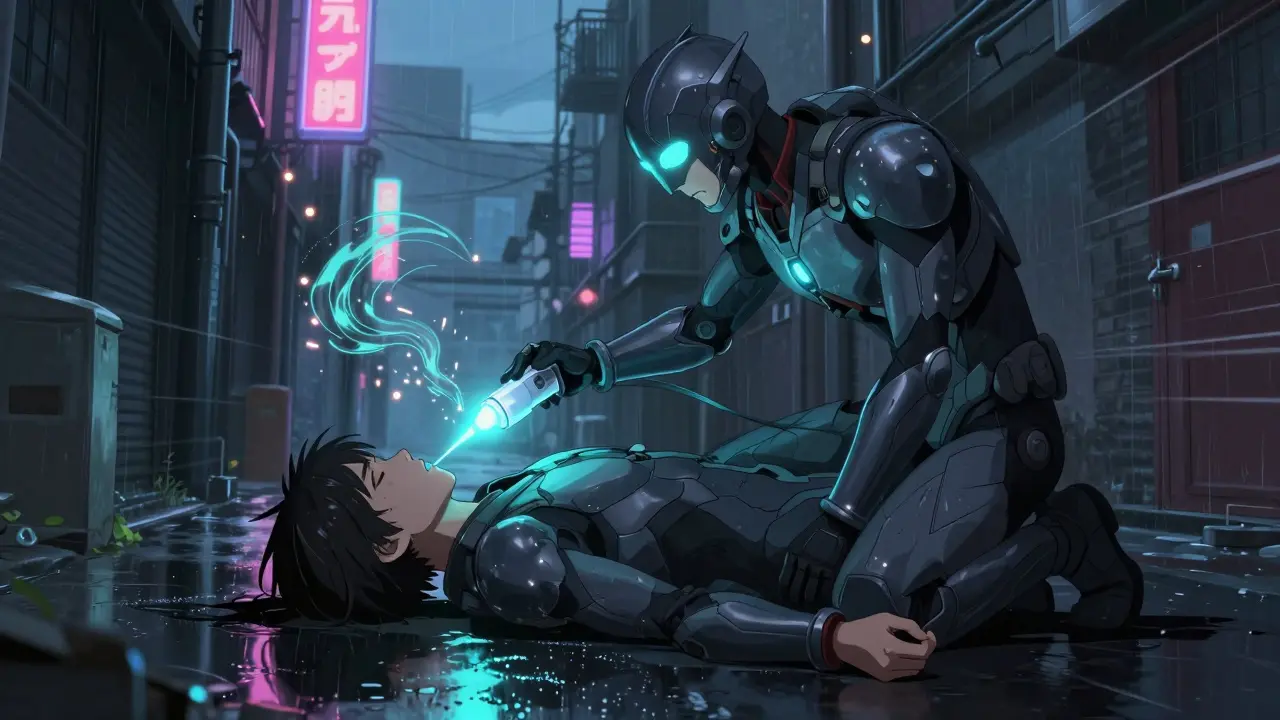
When someone overdoses on opioids, time doesn’t just matter-it’s the only thing standing between life and death. Breathing slows. Skin turns blue. The body goes still. And if no one acts within minutes, the brain begins to die. This isn’t a movie scene. It’s happening right now, in homes, alleyways, and public bathrooms across the country. But here’s the truth: you don’t need to be a doctor to stop it. You just need to know what to look for-and how to use naloxone.
What Happens During an Opioid Overdose?
Opioids-whether prescription painkillers like oxycodone, heroin, or synthetic drugs like fentanyl-bind to receptors in the brain that control breathing. Too much, and those signals shut down. The person stops breathing. Not just slowly. Not just irregularly. They may take only one breath every 3 to 5 seconds. Or none at all. Without oxygen, brain cells start dying after just 4 minutes. After 10, the damage is often permanent.Fentanyl is the biggest threat today. It’s 50 to 100 times stronger than morphine. A tiny amount-less than a grain of salt-can kill. And it’s everywhere. In 2023, over 80% of illicit drugs tested in overdose cases contained fentanyl, often without the user’s knowledge. That’s why overdoses happen so fast, and why so many people die before help arrives.
How to Spot an Opioid Overdose
You don’t need to guess. There are clear, unmistakable signs:- Unresponsive-Shake them hard. Shout their name. No reaction. Not even a groan. This isn’t sleep. This is unconsciousness.
- Shallow or stopped breathing-Look at their chest. Is it moving? Count the breaths. Fewer than 2 every 15 seconds? That’s an emergency.
- Pinpoint pupils-Look at their eyes. If the black center is tiny, like a pinprick, it’s a classic sign.
- Cyanosis-Lips, fingernails, or skin turning blue, purple, or gray. For people with darker skin, it may look ashen or gray instead of blue.
- Cold, clammy skin-Their skin feels wet and cold to the touch, even if the room is warm.
- Gurgling or snoring sounds-Like they’re drowning in their own saliva. This means their airway is blocked.
Don’t wait for all these signs. If someone is unresponsive and breathing abnormally, assume it’s an opioid overdose. Even if you’re not sure. Naloxone won’t hurt them if opioids aren’t involved.
What Is Naloxone and How Does It Work?
Naloxone is a medication that kicks opioids off the brain’s receptors-like pulling a plug from a socket. It doesn’t get you high. It doesn’t work on alcohol, cocaine, or benzodiazepines. It only reverses opioids. And it works fast.First approved by the FDA in 1971, naloxone is now available as a nasal spray (Narcan, Kloxxado) or auto-injector (Evzio). The nasal spray is the most common today. It’s easy to use, requires no needles, and can be carried in a pocket or purse. One spray goes into one nostril. That’s it.
It starts working in 2 to 5 minutes. Breathing usually returns within 5 to 10 minutes. But here’s the catch: naloxone wears off in 30 to 90 minutes. Fentanyl can last for hours. That means the person can stop breathing again after naloxone wears off. That’s why you must call 911-even if they wake up.
How to Administer Naloxone: A Simple 4-Step Plan
There’s no time for panic. Follow these steps:
- Recognize the signs-Unresponsive? Slow breathing? Blue lips? Act now.
- Call 911 immediately-Tell them it’s a possible opioid overdose. Even if you’re scared, even if you’re worried about legal trouble-call. Good Samaritan laws protect you in 47 U.S. states and all Canadian provinces.
- Give naloxone-For nasal spray: Tilt the head back, insert the nozzle into one nostril, and press the plunger firmly. One spray. One nostril. That’s enough for most cases. If no response after 2-3 minutes, give a second dose in the other nostril.
- Rescue breathe and wait-If they’re not breathing, give one breath every 5 seconds. Pinch the nose, lift the chin, seal your mouth over theirs. Watch for chest rise. Keep doing it until they breathe on their own-or help arrives.
Don’t put them in the shower. Don’t give them coffee. Don’t leave them alone. Even if they wake up, they need medical care. Rebound overdose is real. Pulmonary edema (fluid in the lungs) can happen hours later. Emergency responders need to monitor them.

What to Do If Naloxone Doesn’t Work
Most of the time, one dose works. But with fentanyl or other strong opioids, you may need two or three doses. If the person doesn’t respond after the second dose:
- Keep giving rescue breaths
- Wait for EMS
- Try a third dose if available
Some people think naloxone fails. It rarely does. More often, it’s not given fast enough-or not enough is given. Fentanyl overdoses often need multiple doses. Don’t assume one spray is enough.
Where to Get Naloxone and How Much It Costs
You don’t need a prescription. In all 50 U.S. states, you can walk into any pharmacy and ask for naloxone. Many pharmacies keep it behind the counter-just ask. In the UK, naloxone is available through needle exchange programs and some community health centers.
Prices vary. A single nasal spray costs $25 to $130, depending on location and brand. Generic versions now cost as little as $25. Some community programs give it away for free. Check with your local harm reduction group, public health department, or syringe exchange program. Many offer free training too.
Store naloxone at room temperature. Don’t leave it in a hot car or direct sunlight. Heat above 40°C (104°F) can break it down. Check the expiration date. It lasts 18 to 24 months, but don’t wait until an emergency to find out if it’s still good.
Common Myths and Mistakes
People make the same mistakes over and over:
- Myth: “I don’t want to get in trouble.” Truth: Good Samaritan laws protect you from drug possession charges if you call for help.
- Myth: “They’ll be fine if I just let them sleep it off.” Truth: They’re not sleeping. They’re dying.
- Myth: “Naloxone is dangerous.” Truth: It’s safe. Even if they didn’t take opioids, it won’t hurt them.
- Mistake: Giving naloxone and walking away. Fix: Stay with them. Monitor breathing. Be ready to give more.
One Reddit user in Massachusetts saved three lives in 2022 using naloxone. The first time, it took 4 minutes after the spray for her friend to start breathing again. The second time, she had to use two doses because the heroin was laced with fentanyl. She didn’t hesitate. She acted.
Why This Matters Beyond the Moment
Naloxone isn’t a cure. It’s a pause button. It gives someone a second chance. But without treatment-medication like methadone or buprenorphine, counseling, housing, support-they’re likely to overdose again.
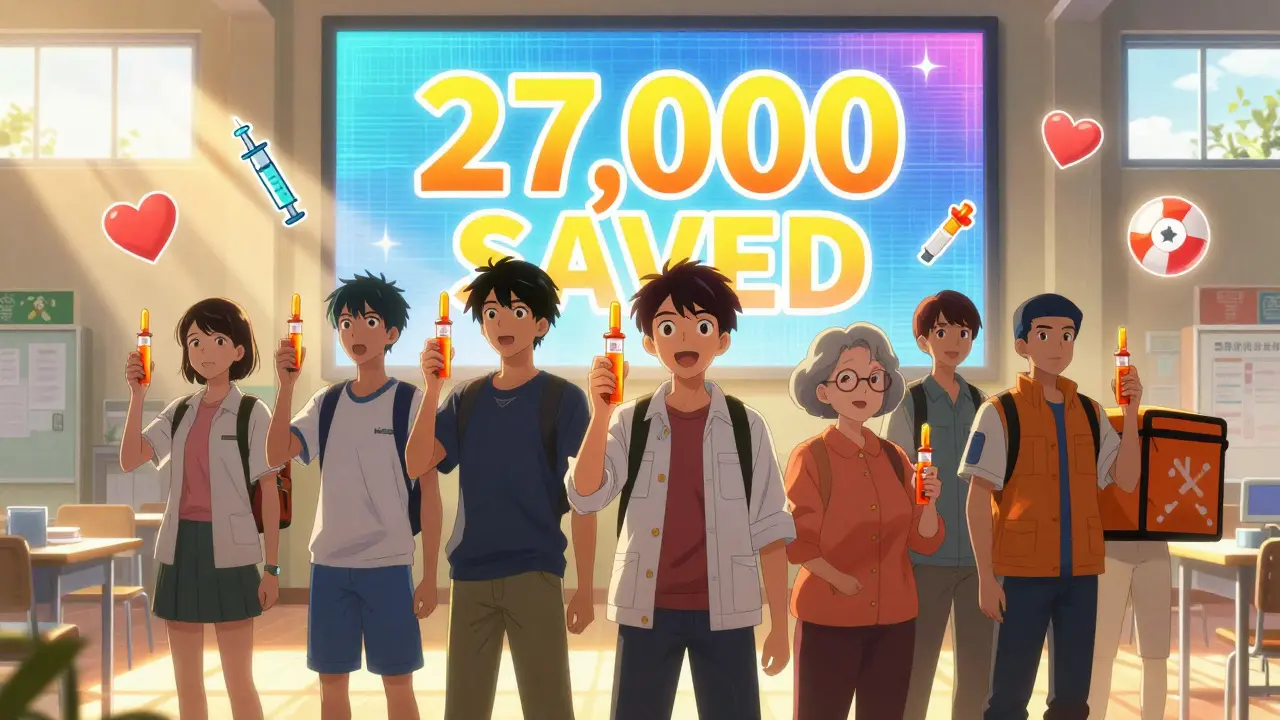
Since 2019, naloxone distribution has prevented an estimated 27,000 deaths a year in the U.S. That’s 27,000 people who went home to their families. But the CDC says we need 2.1 million naloxone kits for at-risk populations. We’re still falling short.
Every time you carry naloxone, you’re not just helping someone else. You’re changing the culture. You’re saying: “This doesn’t have to end in death.”
What You Can Do Today
- Ask your pharmacy for a naloxone nasal spray. Take one home. Keep one in your car.
- Watch a 5-minute training video on YouTube (Next Distro or Harm Reduction Coalition have excellent ones).
- Practice with a trainer device (they come free with some kits).
- Teach someone else. A friend. A family member. A coworker.
- If you use opioids yourself, carry naloxone. You’re not weak for doing this-you’re smart.
Overdose doesn’t care who you are. It doesn’t care if you’re rich or poor, employed or homeless, in recovery or still using. It just happens. But you can stop it. You don’t need to be brave. You just need to act.
Can naloxone be used on someone who didn’t take opioids?
Yes. Naloxone only works on opioid receptors. If someone overdosed on cocaine, alcohol, or benzodiazepines, naloxone won’t help-but it also won’t hurt them. If you’re unsure whether opioids are involved, give it anyway. It’s safe and could save a life.
How long does naloxone last, and why do I need to call 911 even if they wake up?
Naloxone wears off in 30 to 90 minutes. Many opioids, especially fentanyl, last much longer-up to 6 hours. That means the person can stop breathing again after naloxone wears off. Even if they seem fine, they need medical monitoring for at least 2 hours. Rebound overdose, fluid in the lungs, or heart complications can happen later.
Can I give naloxone to a child or teenager?
Yes. Naloxone is safe for all ages, including infants and teens. There’s no lower weight limit. The same dose (one nasal spray) works for everyone. Children who overdose on opioids-often by accidentally ingesting pills or fentanyl-laced powder-can be revived with naloxone just like adults.
Is it legal to carry naloxone in the UK?
Yes. Naloxone is available in the UK through needle exchange programs, some pharmacies, and community health services. It’s not sold over the counter like in the U.S., but harm reduction organizations provide it free of charge to people who use drugs, their friends, and family members. You don’t need a prescription to receive it from these programs.
What if I’m afraid to call 911 because of immigration or criminal records?
In the U.S., 47 states have Good Samaritan laws that protect people who call for help during an overdose from being charged with minor drug possession. In Canada, all provinces offer similar protections. While enforcement varies, emergency responders prioritize saving lives over arrests. If you’re worried, say: “I called because someone is not breathing.” Focus on the medical emergency. Most responders will not ask about legal status unless there’s a separate reason.
Where can I get free naloxone training?
Many local health departments, syringe exchange programs, and nonprofits offer free 20- to 30-minute training sessions. In the U.S., Next Distro and the National Harm Reduction Coalition provide free online videos and mail-order kits. In the UK, organizations like the Frank drugs helpline and local needle exchanges can connect you with training and supplies. No experience needed.
What to Do After an Overdose Is Reversed
When the person wakes up, they may be confused, scared, angry, or even aggressive. That’s normal. Naloxone can cause sudden opioid withdrawal-sweating, nausea, shaking, pain. Don’t take it personally. Stay calm. Reassure them: “You’re safe. Help is coming.”
After EMS arrives, they’ll likely transport them to the hospital. That’s not punishment-it’s protection. Many people who survive an overdose never get treatment. But the hospital is where they can start. Medication-assisted treatment (MAT) with buprenorphine or methadone cuts future overdose risk by 50% or more.
Don’t assume they’re “fixed” after one reversal. The opioid crisis isn’t solved by one spray. But every time someone survives because you acted, it’s a crack in the system. And cracks let the light in.

Just carried my first naloxone kit home today. Didn’t even know I could walk into a pharmacy and ask for it without a prescription. Feels weird to think I might use it someday, but even weirder to think I might not have it when someone needs it.
Thanks for laying this out so clearly. No fluff. Just facts. That’s what saves lives.
While the general guidance is sound, I must emphasize that naloxone administration should never replace comprehensive emergency medical protocols. The pharmacokinetics of fentanyl analogues necessitate continuous monitoring for at least four hours post-administration, as rebound respiratory depression is not merely a theoretical risk but a documented clinical phenomenon in over 32% of cases involving carfentanil exposure.
Additionally, the assertion that ‘one spray is enough for most cases’ is misleading. Dosing should be titrated based on clinical response, not arbitrary assumptions. The FDA-approved labeling for Narcan explicitly recommends a second dose if there is no improvement within 2–3 minutes.
I’ve seen this play out twice in my small town. First time, a guy collapsed outside the gas station. We gave him Narcan, he woke up screaming, ‘Why’d you do that?’ Like we robbed him of his peace.
Second time, a teenager in the park. We gave two sprays. He didn’t wake up until the ambulance got there. We stayed. Held his hand. Didn’t say a word.
It’s not about being brave. It’s about being there. Even when they hate you for it.
Okay, so… I just had a moment. Like, a real one.
I’ve been sober 18 months, but I still carry two Narcan kits in my bag. One for me. One for my cousin who’s still using. I don’t judge her. I don’t even tell her I have it. I just… leave one on her kitchen counter when she’s not looking.
And last week? I saw a guy on the bus, blue lips, head lolled back. I didn’t think. I just sprayed. He woke up choking. Cried. Said ‘I didn’t mean to.’
So yeah. I carry it. Because love isn’t loud. Sometimes it’s just a little plastic spray in your pocket.
Also-can we please stop calling it ‘drug abuse’? It’s not abuse. It’s survival. With a side of trauma.
And… I cried on the bus after. I didn’t want anyone to see.
This is all a psyop orchestrated by Big Pharma and the Deep State to normalize drug use under the guise of ‘harm reduction.’
Why is naloxone free but rehab centers are closed? Why are we giving free needles but no jobs? This is not compassion-it is control. The elites want you dependent, not healed.
Also, fentanyl is a bio-weapon designed to depopulate the working class. The same corporations that make the drugs also sell the antidote. Profit motive. Always.
Train people to pray instead. Prayer reverses death. Science is just a tool of the New World Order.
As a Canadian, I find it utterly embarrassing that the U.S. still treats this like some kind of moral crisis instead of a public health emergency. In Ontario, naloxone is distributed at every library, community center, and even some Tim Hortons.
And we don’t need a 12-page essay to understand that if someone stops breathing, you give them the antidote-no questions, no judgment, no virtue signaling.
Why does America turn saving lives into a TED Talk? Just do it. Like we do.
Also, your ‘Good Samaritan laws’? We don’t need them. In Canada, calling 911 during an overdose is just… what you do. Like calling the fire department. No awards. No applause. Just humanity.
i rlly think ppl shud just stop doing drugs if they dont wanna die lmao
Ugh. Another ‘save a life’ guilt trip.
So now I’m supposed to carry a spray in my purse because some junkie might pass out? What about the people who actually try? The ones who get jobs? Pay taxes? Live clean?
This isn’t heroism. It’s enabling. And the fact that you’re all patting yourselves on the back for not being a monster is… honestly pathetic.
Also, why is this post so long? Did you write this for a college essay? Just give the damn spray. Done.
My sister OD’d last year. We used Narcan. She woke up screaming at me. Called me a control freak.
Two weeks later, she was gone again. This time, no one was there.
I carry two kits now. One in my car. One in my work bag. I gave one to my neighbor last week. Told him, ‘If you see me passed out, don’t wait for me to wake up. Just spray.’
He laughed. Said I was being dramatic.
I didn’t laugh back.
And yeah-I typoed. I’m typing this with tears in my eyes and my hands shaking. I don’t care if it’s messy. This matters.