More people in the U.S. are getting their prescriptions delivered to their door than ever before. In 2023, mail-order pharmacy sales hit over $206 billion-more than double what they were a decade ago. But here’s the catch: prescription volume only went up by 11%. That means the money isn’t coming from more pills-it’s coming from higher prices. And for many, especially those on chronic meds like blood pressure or diabetes drugs, the convenience of home delivery feels like a lifeline. But is it really saving you money-or just making things more complicated?
Why Mail-Order Generics Are So Popular
The biggest reason people turn to mail-order pharmacies is simple: they’re designed for long-term use. If you take a daily pill for high cholesterol, thyroid issues, or depression, you don’t need it tomorrow-you need it every day for years. Mail-order services give you a 90-day supply all at once, often with automatic refills. Many insurance plans charge a $10 copay for a 90-day supply of a generic drug, while the same drug at a local pharmacy might cost $40 for just 30 days. That’s a $45 monthly savings for one medication alone.For people with chronic conditions, this setup works. Studies from the National Institutes of Health show that patients using mail-order pharmacies are more likely to stick with their meds. One study found better control of heart disease risk factors like blood pressure and cholesterol among users. That’s not a small thing. Skipping doses of blood pressure meds can lead to strokes. Skipping insulin? That’s life-threatening.
Mail-order pharmacies also handle the logistics. No more driving across town on a rainy Tuesday. No more forgetting to refill because you were busy. For older adults, people with mobility issues, or those living far from pharmacies, this isn’t just convenient-it’s essential.
The Hidden Cost: Markups and Pricing Tricks
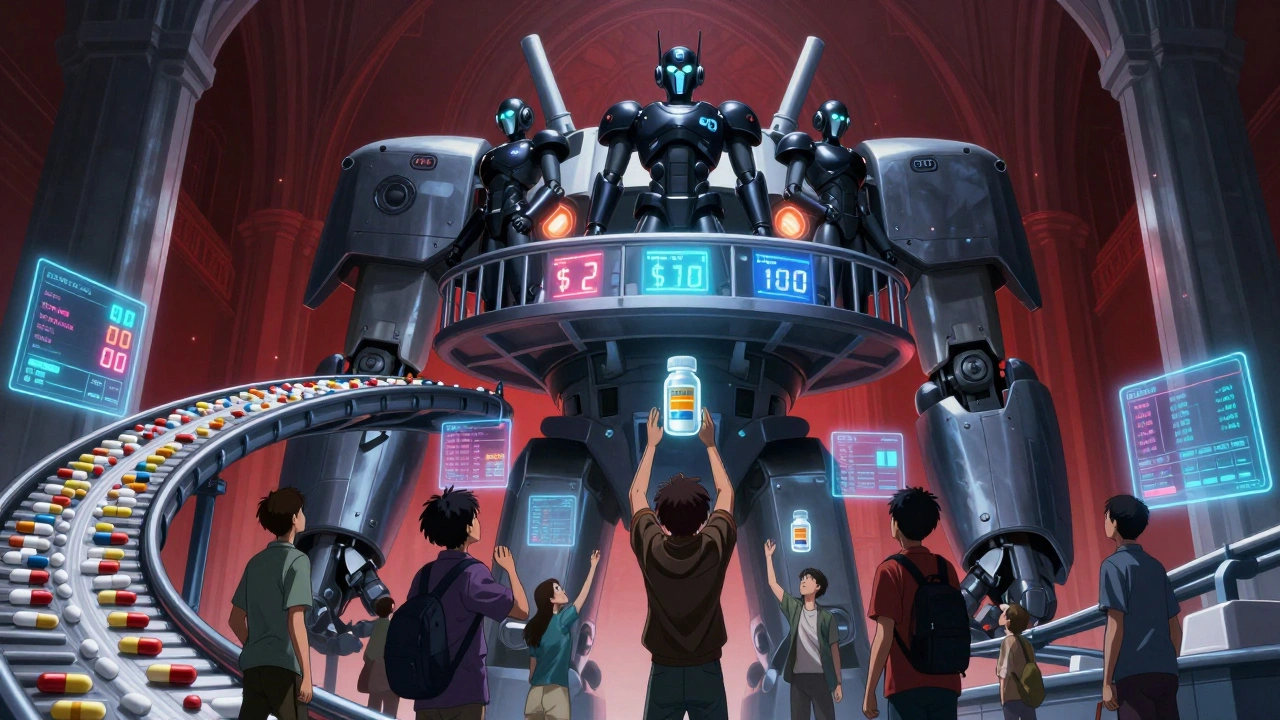
Don’t be fooled by the low copays. The real cost of your medication is hidden in the system. A 2023 report found that a generic antidepressant costing $12 at a retail pharmacy was billed at $100 through a mail-order service. That’s an 800% markup. Brand-name drugs? Some were marked up 35 times their retail price.Who’s making that money? Three companies control nearly 80% of the mail-order market: Express Scripts, CVS Caremark, and OptumRx. These aren’t pharmacies in the traditional sense-they’re pharmacy benefit managers (PBMs) owned by big insurance and healthcare corporations. Their job isn’t to lower drug prices. It’s to negotiate rebates and markups that boost profits, often at the patient’s expense.
Here’s how it works: your insurer says you pay $10 for your generic blood pressure pill. But the PBM paid the manufacturer $2. Then they bill your insurer $15. The insurer gets a rebate of $5. The PBM keeps the rest. You’re paying $10, but the real cost of the pill? $2. You’re not saving money-you’re paying for a middleman’s cut.
Temperature Risks: Your Medication Might Be Spoiled
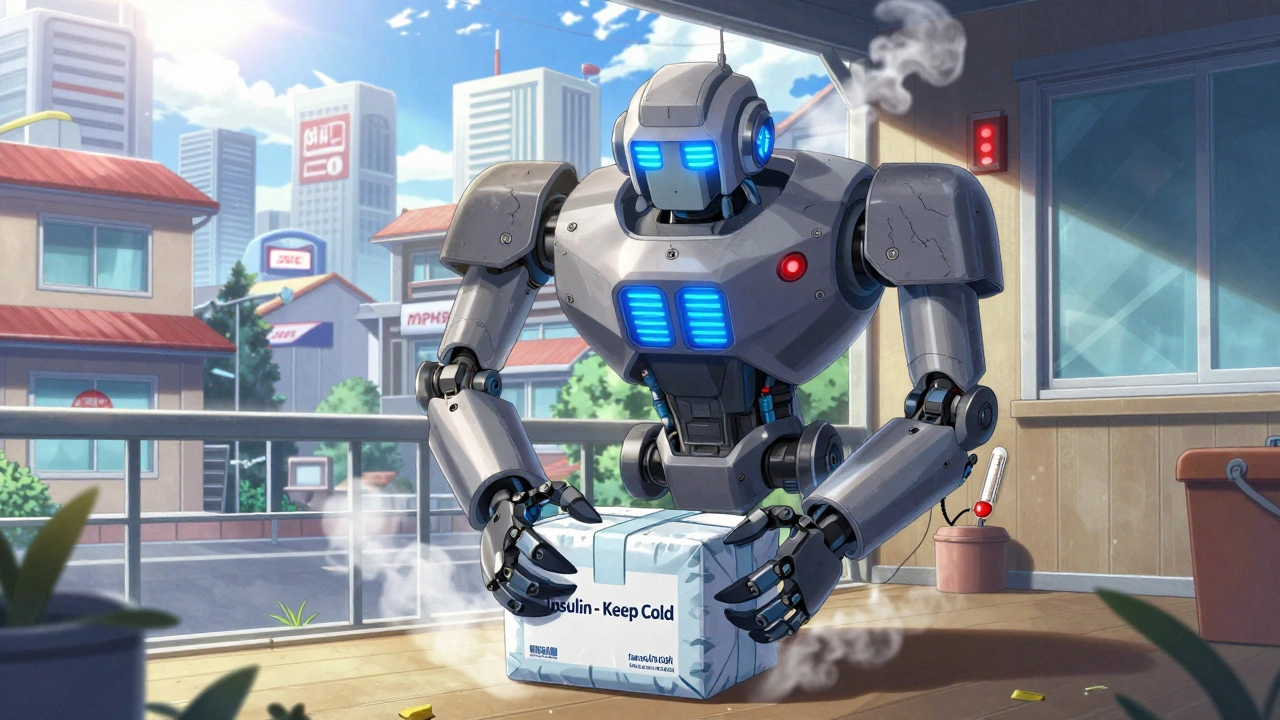
Your insulin, your thyroid pills, your asthma inhaler-they all need to stay between 68 and 77 degrees Fahrenheit during shipping. Outside that range, they can lose potency. Insulin, for example, starts breaking down after 24 hours above 86°F.Here’s the scary part: a study in the Journal of the American Pharmacists Association found that only one-third of mail-order medications are shipped within safe temperature ranges. That means two out of every three packages could be delivering ineffective drugs.
Reddit threads are full of stories: insulin arriving melted in summer heat, antibiotics left on a porch in freezing rain, inhalers exposed to 100-degree temps in a delivery van. The FDA received over 1,200 reports of temperature-related medication failures between 2020 and 2023. Experts believe the real number is much higher-most people don’t report it. They just notice their meds aren’t working and assume they’re getting worse.
When Mail-Order Isn’t Safe
Mail-order is great for chronic meds. It’s terrible for anything you need right now.If you get an infection and need antibiotics, don’t wait a week for a delivery. If you’re recovering from surgery and need pain meds, don’t risk a delay. If your asthma flares up and you need your inhaler, you can’t wait for a package to arrive.
And if you take multiple medications? That’s where things get dangerous. You might get your blood pressure pill from one mail-order pharmacy, your diabetes med from another, and your cholesterol drug from your local pharmacy. None of those pharmacists can see what the others are prescribing. Drug interactions? Side effects? They won’t know. One study found patients juggling multiple pharmacies had higher hospitalization rates because no one was checking for dangerous combinations.
Another risk? Generic switching. The FDA says generics are the same as brand-name drugs. And technically, they are. But pills can look different-different shape, color, size, even taste. For someone with dementia, anxiety, or just a fear of change, that can be terrifying. A 2017 study found patients who kept switching between different generic versions of the same drug were more likely to stop taking it altogether-or end up in the hospital.

Who Benefits? Who Gets Left Behind?
The system works best for people with good insurance. Medicare Part D enrollees use mail-order at a rate of 34%. Diabetes and hypertension patients? Over half use it. But what about the uninsured? Or those with high-deductible plans?For them, mail-order can be a trap. A single monthly dose of semaglutide (a weight-loss drug) can cost $500 when ordered directly through a mail-order pharmacy. No insurance? No rebate? That’s $6,000 a year. That’s more than most people make in a month.
And then there’s the lack of human contact. A Consumer Reports survey found 68% of users worried about missing face-to-face talks with pharmacists. At a local pharmacy, the pharmacist might notice you’re taking three new pills and ask, “Are you sure your doctor knows about this combo?” At a mail-order center? You get a tracking number.
What You Can Do to Stay Safe
If you’re using mail-order generics, here’s how to protect yourself:- Always order at least two weeks before you run out. Delays happen. Weather. Sorting errors. Missing paperwork. Don’t risk running out.
- Check your meds when they arrive. Does your insulin look cloudy? Is your pill a different color? Ask your pharmacist. Don’t assume it’s fine.
- Use one mail-order pharmacy for all your chronic meds. This helps avoid dangerous interactions. If you need a different pharmacy for a better price, tell your primary pharmacist.
- Ask about temperature controls. If you’re shipping insulin or other sensitive meds, ask if they use cold packs and insulated packaging. If they don’t, switch.
- Know your real costs. Compare the mail-order price to your local pharmacy’s cash price. Sometimes, paying cash at CVS or Walmart is cheaper than your mail-order copay.
There’s no doubt mail-order pharmacies have made life easier for millions. But convenience shouldn’t come at the cost of safety. The system is built to save money for insurers-not always for you. If you’re on long-term meds, it’s worth the extra effort to understand how it works. Because when it comes to your health, a little extra caution isn’t paranoia. It’s protection.

I got my blood pressure pills from mail-order for 3 years. One time the box was warm when it arrived. I threw them out. Didn't tell anyone. Now I just go to CVS. $10 cash. Same pill. No drama.
The systemic manipulation of pharmaceutical pricing through pharmacy benefit managers constitutes a profound violation of the social contract between healthcare providers and the American citizenry. The opacity of rebate structures and the monopolistic consolidation of market power among three corporate entities represent not merely economic inefficiency but a moral failure of unprecedented scale
They're not just marking up prices they're poisoning people. Insulin melting on porches? That's not negligence that's murder by bureaucracy. I know someone who had a seizure because her meds arrived warm. The company didn't even apologize. They sent a new box. Like it was a damn Amazon order
pbms are just the tip of the iceberg. big pharma owns the insurances owns the mail order owns the doctors. its all one big circle jerk. you think you saving money? you just paying for the middlemen to get rich while you get weaker pills. and dont even get me started on the generic switcheroo. my anxiety meds changed color last month. i cried. i swear i felt my brain melt
I think we all just want to feel safe. Taking meds is scary enough. Having to wonder if your pill is real or if it got too hot or if someone else got the same one but different... it adds so much stress. Maybe the answer isn't to stop mail-order but to make it simpler. One place. One pharmacist. One person who knows your whole list.
This is a well-articulated exposition on the structural complexities of pharmaceutical distribution in the United States. The data presented regarding temperature control failures and pricing opacity is deeply concerning. One must acknowledge the systemic incentives that prioritize profit over patient welfare, which is a global issue requiring regulatory intervention.
Let me tell you something about the modern American healthcare machine it's not broken it's working exactly as designed to extract every dime from your body while pretending to care and let me tell you the people who run these mail-order pharmacies they don't even know what insulin looks like they just see a number on a spreadsheet and a profit margin and somewhere out there a diabetic is opening a box that smells like plastic and heat and wondering why their numbers are off again
You people act like this is new. It's been this way for decades. People just didn't notice because they were too busy working two jobs and paying for their kid's braces. Now you're mad because your insulin is warm? You think the system cares? It doesn't. It never did. You're not a patient. You're a revenue stream.
The PBM model is a textbook example of agency cost asymmetry. The insurer delegates pricing authority to a third party with conflicting incentives. The result is a misalignment of utility maximization between the beneficiary and the fiduciary. Temperature control failures are secondary to the primary failure: the absence of price transparency. This is not healthcare. This is financial engineering disguised as pharmacy.
I've been on mail-order for my diabetes meds for five years. It saved me hours every month. But I always check the pills when they come. I call the pharmacist if something looks off. I keep my local pharmacy as backup. It's not about hating the system. It's about staying awake in it.
i used to think mail-order was magic until my thyroid meds arrived in july and the bottle was sweaty inside. i took them anyway. felt like a zombie for a week. now i only use it for blood pressure. everything else? i go to the corner pharmacy. the lady there remembers my name. she asks how my dog is. that matters.
I remember when my dad got his first mail-order shipment of heart meds. He was so proud. Said he didn't have to drive anymore. Then one day he called me crying because the pills looked different. He thought he was going crazy. Turned out it was a generic switch. He stopped taking them for two weeks. Ended up in the ER. He's fine now. But he won't use mail-order again. Says he'd rather walk ten blocks than risk his life on a box.
The commodification of human health under late-stage capitalism has reached its zenith in the mail-order pharmacy industry. The patient is no longer a subject of care but a data point in an algorithm designed to extract maximum profit with minimum human interaction. The temperature control failures are not anomalies-they are predictable outcomes of a system that treats biological substances as interchangeable commodities. This is not innovation. This is dehumanization dressed in logistics.
I think the real issue isn't mail-order or retail. It's that we don't have a single source of truth for prescriptions. If every pharmacy could see every other pharmacy's fills, we could prevent interactions. If every package had a temperature log you could check. If the price was transparent. Maybe we don't need to scrap mail-order. Maybe we just need to fix the system behind it.