
When a doctor, pharmacist, or nurse gives you advice about your medications, it’s not just a quick chat. It’s a critical piece of your medical history. And if you don’t write it down-or if your provider doesn’t document it properly-it could lead to mistakes, missed doses, dangerous interactions, or even hospital visits. Medication errors are responsible for 7,000 deaths each year in the U.S., according to the Institute of Medicine. But the good news? Most of these errors are preventable-with clear, accurate documentation.
Why Documentation Matters More Than You Think
Think of your medical record like a relay race. Every time you switch doctors, go to the ER, or get a new prescription, someone else picks up the baton. If the last runner didn’t pass the baton clearly, the next one stumbles. That’s what happens when medication advice isn’t written down. The American Medical Association says every medical record must include: what was decided, what was done, and who did it. That means if your provider told you to take your blood pressure pill with food because it upsets your stomach, that detail isn’t optional. It’s required. If you forget, or if the note says only “take as directed,” someone else might assume you can take it on an empty stomach-and you could end up vomiting all day. The Joint Commission, which certifies hospitals and clinics, requires that all medication information be passed along correctly between care settings. And in 2024, Medicare started enforcing a new rule: every single visit must include a current list of all medications in the record. If it’s missing, your provider could lose reimbursement. That’s not just a paperwork issue-it means less time and attention for you.What Exactly to Write Down
You don’t need to write a novel. But you do need to capture the essentials. Here’s what every provider should document, no matter the setting:- Medication name (brand and generic, if applicable)
- Dose (e.g., 10 mg, not just “one pill”)
- Frequency (e.g., “once daily at bedtime,” not “take when needed”)
- Duration (how long to take it-e.g., “7 days,” “until refill”)
- Special instructions (e.g., “take with food,” “avoid alcohol,” “do not crush”)
- Reason for use (why you’re taking it-e.g., “for hypertension,” “for post-op pain”)
- Refill info (number of refills allowed)
- Allergies and reactions (e.g., “rash after amoxicillin,” “anaphylaxis to sulfa”)
- Education given (e.g., “explained risk of dizziness,” “demonstrated inhaler use”)
- Patient response (e.g., “patient agreed to take as prescribed,” “patient refused refill due to cost”)
That last one-patient response-is often skipped. But if you say, “I can’t afford this,” and it’s not written down, no one will know to help you find a cheaper option. Documentation isn’t just about what was said-it’s about what was understood.
How Providers Should Record It
Most offices now use electronic health records (EHRs), and that’s a good thing. About 89% of U.S. doctors use certified EHRs. But not all EHRs are built the same. A poorly designed system lets providers click through menus without typing real notes. That’s dangerous. The National Committee for Quality Assurance (NCQA) says documentation must be:- Dated - Every entry needs a date and time.
- Initialed - Who wrote it? A signature or initials are required.
- Specific - “Patient educated” is not enough. “Patient shown how to use nasal spray, repeated back instructions correctly” is.
- Permanent - No erasable pens. No vague macros like “meds OK.”
Even if your provider uses a checklist, it must include patient-specific details. For example, if the EHR auto-fills “medication allergies: none,” but you told them you’re allergic to penicillin, and they didn’t update it-that’s a legal risk. The ADA warns: “What you write in the record could be read aloud in a court of law.” That’s not a scare tactic. It’s the truth.
What to Do If You’re the Patient
You don’t have to be a medical expert to help keep your records accurate. Here’s how you can protect yourself:- Ask for a summary - At the end of your visit, say: “Can you please write down what I need to do with my new meds?”
- Repeat it back - “So I take this pill once a day after breakfast, and I shouldn’t drink grapefruit juice?” This catches misunderstandings.
- Request a copy - Ask for a printed or digital copy of your medication list. Most clinics now offer patient portals where you can view your records.
- Check for errors - If you see a wrong dose or a drug you don’t take, report it immediately.
- Keep your own list - Use a notebook, phone app, or even a sticky note. Update it every time something changes.
Patients who track their own meds have 30% fewer errors, according to the Agency for Healthcare Research and Quality. It’s not extra work-it’s insurance.
What Happens When It’s Not Done Right
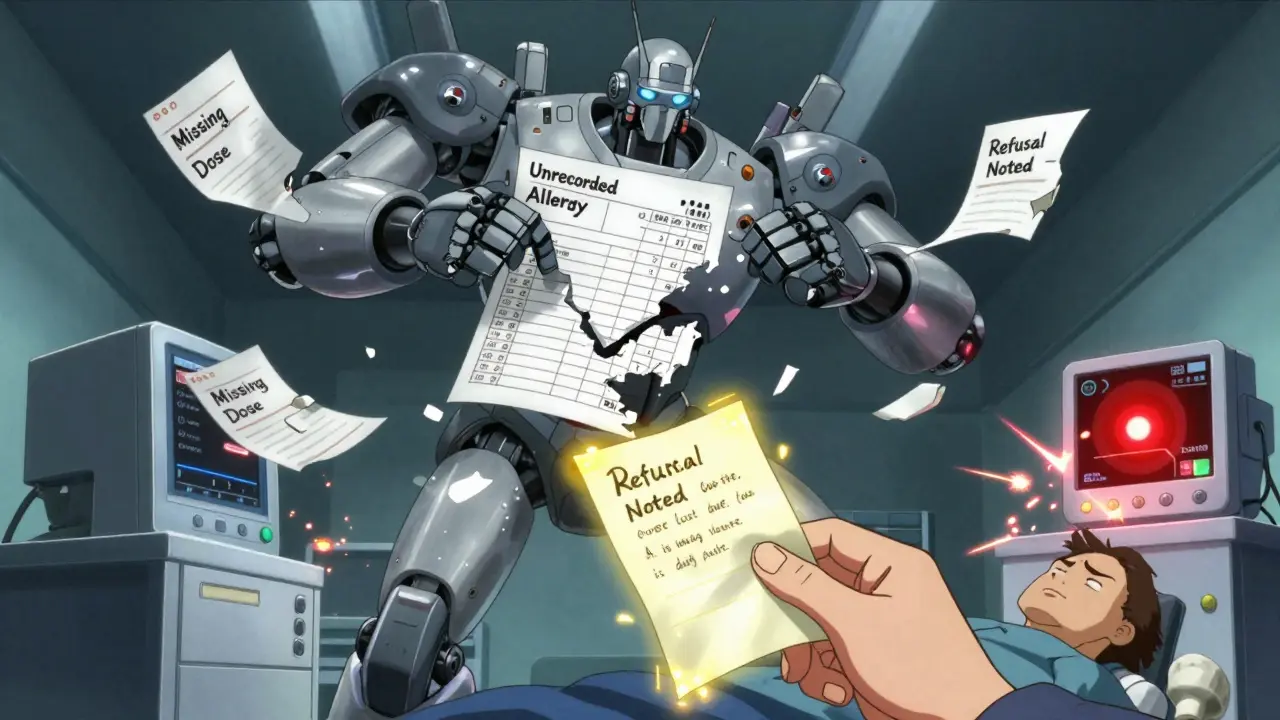
In 2022, the Physician Insurers Association found that 38% of medical malpractice claims involved medication errors. And in 22% of preventable adverse drug events in outpatient care, poor documentation was a key factor. Imagine this: You’re in the ER after a fall. You’re confused. You can’t remember your meds. The doctor sees a note that says “Lisinopril 5 mg daily.” But your real dose is 20 mg. The ER team gives you 5 mg. Your blood pressure spikes. You have a stroke. That scenario didn’t happen because of bad luck. It happened because documentation was incomplete. The same thing happens when providers skip documenting refusals. If you say, “I’m not taking that,” and it’s not written down, your primary care doctor might think you’re noncompliant. They might stop prescribing it-and you might not get the care you need.What’s Changing in 2025 and Beyond
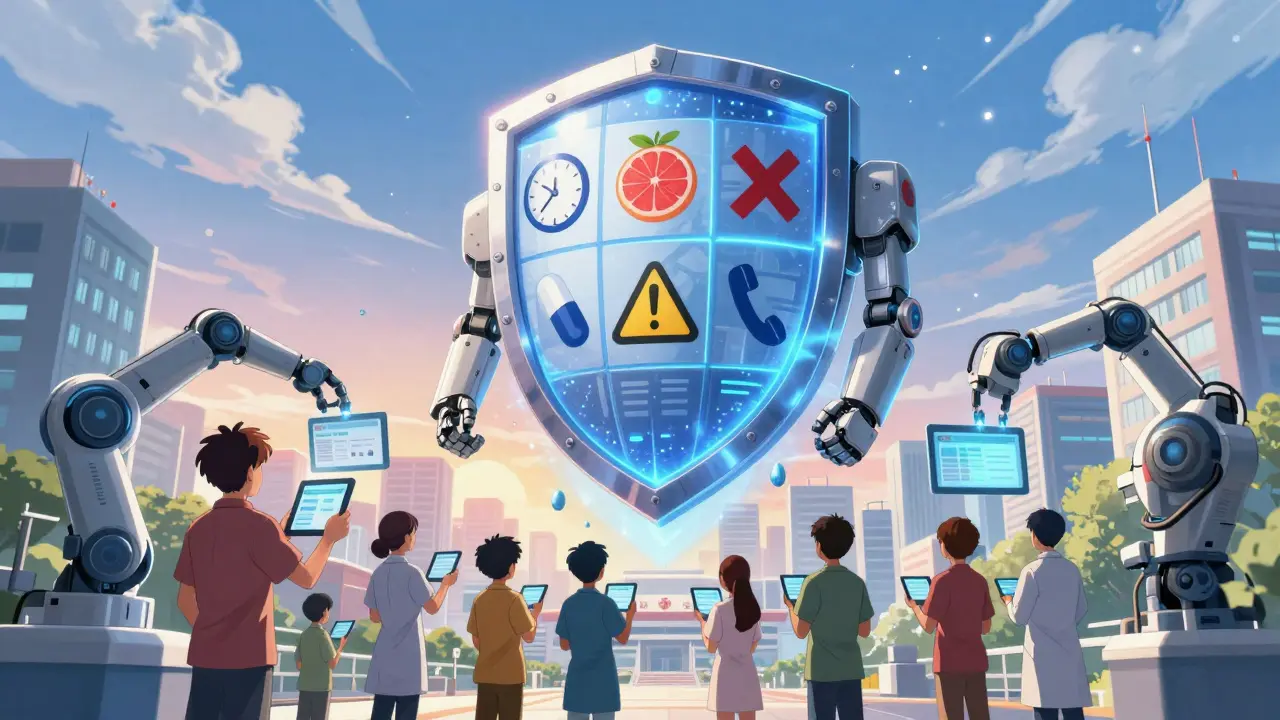
By 2025, nearly all medication documentation will happen through interconnected EHR systems. That means your list of meds will follow you from your primary care clinic to the pharmacy to the hospital-all in real time. The FDA is also pushing a new rule: every prescription will come with a one-page, standardized patient medication info sheet. Think of it like a nutrition label for your drug. It will include:- What it’s for
- How to take it
- Side effects to watch for
- What to avoid
- When to call your provider
This isn’t just a nice-to-have. It’s going to be required. And it will make it harder for providers to say, “I told them.” Because now, there’s a written, FDA-approved standard.
For now, the best thing you can do is insist on clear, specific documentation-every time. Don’t let your care depend on someone’s memory. Write it down. Ask for it. Double-check it. Your health depends on it.

I get why documentation matters, but let’s be real-most doctors don’t care. They’re on clock, scrolling TikTok between patients, and click ‘meds OK’ like it’s a checkbox. I once had a nurse write ‘take as directed’ for my insulin. Bro, that’s not a direction. That’s a dare. 🤦♀️
I’m from a country where patients are expected to just trust the doctor… but after my mom nearly died because her meds weren’t documented right, I learned: trust, but verify. Always ask for a printed list. Always. 🌍❤️
The requirement for dated, initialed, and specific documentation is not merely administrative-it is a foundational element of professional accountability in clinical practice. Failure to adhere constitutes a breach of the standard of care.
i just write my meds on my phone notes. its simple. no need to overcomplicate. if the doc forgets, i remind them. works every time. 🙌
I’ve worked in primary care for 12 years. The biggest barrier isn’t laziness-it’s the EHR design. If the system forces you to click 17 menus just to document a simple instruction, of course people cut corners. Fix the tool, not the person.
This whole ‘document everything’ thing is just government overreach. People used to get care without paperwork. My grandpa took his pills for 40 years and never wrote anything down. He lived to 92. Stop making us jump through hoops.
I love how this post breaks it down. But honestly? The real win is when patients feel safe to say ‘I didn’t understand.’ That’s the magic. Documentation follows from trust, not compliance. I’ve seen it-when patients know they won’t be judged for asking, they speak up. And that saves lives. 💛
If you can’t remember your own meds, you shouldn’t be allowed to take them. This isn’t rocket science. It’s basic responsibility. People keep blaming the system, but the real issue? Personal accountability. I don’t need a checklist to know not to mix alcohol with my blood thinner. 🚫🍷
i dont get why this is even a thing. just tell me what to do. i write it on my hand if i have to. its not that hard. why make it so complicated? lol
Wow. So the solution to 7,000 deaths is… more paperwork? I’m shocked. Truly. 🙃
I’ve been on both sides-patient and caregiver. The most powerful thing I’ve seen? When a provider says, ‘Tell me what you think you’re supposed to do.’ That moment of listening changes everything. Documentation is just the echo of that.
I used to work in a clinic where the EHR auto-filled ‘no allergies’ for everyone. One day, a patient told the doc she was allergic to penicillin. The doc said ‘cool’ and clicked next. The note stayed blank. She had anaphylaxis two weeks later. Documentation isn’t busywork. It’s a lifeline.
i got my meds list on my phone. i update it after every visit. even if the doc forgets, i got it. its not hard. just take 30 seconds. you dont need a form. you need a habit.
The epistemological foundation of medical documentation lies in the necessity of veridical testimony as a condition for the continuity of care. To omit a detail is not merely negligence-it is the ontological erasure of a patient’s lived experience from the clinical record. This is not bureaucratic overreach; it is the ethical architecture of healing.
The key insight here is that documentation is a proxy for therapeutic alliance. When a provider records patient response-especially refusal-it transforms compliance from a metric into a dialogue. That’s the shift we need: from transactional to relational.