Imagine taking a new blood pressure pill that suddenly makes your heart race, or starting an antibiotic that turns your usual painkiller into a toxic load. These aren't random bad luck events; they are often the result of pharmacokinetic drug interactions. This happens when one medicine changes how another moves through your body-specifically how it is absorbed, distributed, metabolized, or excreted. For most patients, this sounds like complex medical jargon, but understanding the basics can save your life and prevent unnecessary hospital visits.
The U.S. Food and Drug Administration notes that adverse drug reactions lead to about 1.3 million emergency department visits every year in the United States alone. Among elderly patients, drug interactions account for 6-10% of all hospital admissions. The good news? Once you know how these interactions work, you can take simple steps to protect yourself. This guide breaks down the science into plain English so you can have smarter conversations with your doctors and pharmacists.
What Are Pharmacokinetic Drug Interactions?
To understand the problem, we first need to distinguish between two types of drug interactions. Pharmacodynamic interactions occur when two drugs affect the same part of the body, like two sedatives making you too sleepy. In contrast, pharmacokinetic interactions happen when one drug alters the absorption, distribution, metabolism, or excretion (ADME) of another drug, changing the amount that reaches its target site.
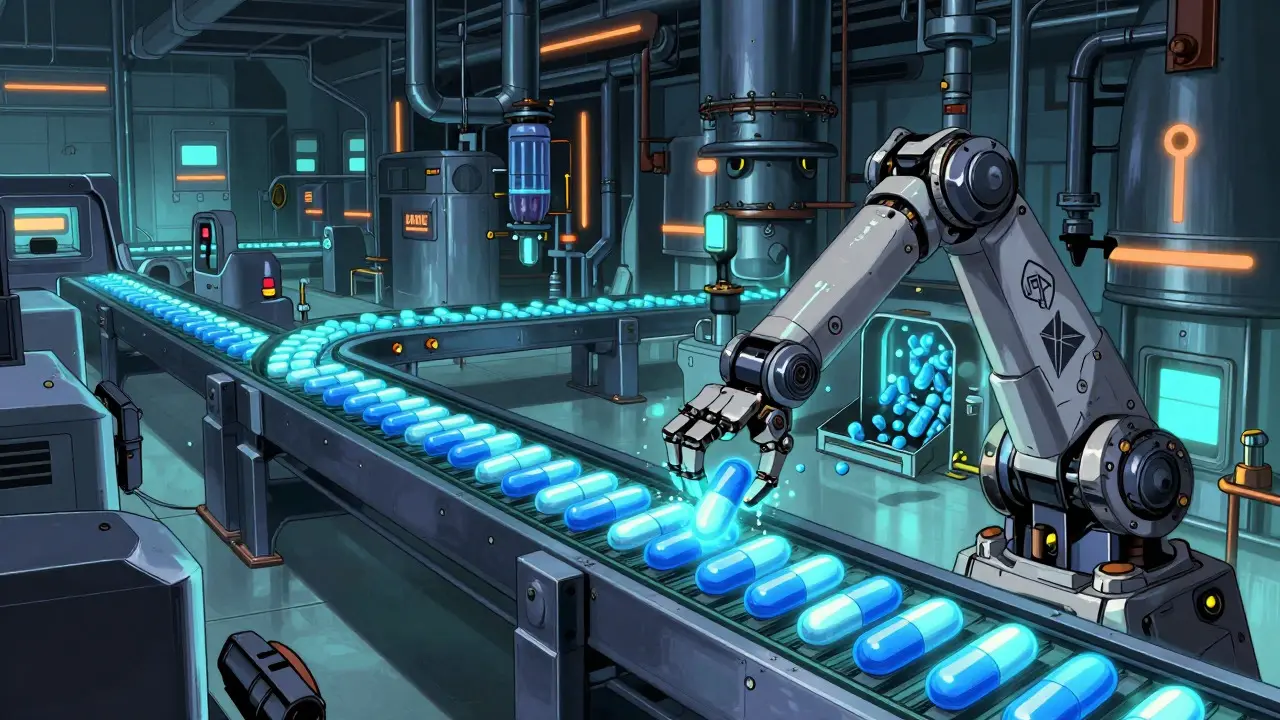
Think of your body as a factory. The drug is the raw material. Pharmacokinetic interactions are like one worker tampering with the conveyor belt, the storage room, the processing machine, or the waste disposal system. If the raw material doesn’t get processed correctly, you either get too much of it (toxicity) or too little (ineffectiveness). The four stages of this process are known by the acronym ADME:
- Absorption: How the drug enters your bloodstream from where you took it (stomach, skin, etc.).
- Distribution: How the drug travels through your blood to different organs and tissues.
- Metabolism: How your liver breaks the drug down into inactive parts.
- Excretion: How your kidneys remove the broken-down drug from your body via urine.
Absorption: Getting Into the Bloodstream
This is the first hurdle. If a drug isn’t absorbed properly, it can’t do its job. Several things can block this step. One common issue involves stomach acid. Some medications, like the antifungal ketoconazole, need an acidic environment to dissolve and be absorbed. If you take an antacid or a proton pump inhibitor (like omeprazole) at the same time, you raise your stomach’s pH, which can prevent the ketoconazole from working effectively.
Another major player here is chelation. This happens when minerals bind to drugs, forming a compound that your body can’t absorb. A classic example is tetracycline antibiotics. If you take them with dairy products containing calcium, or with iron supplements, the calcium binds to the antibiotic. Research indicates this can reduce absorption by up to 50%. To avoid this, health professionals recommend spacing these out by at least 2 to 3 hours.
Gut movement also matters. Opioids like morphine slow down how fast your stomach empties. This delay can change when other drugs, such as acetaminophen, enter the small intestine where they are absorbed. While not always dangerous, it can alter the timing of relief, leading to peaks and troughs in pain control that feel unpredictable.
Distribution: Traveling Through the Body
Once in the blood, drugs often hitchhike on proteins called albumin. Only the "free" drug that isn’t bound to a protein can actually enter cells and exert its effect. Distribution interactions usually involve competition for these protein binding sites.
Consider warfarin, a blood thinner that is highly bound to albumin. If you add diclofenac (an anti-inflammatory), both compete for the same spots on the albumin. Diclofenac might push warfarin off, increasing the amount of free warfarin in your blood. For most drugs, the body compensates quickly, so this isn’t a huge deal. But for drugs with a "narrow therapeutic index"-meaning the difference between a helpful dose and a toxic dose is very small-this shift can be dangerous. In the case of warfarin, even a slight increase in free drug levels can lead to serious bleeding risks.
Metabolism: The Liver’s Role and CYP Enzymes
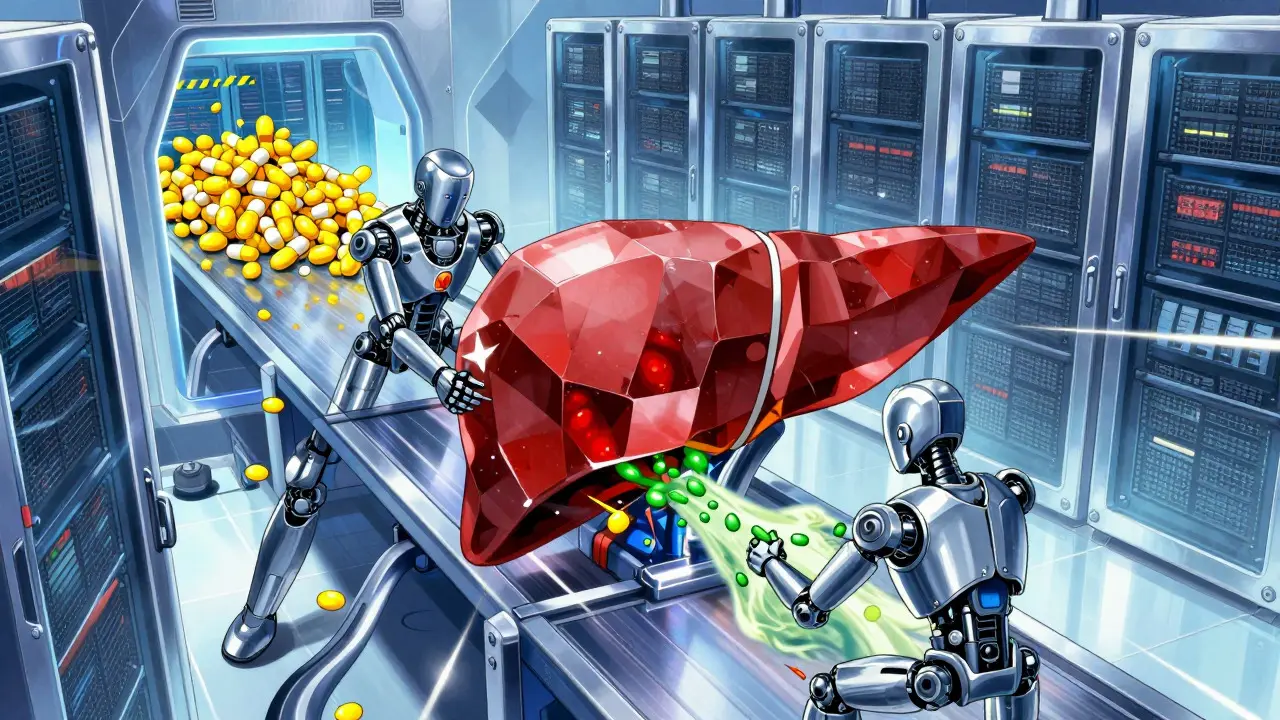
This is where most serious interactions happen. Your liver uses a family of enzymes called cytochrome P450 (CYP) to break down drugs. Two specific enzymes, CYP3A4 and CYP2D6, handle a large portion of prescription medications. When another drug interferes with these enzymes, it’s called a metabolic interaction.
There are two main ways this goes wrong:
- Inhibition: One drug blocks the enzyme, slowing down the breakdown of the second drug. This causes the second drug to build up in your system. For example, clarithromycin (an antibiotic) inhibits CYP3A4. If you are taking midazolam (a sedative) at the same time, the midazolam isn’t cleared fast enough, leading to excessive drowsiness or breathing problems.
- Induction: One drug speeds up the enzyme, breaking down the second drug too quickly. This makes the second drug less effective. Phenobarbital, an older seizure medication, induces CYP enzymes. If taken with lamotrigine, it can cause the lamotrigine levels to drop, potentially allowing seizures to return, or in some cases, creating toxic metabolites.
Foods can act like drugs here too. Grapefruit juice is a well-known inhibitor of CYP3A4. Drinking it while taking statins or certain blood pressure meds can significantly raise their blood levels. Approximately 85 prescription medications have labeling warnings regarding grapefruit juice, according to FDA guidelines.
Excretion: Leaving the Body
Your kidneys filter waste and excess drugs out of your blood. Sometimes, two drugs fight for the same exit route. This is common with drugs that are eliminated by the kidneys. Probenecid, for instance, reduces the renal excretion of cephalosporin antibiotics. By blocking the exit, probenecid keeps the antibiotic in the body longer, which can be useful for treating infections but risky if it leads to toxicity.
Transporter proteins also play a key role here. One important transporter is P-glycoprotein (P-gp), which pumps drugs out of kidney cells into the urine. Itraconazole, an antifungal, inhibits P-gp. If you take digoxin (a heart medication) along with itraconazole, the digoxin isn’t pumped out efficiently. Its concentration rises, potentially causing dangerous heart rhythm issues. Digoxin has a narrow therapeutic window, so even small increases in level matter.
Practical Strategies for Patient Safety
You don’t need to memorize every enzyme name to stay safe. Instead, focus on these actionable habits that healthcare providers recommend to minimize risk:
- Maintain a Complete List: Keep a current list of all prescriptions, over-the-counter drugs, vitamins, and herbal supplements. Studies show that having a complete list reduces interaction risks by nearly half. Include things like St. John’s Wort, which is a potent CYP inducer, and garlic supplements, which can affect blood clotting.
- Use One Pharmacy: When you fill all your prescriptions at the same place, the pharmacy’s computer system can scan for interactions across all your meds. Using multiple pharmacies fragments this data, missing potential conflicts.
- Ask Specific Questions: Don’t just ask, "Is this okay?" Ask, "Does this interact with my other meds?" and "Are there foods I should avoid?" This prompts your provider to check specific pathways rather than relying on general knowledge.
- Space Out Medications: If you take thyroid medication, iron, or calcium, space them 4 hours apart from other meds to ensure proper absorption. This simple timing adjustment prevents many absorption-based interactions.
How Healthcare Providers Prevent Errors
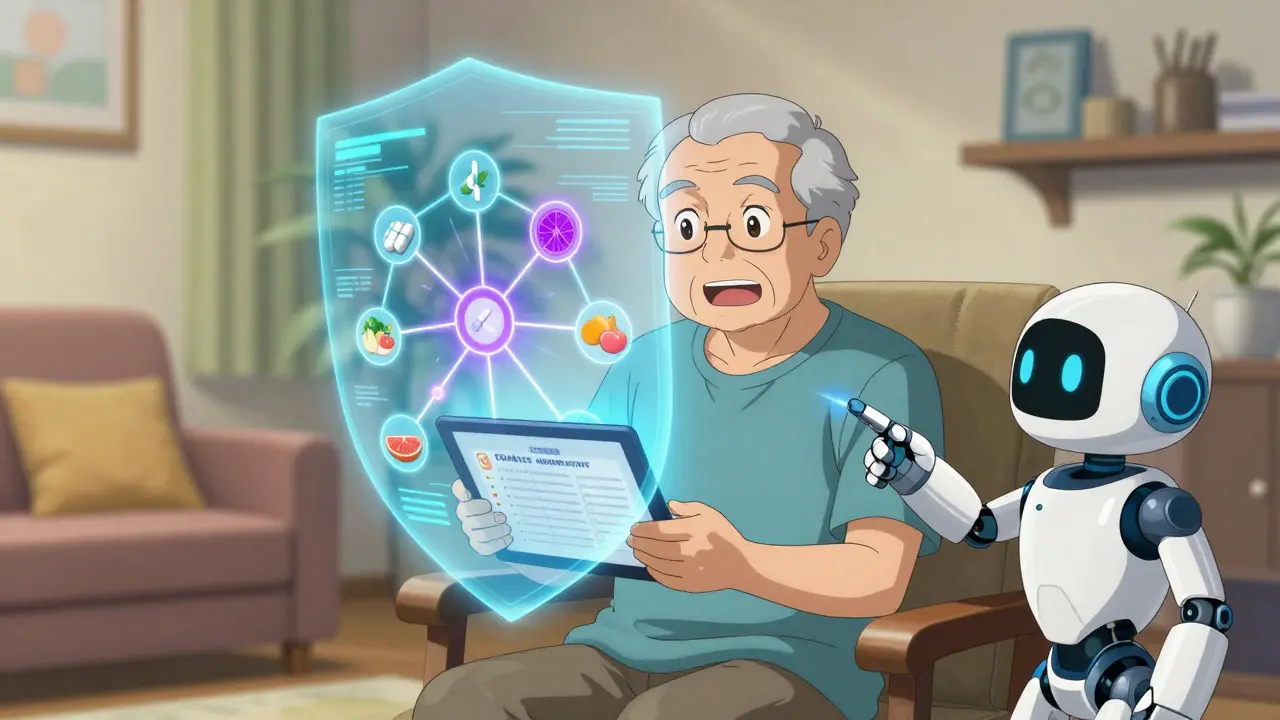
Your medical team uses technology to help catch these issues before they become problems. Electronic Health Records (EHRs) now include clinical decision support systems that alert doctors to major interactions. However, these alerts can be frequent, leading to "alert fatigue" where clinicians might override warnings. That’s why your input is crucial. If you notice a side effect after starting a new med, report it immediately.
Pharmacists also play a vital role. Medication Therapy Management (MTM) services, often available for Medicare beneficiaries, involve a pharmacist reviewing your entire regimen. Data suggests these reviews reduce adverse drug events by 22%. If you are on five or more chronic medications, ask your doctor for a referral to MTM.
Special Considerations: Age and Genetics
Your personal biology changes how you handle drugs. As we age, kidney function naturally declines. About 40% of adults over 65 have reduced kidney filtration rates, which means drugs that rely on excretion stay in the body longer. This makes elderly patients particularly vulnerable to accumulation effects.
Genetics also matter. Some people are "poor metabolizers" due to genetic variations in CYP enzymes. They break down drugs much slower than average. Conversely, "rapid metabolizers" clear drugs too fast. Pharmacogenomic testing can identify these traits, and the FDA now includes genetic information in the labels of over 340 drugs. While not routine yet for everyone, asking about genetic factors if you have unusual reactions to standard doses is a smart move.
| Interaction Type | Example Drugs/Factors | Potential Consequence | Patient Action |
|---|---|---|---|
| Absorption (Chelation) | Tetracycline + Calcium/Iron | Reduced antibiotic effectiveness | Space doses 2-3 hours apart |
| Absorption (pH Change) | Ketoconazole + Antacids | Antifungal fails to work | Take ketoconazole on empty stomach without antacids |
| Metabolism (Inhibition) | Clarithromycin + Midazolam | Excessive sedation/respiratory depression | Monitor for drowsiness; adjust dose if prescribed |
| Metabolism (Food) | Statins + Grapefruit Juice | Increased risk of muscle damage | Avoid grapefruit juice entirely |
| Excretion (Transporter) | Itraconazole + Digoxin | Heart rhythm irregularities | Monitor digoxin levels closely |
When to Worry: Red Flags
Not every interaction causes immediate symptoms. Some are subtle. Watch for these signs that might indicate a pharmacokinetic issue:
- Sudden increase in side effects after adding a new medication.
- Loss of effectiveness in a chronic medication (e.g., blood sugar rising despite same insulin dose).
- New bruising or bleeding while on blood thinners.
- Unexplained fatigue or confusion, especially in older adults.
If you experience any of these, contact your healthcare provider before stopping medication abruptly. Sudden stops can be more dangerous than the interaction itself.
Do vitamin supplements count as drugs for interactions?
Yes. Many supplements contain active compounds that affect CYP enzymes or transporters. St. John’s Wort, kava, and high-dose fish oil are examples that can significantly alter how prescription drugs work. Always list supplements on your medication sheet.
How long does it take for a metabolic interaction to show up?
It varies. Inhibition can happen within days, as enzyme levels change relatively quickly. Induction takes longer, often 1-2 weeks, because the body needs time to produce more enzymes. If you start a new med and feel fine for a week, wait a bit longer before assuming there’s no interaction.
Can food other than grapefruit affect drug absorption?
Absolutely. High-fat meals can increase the absorption of some drugs like ketoconazole, while fatty foods can decrease the absorption of others. Dairy products interfere with tetracyclines. Always read the label instructions regarding whether to take a med with or without food.
Why are elderly patients at higher risk?
Aging affects all four ADME processes. Kidney function declines, reducing excretion. Liver mass decreases, affecting metabolism. Body fat percentage increases, which can trap fat-soluble drugs. Additionally, older adults often take more medications (polypharmacy), increasing the chance of combinations interacting.
Should I stop taking a drug if I suspect an interaction?
Usually, no. Stopping abruptly can cause withdrawal or rebound effects. Call your doctor or pharmacist first. They may advise you to hold a dose, switch to an alternative, or simply monitor you more closely. Never make unilateral changes to chronic therapies without professional guidance.
