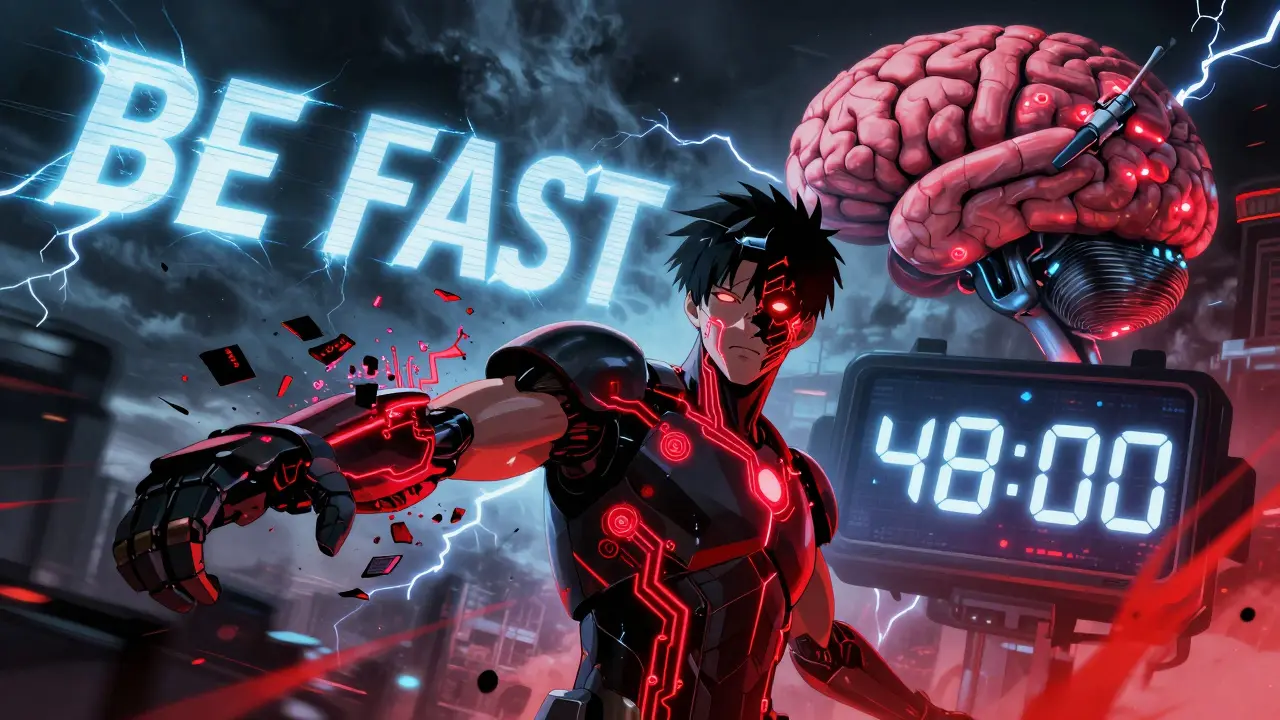
When someone suddenly loses control of one side of their face, slurs their words, or can’t lift their arm - even if it all goes away in minutes - many people breathe a sigh of relief. TIA - transient ischemic attack - is often dismissed as a "mini-stroke." But that’s dangerously wrong. A TIA isn’t a warning. It’s already a stroke event that just didn’t leave permanent damage. And if you ignore it, you’re gambling with your life.
What Exactly Is a TIA?
A TIA happens when blood flow to part of the brain stops briefly, causing stroke-like symptoms that vanish within minutes or hours. Unlike a full stroke, no permanent brain tissue dies. But here’s the twist: modern medicine no longer defines TIA by how long symptoms last. The old rule - "if it clears in 24 hours, it’s a TIA" - was scrapped in 2009. Now, doctors look at the brain itself. If an MRI shows no infarction (dead tissue), it’s a TIA. If it does? That’s a minor stroke.
That means nearly 1 in 3 people who think they had a TIA actually had a tiny stroke. Advanced imaging finds brain damage in 35% of cases labeled as TIA. And here’s the kicker: even if you feel fine, that damage might be invisible to you. The brain doesn’t always scream when it’s hurt. A 2022 study from UC San Francisco found that 48% of "TIA" patients had subtle brain injuries only detectable with cutting-edge MRI scans.
Stroke Symptoms: The Real Red Flags
The symptoms of a TIA and a stroke are identical. There’s no difference in how they feel. That’s why you can’t wait to see if it goes away. Use BE FAST - it works for both:
- Balance: Sudden dizziness, loss of coordination, or trouble walking
- Eyes: Blurry, double, or total vision loss in one or both eyes
- Face: One side droops. Ask the person to smile. Does it look uneven?
- Arm: One arm drifts down when raised. Try lifting both. Is one weaker?
- Speech: Slurred, strange, or confused speech. Can they repeat a simple sentence?
- Time: Call 911 now. Even if symptoms disappear.
Other signs? A sudden, severe headache with no known cause. Numbness on one side. Confusion or trouble understanding speech. These aren’t "just a spell." They’re your brain screaming for help.
Why Time Is Everything
The biggest myth? "It went away, so it’s not serious." That thinking kills. One in five people who have a TIA will have a full stroke within 90 days. And half of those happen in the first 48 hours. That’s why every minute counts.
Think of it like this: a TIA is the brain’s final alarm before a major system failure. If you ignore the alarm, the system crashes. Studies show that getting evaluated within 60 minutes of symptom resolution cuts stroke risk by 80%. The longer you wait, the higher your risk. Delaying care beyond 24 hours increases your stroke risk by 31% - that’s CDC data from 2021.
At St. Vincent’s Hospital, neurologists tell patients: "If you had a TIA, you’re not lucky. You’re in danger." The American Heart Association now calls TIA a neurological emergency. Same as stroke. Same urgency. Same 911 call.
How Doctors Tell Them Apart
Here’s where it gets technical - but you need to know this:
| Feature | TIA | Stroke |
|---|---|---|
| Brain Damage | None visible on MRI | Clear infarction (dead tissue) on MRI or CT |
| Symptom Duration | Usually under 1 hour (56% resolve in 10-60 min) | Persists beyond 24 hours |
| Imaging Result | No acute infarction on diffusion-weighted MRI | Positive for infarction on MRI |
| Immediate Treatment | Aspirin within 24 hours, dual antiplatelets if high-risk | Thrombolytics (like alteplase) within 4.5 hours |
| ABCD2 Score Risk | ≥4 = 8.1% stroke risk in 2 days | Not used - treatment starts immediately |
The ABCD2 score is a tool doctors use to predict stroke risk after a TIA. It looks at:
- Age (60 or older = 1 point)
- Blood pressure (140/90 or higher = 1 point)
- Clinical features (weakness = 2 points, speech issue without weakness = 1)
- Duration (60+ minutes = 2, 10-59 = 1)
- Diabetes (yes = 1)
A score of 4 or higher means you’re high-risk. You need hospital evaluation within 12 hours. A score below 4? Still urgent. You need to be seen within 24 hours. No exceptions.
What Happens in the ER
If you or someone else has TIA symptoms - even if they’re gone - call 911. Don’t drive. Don’t wait. Emergency teams treat this like a stroke.
Here’s what you’ll get:
- Non-contrast CT scan - to rule out bleeding in the brain.
- Diffusion-weighted MRI - within 24 hours. This is the gold standard. It finds tiny strokes invisible on CT.
- Blood tests - for sugar, cholesterol, clotting issues.
- Heart monitoring - to check for atrial fibrillation, a common cause.
- Immediate treatment - Aspirin 325 mg within 24 hours cuts stroke risk by 60%. For high-risk patients, doctors add clopidogrel (dual antiplatelets) for 21-30 days.
- Statin therapy - Atorvastatin 80 mg daily, even if cholesterol looks normal. It stabilizes plaques in arteries.
- Blood pressure control - Target is under 140/90. Often requires medication.
Programs like SOS-TIA at Massachusetts General Hospital cut 90-day stroke rates from 10.3% to just 1.2% by guaranteeing same-day evaluation. That’s not luck - that’s protocol.
Why People Delay - And Why It’s Deadly
Why do so many wait? Because they think: "It went away." Or "It was just a migraine." Or "I’ll see my doctor tomorrow."
Here’s the truth: 31% of TIA patients delay care beyond 24 hours. That’s a huge number. And it’s why 15-30% of people with TIA never seek medical help at all. That’s a public health crisis.
Doctors in Bristol, like those at Southmead Hospital, see this every week. A 72-year-old man walks in after his arm went numb for 15 minutes. "I thought it was just a pinched nerve," he says. He had a silent stroke. He didn’t know. He’s lucky he didn’t have another - and bigger - one next.
There’s no such thing as "not serious" when it comes to brain symptoms. The brain doesn’t heal like a scraped knee. Once brain cells die, they’re gone. And a TIA means your brain is already at risk.
What Happens After the ER
Getting treated in the ER is step one. Step two? Long-term prevention.
- Medication - Aspirin or clopidogrel daily. Statins. Blood pressure pills. No skipping.
- Lifestyle changes - Quit smoking. Cut salt. Move daily. Even a 20-minute walk helps.
- Diabetes control - If you have it, tight sugar control cuts stroke risk by 30%.
- Heart checks - If you have AFib, you need anticoagulants like apixaban. Not aspirin.
- Follow-up - See a neurologist or stroke clinic within 1 week. Don’t rely on your GP alone.
Future tools are coming fast. By 2026, blood tests for GFAP (a brain injury marker) could tell if you had a TIA or stroke in under 15 minutes. AI tools are already predicting stroke risk with 92% accuracy using brain scans. But none of that matters if you don’t act now.
Bottom Line: Don’t Wait. Don’t Guess.
A TIA is not a warning sign. It’s the first strike. The brain doesn’t get a second chance. If you or someone you know has sudden weakness, slurred speech, or vision loss - even if it lasts 10 minutes - call 911. No exceptions. No "waiting to see."
Every minute you delay increases your chance of a full stroke. And a stroke can end your life - or leave you paralyzed, speechless, or dependent on others. The tools to stop it exist. The window to act is narrow. And the cost of waiting? It’s not just money. It’s your future.
Learn BE FAST. Share it. Use it. And never, ever ignore it.

Let me cut through the noise: a TIA isn’t a warning. It’s a siren. And if you’re still waiting to see if it "goes away," you’re already dead money. I’ve seen guys walk in laughing, saying "it was just a twitch." Two weeks later, they’re in rehab, forgetting their kids’ names. No drama. No hype. Just facts. Call 911. Now.
i just had a mini stroke last year… or so i thought. turned out it was a full tiny one. no one told me to call 911. i thought it was just stress. now i tell everyone: if your face droops even for 2 mins… call 911. dont be like me.
OMG YES!!! 🙌 I’m so glad someone finally said it! 🇺🇸 We’re not just "lucky" when symptoms disappear - we’re playing Russian roulette with our brains. 😱 And honestly? If you wait to see your GP tomorrow? That’s not just negligent. That’s *criminal*. Get. Help. Now. 💉🧠
Oh wow. A "mini-stroke"? 🤡 Like, what, a stubbed toe of the brain? "Oh no, my left arm vanished for 12 minutes… better wait until Tuesday to call my doctor." 🥱 You know what’s scarier than a TIA? The fact that people still think this is a joke. The brain doesn’t have a "try again" button. 🧠💥
Interesting read. In India, many still think TIA is just dizziness from heat or tiredness. No emergency response at all. We need more awareness. Maybe community health talks? The numbers here are rising fast.
This is a critical public health message that deserves widespread dissemination. The medical community has updated its protocols, yet public perception lags dangerously behind. The data is unequivocal: immediate evaluation following transient neurological symptoms reduces stroke risk by over 80%. Delaying care constitutes a preventable public health failure.
So true!!! I mean, seriously-how many times do we need to hear this?!!! If your arm drops, if your words slurred, if your vision goes weird-CALL 911. CALL 911. CALL 911. It’s not a suggestion. It’s a lifeline. And if you wait? You’re gambling with your future. And your family’s future. And your sanity. Don’t do it. Don’t. Don’t. Don’t.
My uncle had this happen and he didn’t go to the hospital. Said he was fine. Two months later he had a massive stroke. We lost him. Please listen. This isn’t scare tactics. It’s survival. If something feels off in your brain, don’t explain it away. Just go. No excuses.
Why are we still talking about this like it’s a choice? Because the system fails people. Hospitals don’t have enough neurologists. Insurance won’t cover same-day MRIs. And doctors tell people to "wait and see." That’s not care. That’s negligence. We need national mandates. Not awareness campaigns. Mandates.
What if this is all just a pharmaceutical scam? I read online that MRIs are overused and most "silent strokes" are just misread artifacts. Maybe the real danger is the drugs they push afterward. Statins? They’re toxic. And aspirin? It thins your blood too much. Who benefits? Big Pharma. Always.
Wow. A conspiracy theorist just commented on a medical emergency. Congrats. You just made my point for me. If you think a brain scan is a scam, then go ahead and ignore your numb hand. We’ll be here when you need the ambulance. And we’ll be the ones who told you to act.