
Adverse Event Report Readiness Calculator
Checklist: Is Your Data Ready?
Based on the 5 Ws framework and FDA MedWatch guidelines
Report Quality Assessment
Incomplete
Add more details to increase the likelihood of regulatory action.
You take a pill. You feel strange. Is it the med? Or is it something else? This moment of doubt happens to millions of Americans every year. According to the FDA, roughly 1.3 million adverse event reports hit their system annually, but here is the catch: only 8% come directly from consumers. The vast majority-68%-come from doctors and pharmacists who act as the bridge between you and the regulators. That means your ability to communicate clearly with your provider is not just polite; it is the single most important factor in getting your concern taken seriously.
If you dismiss symptoms as 'just part of aging' or 'normal stress,' you might be missing a serious adverse drug reaction (ADR). On the flip side, if you rush into an appointment saying 'this med makes me sick,' without data, your doctor may not have enough context to act. The goal isn't just to complain; it's to provide evidence that triggers clinical intervention and contributes to national drug safety surveillance. In fact, 30% of drug label changes between 2008 and 2022 resulted directly from spontaneous reports like yours. Let’s look at how to build a report so solid your provider cannot ignore it.
Why Your Doctor Needs Data, Not Just Complaints
Doctors are trained to diagnose based on patterns. When you say, 'I feel dizzy,' it’s vague. Dizziness could be dehydration, low blood sugar, an inner ear issue, or a side effect of your new antihypertensive. Without specifics, it’s hard to pin down the cause. Dr. Janet Woodcock, Director of the FDA Center for Drug Evaluation and Research, noted that reports containing specific timing information are 5.2 times more likely to establish causality than vague descriptions.
Think of your body as a black box recorder. You need to capture the flight data before the crash. A 2022 study in the *Journal of the American Medical Informatics Association* analyzed over 12,000 adverse event reports and found that in-person consultations yielded the most complete information-but only when patients came prepared. Reports missing three or more key elements had a 73% lower chance of triggering regulatory action. So, what are those key elements?
- Patient Identifiers: Age, gender, and weight matter because dosage toxicity often correlates with body mass.
- Exact Medication Details: Brand name, generic name, dosage (e.g., 50mg), and frequency. If you have the bottle, bring the lot number.
- Onset Timing: Exactly when did symptoms start relative to taking the dose? 'Two hours after my morning pill' is powerful data.
- Clinical Outcome: Did you stop the med? Did you need another drug to fix the side effect?
- Concomitant Medications: What else are you taking? Interactions are a leading cause of ADRs.
Dr. Jerry Avorn from Harvard Medical School published findings showing that patients who maintain medication diaries are 63% more likely to have their adverse events properly documented. It sounds tedious, but a simple notebook or notes app can save you weeks of unnecessary suffering.
The Four-Step Reporting Workflow
Effective reporting isn’t accidental. The FDA’s MedWatch Training Guide outlines a process that reduces communication time by 37% while increasing report completeness by 52%. Here is how to apply it in real life.
Step 1: Document for Three Days Minimum
Don’t wait until the symptom is unbearable. Start tracking immediately when you suspect a link. Use the '5 Ws' framework recommended by experts:
- What: Describe the symptom objectively. Instead of 'I felt weird,' write 'Nausea, lasting 45 minutes, no vomiting.'
- When: Note the time of dose and time of symptom onset. Precision matters.
- Where: Where on your body does it hurt? Is it localized or systemic?
- Why: Why do you suspect the medication? (e.g., 'It started right after I increased the dose.')
- What helps/worsens it: Does food help? Does lying down make it worse?
If you have visible symptoms like a rash, take photos. FDA data shows that reports accompanied by photographs have a 42% higher validation rate than verbal descriptions alone. Timestamp those photos.
Step 2: Schedule a Dedicated Appointment
Do not try to squeeze this conversation into the last two minutes of a routine check-up. The Institute for Safe Medication Practices found that physicians spend an average of only 3.2 minutes discussing medication side effects during standard 15-minute appointments. That is not enough time for a complex case.
Call ahead and request a 20-minute slot specifically for 'medication concerns.' Most providers will accommodate this if you frame it as a safety issue. If you use a patient portal, send a message flagging the issue first, then schedule the visit. This primes your doctor to review your chart beforehand.
Step 3: Present Structured Evidence
Bring your diary or printed notes. Hand them to your provider. Say, 'I’ve tracked these symptoms for three days, and they correlate with my [Medication Name] doses.' This shifts the dynamic from a subjective complaint to an objective clinical presentation. Studies show that providers receiving structured reports have 32% higher patient satisfaction scores because the interaction feels productive and resolved.
Step 4: Verify Documentation
This is the step most people skip. Ask your provider: 'Will you document this adverse event in my medical record?' Under the 21st Century Cures Act, Medicare-participating providers are required to document patient-reported adverse events in structured fields. If they don’t write it down, it didn’t happen in the eyes of the system. Ensure they note the specific symptoms and the suspected drug.
Digital vs. In-Person: Which Is Better?
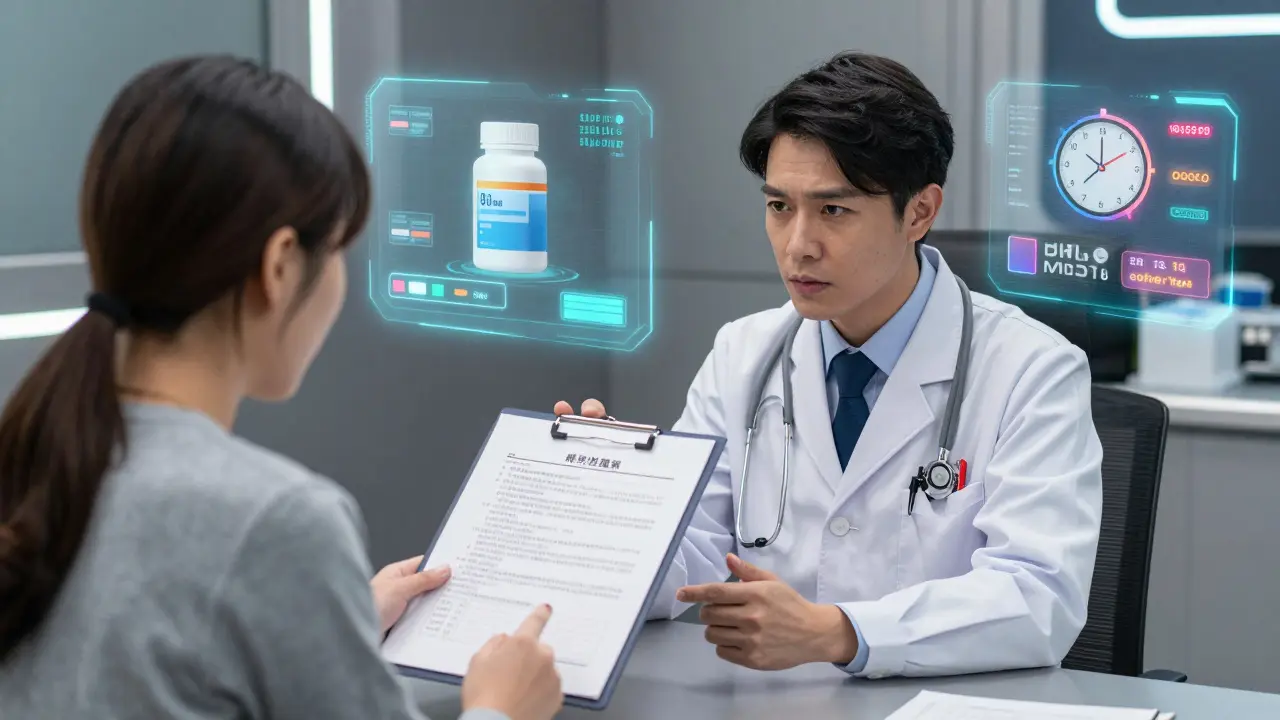
Technology has changed how we talk to doctors. Electronic Health Record (EHR) integration has made reporting faster. Epic Systems’ analysis showed that EHR-embedded tools cut documentation time from 22 minutes to 7 minutes. Direct-to-provider reporting through portals has jumped from 18% in 2018 to 41% in 2023.
| Method | Completeness Score (out of 10) | Speed of Resolution | Best For |
|---|---|---|---|
| In-Person Visit | 8.7 | Immediate clinical intervention possible | Complex reactions, physical exams needed |
| Secure Patient Portal | 7.2 | 92% completed within 24 hours | Mild-moderate symptoms, detailed logs |
| Telephone Call | 5.8 | Variable | Urgent but non-emergency questions |
| Traditional Mail | 4.3 | Slowest | Rarely recommended |
However, digital methods have a flaw: a 22% higher rate of incomplete information. Doctors can’t see your face or check your reflexes via a portal message. If you are experiencing severe reactions-difficulty breathing, swelling, confusion-go to the ER or call emergency services. Do not email about anaphylaxis.
For mild to moderate issues, the portal is excellent for attaching your symptom diary and photos. But follow up with a phone call or visit if the issue persists. A 2023 AMA survey found that 68% of physicians still prefer verbal communication for initial assessment because it provides better clinical context.
Overcoming Common Barriers
You might worry about being dismissed. It happens. One user on Reddit shared that their doctor said dizziness was 'normal' and didn’t document it, requiring three visits to get attention. How do you avoid this?
Use Standardized Language. The American Medical Informatics Association recommends using the Common Terminology Criteria for Adverse Events (CTCAE) version 5.0. You don’t need to memorize the whole scale, but knowing terms like 'Grade 1 (mild)' vs 'Grade 3 (severe)' helps. For example, instead of 'my skin hurts,' say 'I have Grade 2 dermatitis with widespread redness.'
Leverage Authority. Bring printed information from reputable sources like the NIH or FDA websites. If your doctor says, 'That’s not a known side effect,' you can respond, 'The FDA label mentions it as rare, but I’m experiencing it consistently.' This invites collaboration rather than confrontation.
Know Your Rights. The American Medical Association’s Code of Medical Ethics states that physicians have an ethical responsibility to report suspected adverse reactions. If your provider refuses to listen, ask to speak to the practice manager or consider changing providers. Your safety is paramount.

The Bigger Picture: Pharmacovigilance
Your report doesn’t just help you. It helps everyone. The National Academy of Medicine estimates that effective side effect reporting prevents approximately 130,000 serious adverse drug events annually in the U.S. When you report to your doctor, they may file a report to the FDA’s MedWatch program. This data pool is used to update drug labels, issue safety warnings, and even withdraw dangerous drugs from the market.
Currently, underreporting is a massive problem. Dr. Sidney Wolfe of Public Citizen’s Health Research Group testified that only 1-10% of adverse events are ever reported through proper channels. By taking the time to document and communicate effectively, you are filling that gap. You are contributing to a system that protects future patients.
New tools are emerging to make this easier. The FDA launched the MedEffect Mobile app in late 2023, allowing patients to create structured reports that sync with provider EHRs. By 2025, all certified health IT systems must support seamless transmission of these reports. AI-assisted tools are also being piloted to recognize symptom patterns, though human judgment remains essential.
Quick Checklist for Your Next Appointment
- [ ] Track symptoms for at least 3 days before the visit.
- [ ] Take photos of any visible symptoms with timestamps.
- [ ] List all medications, including supplements and OTC drugs.
- [ ] Note exact times of dosing and symptom onset.
- [ ] Request a dedicated appointment slot for medication concerns.
- [ ] Bring your written log to the appointment.
- [ ] Ask your provider to document the adverse event in your chart.
- [ ] Confirm if a MedWatch report will be filed.
Reporting side effects is not about being difficult. It’s about being precise. Your health depends on clear communication. Take control of the narrative, bring the data, and ensure your voice is heard in the medical record.
How long should I track symptoms before seeing my doctor?
You should track symptoms for a minimum of three days. This period allows you to identify patterns, such as whether symptoms occur shortly after each dose or accumulate over time. Shorter tracking periods may miss intermittent side effects, while longer periods delay necessary clinical intervention.
Can I report side effects directly to the FDA instead of my doctor?
Yes, you can submit a report directly to the FDA via the MedWatch program online or by mail. However, direct consumer reports account for only 8% of total submissions. Reporting to your healthcare provider first ensures you receive immediate clinical care and allows the provider to verify the medical context, which increases the likelihood of the report being acted upon.
What if my doctor dismisses my side effects?
If your doctor dismisses your concerns, present your documented evidence calmly and ask for the reasoning. Request that the discussion be documented in your medical record. If you feel unheard, seek a second opinion from another provider or a pharmacist. Persistent dismissal of valid symptoms is a barrier to safety, and changing providers may be necessary.
Is it safe to stop taking my medication if I experience side effects?
Do not stop prescribed medications abruptly without consulting your healthcare provider, as this can cause withdrawal symptoms or rebound conditions. However, if you experience severe symptoms like difficulty breathing, swelling, or chest pain, seek emergency care immediately. For mild side effects, contact your provider to discuss adjusting the dose or switching medications.
Does using a patient portal improve the reporting process?
Yes, patient portals allow you to attach detailed logs, photos, and lab results, making the report more comprehensive. Studies show portal messages yield 7.2 out of 10 required elements on average, compared to 5.8 for phone calls. Portals also enable faster response times, with 92% of reports addressed within 24 hours. However, for complex cases requiring physical examination, an in-person visit is still superior.
