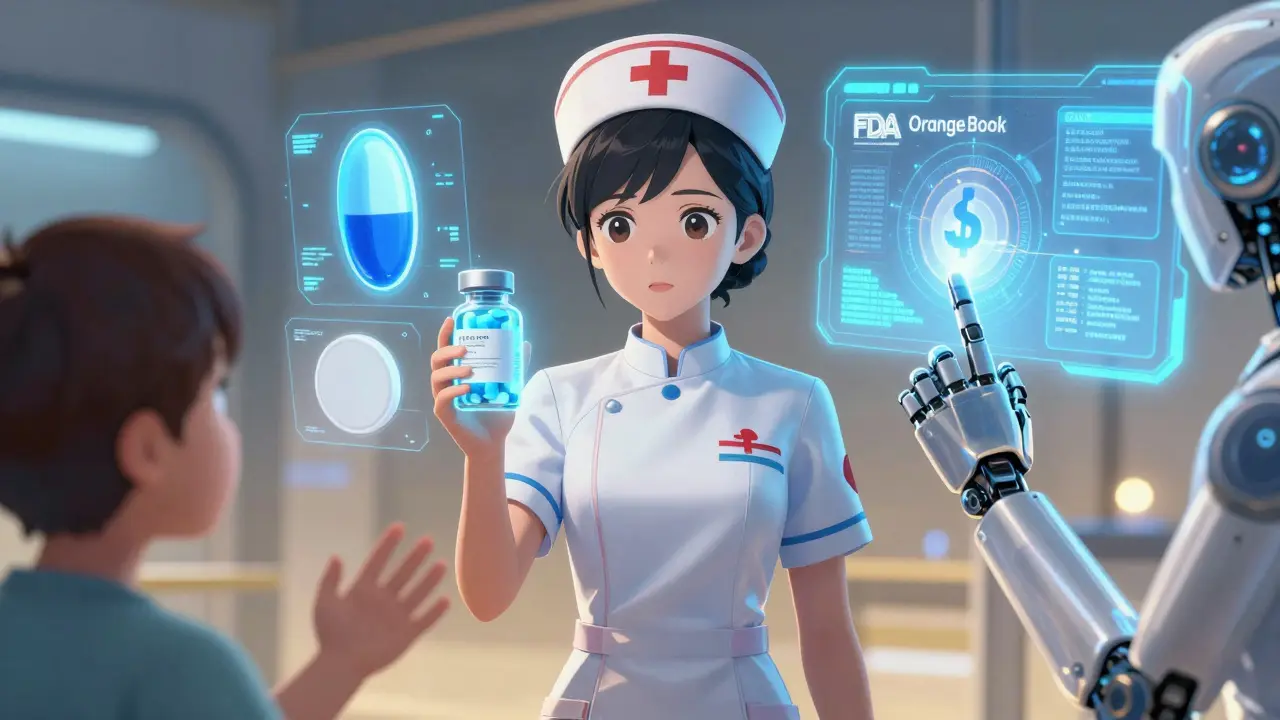
When a patient picks up a prescription and sees a pill that looks nothing like the one they’ve taken before, panic can set in. Generics are just as effective as brand-name drugs-but most people don’t know that. Nurses are often the first-and sometimes the only-healthcare provider who has the time to explain why.
In hospitals and clinics across the U.S., nurses are on the front lines of medication safety. They’re the ones holding the pill bottle, watching the patient swallow it, and answering the quiet question: "Is this really the same?" The answer isn’t just medical-it’s emotional, visual, and deeply personal. And nurses are trained to handle it.
Why Patients Doubt Generics
It’s not irrational. A patient who’s taken a blue oval pill for years suddenly gets a white round one. Same name, different look. Their brain says: "Something changed. Is it safe?" A 2021 FDA survey found that 68% of patients believe generics are less effective. That belief isn’t born from ignorance-it’s born from experience. Pills change shape. Color. Size. Even taste. And when someone’s health is on the line, especially with chronic conditions like hypertension or thyroid disease, that change feels risky.
Nurses don’t dismiss those fears. They meet them head-on. One nurse at Johns Hopkins told a patient, "The FDA doesn’t let them make a generic unless it works exactly like the brand. Same active ingredient. Same dose. Same way your body absorbs it." Then she showed them the FDA’s Orange Book on her tablet-the official list that proves bioequivalence. That visual proof cut through the fear.
What Nurses Actually Say
Counseling isn’t a script. It’s a conversation. But there are key points every nurse learns to cover. According to the National Council for Prescription Drug Programs (NCPDP), eight elements are essential:
- The generic name and brand name (if known)
- Why it’s being used-what condition it treats
- When and how to take it
- What it looks like now (color, shape, markings)
- What side effects to expect
- What to do if a dose is missed
- How to store it
- When to call for help
But the most powerful moment? When they explain appearance. "Your pill changed color because the manufacturer changed," says a nurse in a Cleveland hospital. "But the medicine inside? Same. The FDA checks every batch. Every factory. Same rules as the brand-name version."
They use simple analogies: "Think of it like two different brands of aspirin. One’s red, one’s white. Both have acetaminophen. Both work the same."
The Teach-Back Method
Just telling a patient isn’t enough. Nurses use the teach-back method-ask the patient to explain it back in their own words. It’s not a test. It’s a safety net.
"I had a man on warfarin," shared an ICU nurse in Texas. "He’d been on the brand for five years. When we switched him, he refused to take it. Said, ‘This isn’t my medicine.’ I asked him: ‘What do you think this pill does?’ He said, ‘It stops blood clots.’ I said, ‘Good. And the brand does the same thing. The only difference is the color. Would you trust your doctor’s advice?’ He paused. Then said, ‘Yeah. I guess I will.’"
That moment saved him from a potential clot. And it’s why 92% of Magnet-designated hospitals require teach-back documentation.
When Generics Get Tricky
Not all drugs are created equal. Some have a narrow therapeutic index-meaning the difference between too little and too much is tiny. Drugs like warfarin, levothyroxine, and phenytoin fall into this category. Patients on these meds are especially anxious.
A 2023 case study in the American Journal of Health-System Pharmacy told the story of a 68-year-old woman who stopped taking her generic levothyroxine because she thought it wasn’t working. She developed myxedema-a life-threatening thyroid crisis. She ended up in the ICU. The root cause? No one explained that the pill change didn’t mean the medicine changed.
Nurses working with these patients go further. They check the manufacturer. They note if the patient has been stable on the same generic for months. They say: "We’re not switching manufacturers today. We’re keeping the same one you’ve been on."
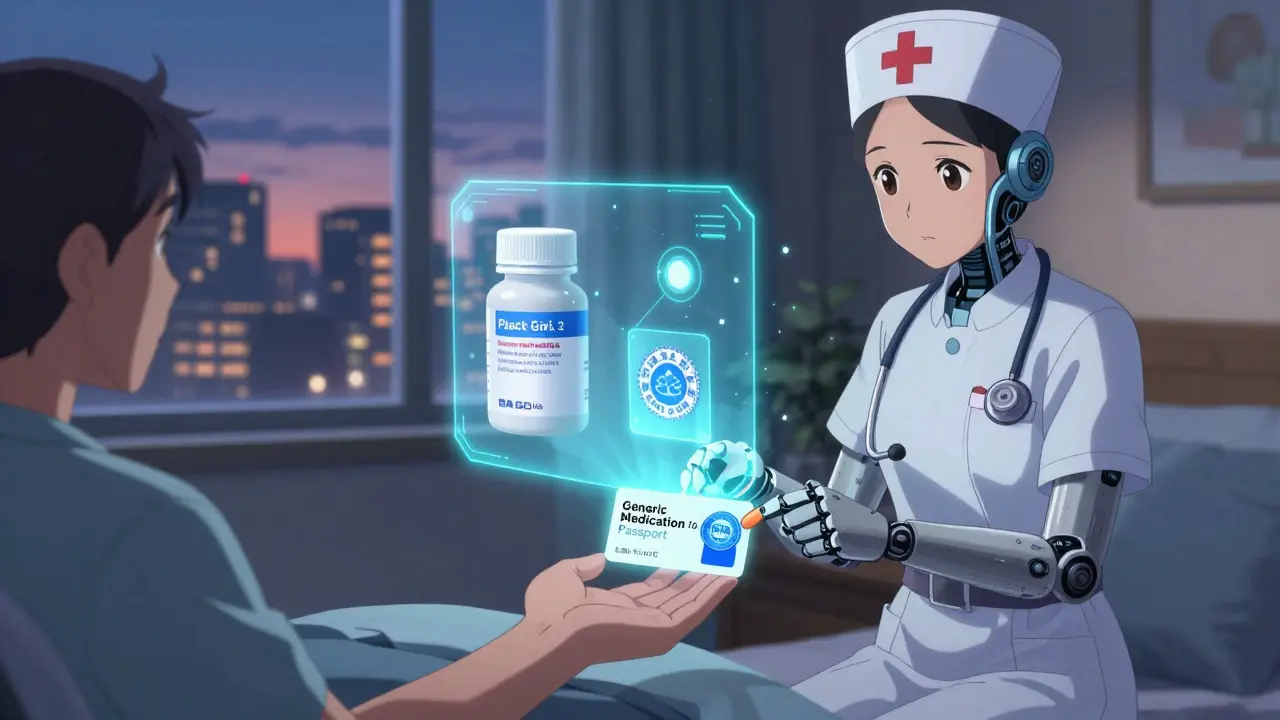
Some hospitals now use a "Generic Medication Passport"-a small card patients carry that lists every generic they’ve been switched to, with a photo of the pill. It’s like a medication ID card. Patients love it.
Time Is the Enemy
In a busy ER, nurses might have 90 seconds to explain a new generic. In a quiet clinic, they might have five. But even in rushed settings, the counseling still happens.
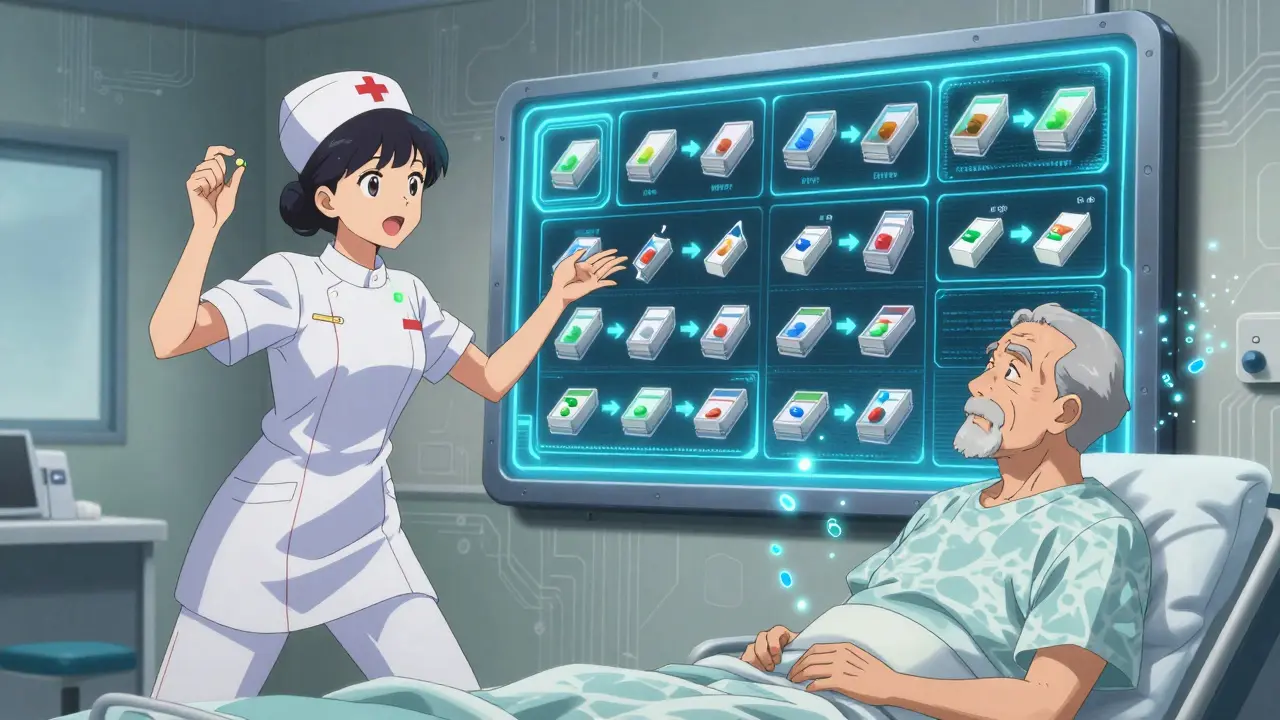
One study found that in high-census units, nurses cut their counseling time by 60%, but they didn’t cut the quality. They used visual aids-printed images of pill changes. They had one-line scripts ready: "This is the same medicine. Just looks different."
Still, time is a real barrier. A 2022 survey found 67% of nurses say they don’t have enough time to counsel properly. That’s why hospitals are rolling out AI tools. By 2024, 45% of health systems had integrated real-time FDA data into their EHRs. When a nurse clicks on a generic, the system auto-populates: "Therapeutic equivalence: AB-rated. Same as brand. FDA-approved."
Training Gaps and Solutions
Here’s the hard truth: 41% of new nurses say they weren’t trained enough on generic counseling. That’s a problem. A patient’s life can hinge on this conversation.
Most hospitals now require 8-10 hours of specialized training before nurses can administer medications. It’s not just about pharmacology. It’s about communication. They learn how to respond to:
- "I’ve been on this for ten years-why are you changing it?"
- "My cousin took a generic and got sick."
- "I don’t trust these cheaper pills."
Standardized scripts, approved by pharmacy and therapeutics committees, help. So do visual aids. One hospital created a flipbook showing 20 common generic switches-with photos of the brand and generic side by side. Nurses carry it in their pockets.
Why Nurses Are the Best Fit
Pharmacists counsel at the pharmacy counter. Nurses counsel at the bedside. That difference matters.
A 2022 study in the Journal of Advanced Nursing found that while pharmacists had slightly higher comprehension rates (93% vs. 89%), nurses were better at addressing immediate concerns. Why? Because nurses are there when the patient wakes up. When they’re scared. When they’re confused about five different pills on their tray.
Patients who see the same nurse every day? They’re 44% less likely to worry about generics. That’s the power of trust. Of continuity. Of a face they know.
Nurses don’t just give pills. They build relationships. And in those relationships, the fear of generics fades-not because the patient understands bioequivalence, but because they trust the person holding the bottle.
What’s Next
The future of nursing counseling is clear: more tech, more standards, more focus.
By 2026, the Nursing Generic Medication Education Collaborative plans to standardize training across 500 hospitals. The CMS is pushing a new rule that will require documentation of generic counseling for all Medicare patients-60 million people. And with biosimilars (complex biologic generics) expected to grow 300% by 2028, nurses will need to learn even more.
But the core won’t change. It never does. It’s still the same: a nurse, a patient, a pill, and a quiet conversation that says: "You’re safe. This is the same medicine. I’ve seen it work. I’ll be here when you need me."
Are generic medications really as effective as brand-name drugs?
Yes. The FDA requires generics to contain the same active ingredient, strength, dosage form, and route of administration as the brand-name drug. They must also meet strict bioequivalence standards-delivering the same amount of medicine into the bloodstream within 80-125% of the brand’s performance. This means they work the same way in the body. Over 90% of prescriptions filled in the U.S. are generics, and they’ve been used safely for decades.
Why do generic pills look different from brand-name pills?
The appearance-color, shape, size, and markings-is determined by the manufacturer, not the active ingredient. Brand-name companies often use unique designs to protect their trademarks. Generic manufacturers can’t copy those designs, so they use different ones. But the medicine inside is identical. Nurses often show patients side-by-side images from the FDA’s Orange Book to prove this.
Do nurses need special training to counsel about generics?
Yes. While basic pharmacology is part of nursing education, specialized training on generic counseling-especially around bioequivalence, appearance changes, and patient concerns-is now required in most hospitals. The American Nurses Association recommends 8-10 hours of focused training, including how to use the FDA’s resources and how to apply the teach-back method. Many nurses receive this during orientation or annual competency reviews.
What should a nurse do if a patient refuses a generic medication?
The nurse should not force the issue. Instead, they document the refusal, notify the prescriber and pharmacist, and explore the patient’s concerns. Sometimes, switching back to the brand is medically acceptable-especially for narrow therapeutic index drugs. Other times, the patient just needs more time and clearer information. Nurses are trained to listen first, explain second, and never shame a patient for being cautious.
Can generic medications cause different side effects?
The active ingredient is the same, so the expected side effects are identical. However, inactive ingredients (like fillers, dyes, or preservatives) can vary between brands and generics. In rare cases, these can cause allergic reactions or stomach upset. Nurses are trained to ask: "Have you noticed any new symptoms since the switch?" and to report any unusual reactions immediately.
How do nurses verify a patient understands generic counseling?
They use the teach-back method. Instead of asking, "Do you understand?" they ask the patient to explain it back in their own words. For example: "Can you tell me why this pill looks different but still works the same?" If the patient can describe the active ingredient, the FDA standards, and the reason for the change, the nurse knows the message landed. This method is required in 92% of Magnet hospitals.
Are there any drugs where generics aren’t recommended?
The FDA considers all AB-rated generics safe and effective. However, for drugs with a narrow therapeutic index-like warfarin, levothyroxine, or phenytoin-some clinicians prefer to avoid switching manufacturers unless necessary. Nurses are trained to recognize these cases and to communicate with pharmacists and prescribers before any change. The goal is stability: if a patient is doing well on a specific generic, they often stay on it.
What role do electronic health records play in generic counseling?
EHRs like Epic and Cerner now include built-in prompts for nurses during medication administration. When a generic is dispensed, the system auto-populates key counseling points, links to FDA data, and requires documentation of patient understanding. In 67% of healthcare systems, these fields are mandatory. This ensures consistency and protects both patient safety and legal compliance.
Generics are not second-rate. They’re the backbone of affordable care. And nurses-armed with evidence, empathy, and a few well-chosen words-are the ones making sure patients don’t just take them… but trust them.

So many people don’t realize generics are just as safe-it’s all about the active ingredient. I had a friend who refused her thyroid med because it looked different, and she ended up in the ER. Nurses are the real MVPs here. They don’t just hand out pills-they hand out peace of mind. 🙌
Let’s be real-this whole system works because nurses show up. No one else has the time, the patience, or the bedside presence to explain why a white pill isn’t ‘inferior.’ I’ve seen it. A nurse in my mom’s hospital pulled up the FDA database on her tablet and said, ‘Look. Same molecule. Same dose. Same results.’ That’s all it took. Simple. Human. Effective.
It’s fascinating how much trust is built through consistency. In Canada, we’ve been using generics for decades, yet the stigma persists-even among educated patients. The teach-back method is brilliant. It transforms a transaction into a dialogue. And the Generic Medication Passport? Brilliant innovation. I wish every hospital adopted it. It’s not just clinical-it’s dignified.
67% of nurses say they don’t have enough time? That’s a systemic failure. We’re asking frontline workers to do the job of three people and then blaming them for not perfecting it. The real solution isn’t more training-it’s more staff. Less bureaucracy. More time. The tech is cool, sure-but you can’t AI your way out of burnout.
OMG YES. I had a nurse literally hold up two pills side by side like a magic trick and say, ‘See? Same stuff. Just different packaging.’ I cried. Like, actually cried. 😭 Also, the FDA Orange Book? I Googled it. It’s real. And now I’m obsessed. #GenericPillTruth
Every time I see a nurse calmly explain a generic switch, I think-this is healthcare at its best. No jargon. No rush. Just presence. I’ve worked in hospitals for 12 years, and the nurses who do this right? They’re the ones patients remember. Not the doctors. Not the techs. The nurse who sat down, looked them in the eye, and said, ‘I’ve seen this work a hundred times.’ That’s healing.
good point about the teach back method. i saw a nurse do this with an elderly guy on warfarin and he kept saying 'but this looks wrong' and she just smiled and asked him 'so what does your blood do when you take it?' he said 'it thins' and she said 'same with this one' and he just nodded. no drama. just clarity. also typo? i think it's 'aspirin' not 'acetaminophen' in the example lol
Generics aren’t cheap-they’re smart. And nurses are the bridge between science and fear. I’ve been on generics for years. Never had an issue. But I get why people panic. Seeing a different pill is like finding out your favorite coffee cup got replaced. You don’t know if the brew’s still good. The visual proof? Game changer. The passport idea? Genius.
92% of Magnet hospitals require teach-back? That’s still not enough. If you’re not mandating 100% documentation with audio verification, you’re leaving patients vulnerable. Also, the FDA’s Orange Book isn’t user-friendly. Nurses shouldn’t be doing detective work. This system is patchwork. And it’s dangerous.
Let’s be honest-some generics DO behave differently. I’ve had patients report side effects after switching. Not because of the active ingredient. But because of fillers. And yeah, the FDA says ‘bioequivalent’-but bioequivalent doesn’t mean identical. Some people are sensitive. And no one talks about that. So don’t pretend this is black and white.
They’re lying to us. You think the FDA really checks every batch? Tell me why the same generic from two different factories gives me different headaches. I’ve been on levothyroxine for 15 years. I’ve switched three times. Each time, my TSH went haywire. Nurses don’t know what’s happening. They’re just reading scripts. And now we’re told to ‘trust the system.’ What system? The one that lets a pill change color and says ‘same medicine’? I don’t buy it.
Why do we even need generics? Brand name drugs are made by American companies. Generics? Mostly made overseas. I don’t trust Chinese or Indian factories. My mom’s heart med switched and she got dizzy. Coincidence? I don’t think so. Nurses should be telling patients: stick with the brand. It’s worth the extra cost.
Teach-back. Not ‘do you understand?’ But ‘explain it to me.’ That’s clinical excellence. Period.
I work in a clinic. We use the flipbook. Patients love it. One guy said, ‘I didn’t know pills had ID cards.’ I showed him his own meds side by side. He laughed. Said, ‘So this white thing is just my blue thing in pajamas?’ I told him yeah. He took it. No problem. Simple. Human. Real.
In India, generics are the only option. We don’t have brand-name drugs for most conditions. So we’ve been doing this for decades. No one panics. Why? Because they’ve seen it work. The fear isn’t about the pill. It’s about the system that makes people feel disposable. Nurses here don’t have time for teach-back. They have 100 patients a day. This article is beautiful. But it’s a luxury. Not a reality.