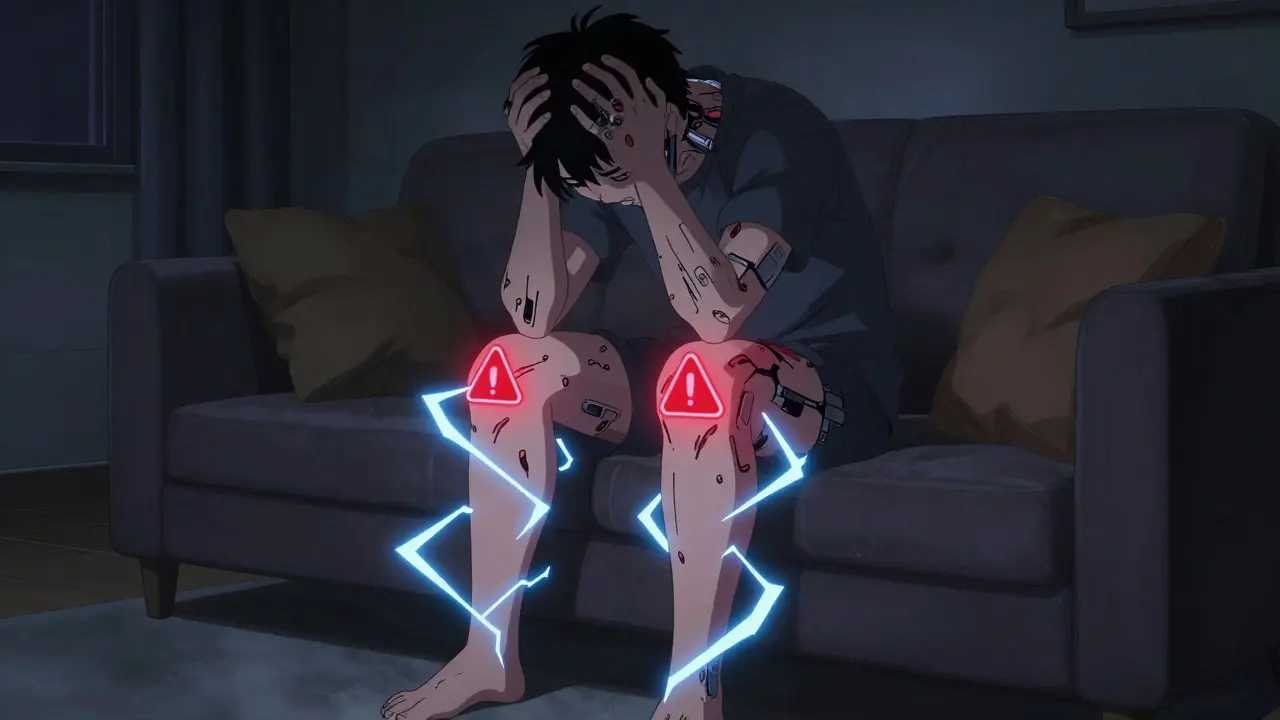
Imagine sitting on the couch after dinner, trying to relax, but your legs feel like they are crawling, tingling, or burning. You have to get up and walk around just to make it stop. Then, you try to sleep, but the sensations return, stronger than before. This is not just a bad night's sleep; for millions of people, this is their reality every single night. This condition is known as Restless Legs Syndrome, also referred to as Willis-Ekbom disease. It is a neurological sensorimotor disorder that forces you to move your legs due to uncomfortable sensations.
About 10 percent of adults in the United States live with RLS. While it might sound like a minor annoyance, the impact is severe. It disrupts sleep architecture, leaving you exhausted, irritable, and struggling to focus during the day. The good news? We understand the biology behind it better than ever. Specifically, we know that dopamine dysfunction plays a central role in causing these symptoms. This knowledge has led to effective treatments, particularly dopaminergic therapy, which uses medications to boost dopamine levels in the brain. But how does this work, and what should you watch out for?
Understanding the Root Cause: Why Your Legs Won't Rest
To treat RLS effectively, you first need to understand why it happens. For centuries, doctors were puzzled by this condition. Sir Thomas Willis first described it in 1672, but it wasn't until Swedish neurologist Karl-Axel Ekbom characterized it in 1945 that we began to see it as a distinct medical issue. Today, we know that RLS is rooted in the central nervous system.
The key player here is dopamine, a neurotransmitter that helps control movement and pleasure. In people with RLS, the brain’s dopamine system doesn’t function correctly, specifically in the basal ganglia. Brain imaging studies using PET scans show that RLS patients have 20-30% less dopamine transporter density in the striatum compared to healthy individuals. Additionally, there is often an iron deficiency in the substantia nigra region of the brain. Iron is necessary for dopamine production, so low iron levels can worsen the problem.
This biological mismatch creates a specific pattern. Symptoms typically start or get worse when you are resting, especially in the evening or at night. They improve temporarily when you move. If you don’t move, the urge becomes irresistible. The International Restless Legs Syndrome Study Group (IRLSSG) established five diagnostic criteria in 2014 that doctors still use today:
- An urge to move the legs, usually accompanied by uncomfortable sensations.
- Symptoms begin or worsen during periods of rest or inactivity.
- Movement provides partial or complete relief from the discomfort.
- Symptoms are worse in the evening or at night than during the day.
- The symptoms are not solely explained by another medical condition (like arthritis or varicose veins).
If you meet all five of these criteria, you likely have RLS. Recognizing this pattern is the first step toward getting help.
The Toll on Sleep: More Than Just Tossing and Turning
You might think RLS is just about uncomfortable legs, but its biggest enemy is your sleep. Polysomnographic studies from the American Academy of Sleep Medicine reveal that RLS causes significant sleep disruption. People with RLS experience 30-50% reductions in total sleep time. They spend 25-40% more time in lighter sleep stages (N1 and N2), which means they aren’t getting the deep, restorative rest their bodies need.
Consider the numbers. A healthy person might fall asleep in 15-20 minutes. An RLS patient averages 45-60 minutes of lying awake, fighting the urge to move. During the night, healthy sleepers wake up 2-3 times. RLS patients wake up 6-10 times. This leads to reduced sleep efficiency-only 70-80% of time in bed is spent sleeping, compared to 85-90% for unaffected individuals.
Worse still, about 80-90% of RLS patients also suffer from Periodic Limb Movement Disorder (PLMD). This means their legs jerk or twitch repeatedly while they sleep, every 20-40 seconds. These movements can happen 15-100 times per hour. Even if you don’t fully wake up, these micro-arousals fragment your sleep cycle.
The daytime consequences are real. Studies show RLS patients score higher on the Epworth Sleepiness Scale, indicating excessive daytime sleepiness. Cognitive function suffers, with 20-30% reductions in attention and working memory tasks. There is even a higher risk of motor vehicle accidents, with an odds ratio of 2.3 compared to the general population. Getting your sleep back isn’t just about comfort; it’s about safety and mental health.

Dopaminergic Therapy: How It Works and What to Expect
Because dopamine dysfunction is at the heart of RLS, treating it involves boosting dopamine activity. This is where dopaminergic therapy comes in. These medications, known as dopamine agonists, mimic the effects of dopamine in the brain. They are considered first-line pharmacological treatment for moderate to severe RLS.
There are three FDA-approved dopamine agonists for RLS:
- Ropinirole (Requip): Approved in 2005. Starting dose is 0.25 mg, taken 1-3 hours before bedtime. Maximum recommended dose is 4 mg daily.
- Pramipexole (Mirapex): Approved in 2006. Starting dose is 0.125 mg. Maximum recommended dose is 0.5 mg daily.
- Rotigotine (Neupro): Approved in 2012. This is a transdermal patch worn on the skin, delivering medication continuously over 24 hours. Doses range from 1-3 mg.
These drugs target D3 receptors in the brain. Clinical trials show they can reduce symptom severity by 40-50%. For example, a 12-week trial involving 278 patients found that ropinirole reduced symptoms by 47%, compared to only 19% for placebo. Many patients report immediate relief. One user on Drugs.com described feeling "immediate relief after years of suffering" within days of starting ropinirole. Another said the rotigotine patch gave them the "ability to finally sleep through the night."
However, these medications are not without risks. The most significant concern is augmentation. Augmentation occurs when the medication stops working as well, or makes the symptoms worse. Symptoms may start earlier in the day, spread to other body parts like the arms, or become more intense. Long-term studies show augmentation rates between 20-70% after one year. Rotigotine has the lowest rate at 26%, while pramipexole is higher at 66% after three years.
Another risk is impulse control disorders. About 6-17% of patients develop compulsive behaviors, such as gambling, shopping, or eating disorders. Gambling disorder is the most common, affecting 3.5% of users. This is why FDA-mandated black box warnings exist on all dopamine agonists since 2016.
Alternatives and Comparisons: Is Dopamine Agonist Right for You?
While dopamine agonists work fast, they aren’t the only option. Recent guidelines suggest considering other treatments, especially for chronic daily symptoms, to avoid augmentation.
| Treatment Type | Examples | Time to Effect | Augmentation Risk | Key Considerations |
|---|---|---|---|---|
| Dopamine Agonists | Ropinirole, Pramipexole, Rotigotine | 1-2 hours | High (20-70%) | Fast relief; risk of impulse control disorders |
| Alpha-2-Delta Ligands | Gabapentin Enacarbil, Pregabalin | 2-4 weeks | Low (5-10%) | Slower onset; better for long-term use |
| Iron Therapy | Ferric Carboxymaltose IV infusion | 3-6 months | N/A | Only for those with low ferritin (<75 ng/mL) |
Alpha-2-delta ligands, such as pregabalin, are now often recommended as first-line for chronic cases because they have a much lower risk of augmentation. A 2021 head-to-head trial in JAMA Neurology found that pregabalin provided comparable symptom relief to pramipexole but with only an 8% augmentation rate versus 32% at six months. However, they take longer to work and can cause dizziness or weight gain.
If your blood tests show low iron (serum ferritin below 75 ng/mL), iron therapy is crucial. Intravenous iron infusions can improve symptoms by 30-40% in deficient patients. Oral iron supplements are less effective for RLS because the gut doesn’t absorb enough to raise brain iron levels significantly.

Managing Your Treatment: Practical Steps for Success
If you start dopaminergic therapy, careful management is key. Don’t just take the pill and hope for the best. Follow these steps:
- Start Low: Begin with the lowest effective dose (e.g., ropinirole 0.25 mg). Do not exceed maximum recommended doses unless directed by a specialist.
- Timing Matters: Take oral medications 1-3 hours before your symptoms typically start. For many, this is early evening.
- Track Symptoms: Keep a weekly diary. Note when symptoms start, how severe they are (0-10 scale), and if they spread to other limbs. A 2022 study found that 83% of augmentation cases were caught within 3 months using this method.
- Watch for Red Flags: If you find yourself gambling, shopping compulsively, or if symptoms start mid-afternoon instead of at night, contact your doctor immediately.
- Combine with Lifestyle Changes: Medication works best with good sleep hygiene, regular moderate exercise, and avoiding caffeine, alcohol, and nicotine, which can trigger symptoms.
Real-world data shows that patient education improves outcomes by 40%. Understanding what augmentation looks like empowers you to catch it early. Most patients need 3-5 visits with their healthcare provider during the initial phase to fine-tune their dosage.
Future Directions: What’s Next for RLS Treatment?
Science is moving forward. The RLS treatment market is growing, projected to reach $1.8 billion by 2027. New formulations are emerging, like extended-release ropinirole, which aims to provide steadier drug levels and reduce augmentation risk. Phase III trials showed an 18% augmentation rate at 12 months for the new formulation, compared to 31% for immediate-release.
Researchers are also looking into genetic markers. Variants in genes like BTBD9 and MEIS1 may predict how well you respond to certain drugs. The RLS Pharmacogenetics Consortium reported 72% accuracy in predicting pramipexole response based on genetic profiles. This could lead to personalized medicine, where your DNA determines your treatment plan.
Non-dopaminergic therapies are also in development. Fipamezole, an alpha-2 adrenergic antagonist, showed a 35% lower augmentation rate than pramipexole in Phase II trials. Intranasal apomorphine is being studied for rapid symptom relief without systemic side effects.
While dopamine agonists remain essential for severe cases, the future lies in safer, more targeted treatments. Until then, working closely with your doctor, monitoring your symptoms, and staying informed are your best tools for reclaiming your sleep.
What is the difference between Restless Legs Syndrome and periodic limb movement disorder?
Restless Legs Syndrome (RLS) is a waking sensation where you feel an irresistible urge to move your legs due to discomfort. Periodic Limb Movement Disorder (PLMD) involves involuntary jerking or twitching of the legs during sleep. While they are different conditions, about 80-90% of people with RLS also have PLMD. RLS keeps you awake; PLMD fragments your sleep once you are asleep.
Can dopamine agonists cause addiction?
Dopamine agonists do not cause physical addiction in the traditional sense, but they can lead to impulse control disorders. This means you might develop compulsive behaviors like gambling, shopping, or binge eating. This affects 6-17% of patients. It is important to monitor your behavior closely when starting these medications.
What is augmentation in RLS treatment?
Augmentation is a paradoxical worsening of symptoms caused by long-term use of dopamine agonists. Symptoms may start earlier in the day, become more intense, or spread to other body parts like the arms. It occurs in 20-70% of patients after one year. Rotigotine patches have a lower risk of augmentation compared to oral medications like pramipexole.
Is iron deficiency linked to Restless Legs Syndrome?
Yes, iron deficiency is strongly linked to RLS. Iron is needed for dopamine production in the brain. If your serum ferritin level is below 75 ng/mL, iron therapy (often via IV infusion) can significantly improve symptoms. Oral iron supplements are generally less effective for raising brain iron levels.
Are alpha-2-delta ligands better than dopamine agonists?
For chronic, daily symptoms, alpha-2-delta ligands like pregabalin are often preferred because they have a much lower risk of augmentation (5-10% vs 20-70%). However, they take 2-4 weeks to reach full effect, whereas dopamine agonists work within hours. Doctors often choose based on whether you need immediate relief or long-term stability.
How quickly do dopamine agonists work for RLS?
Dopamine agonists typically provide symptom relief within 1-2 hours of taking the dose. This makes them effective for managing evening and nighttime symptoms. Patients often notice improvement in sleep quality within the first few days of treatment.
What lifestyle changes can help manage RLS symptoms?
Good sleep hygiene, regular moderate exercise, and avoiding triggers like caffeine, alcohol, and nicotine can help. Stress management techniques and maintaining a consistent sleep schedule are also beneficial. These non-pharmacological approaches support medical treatment and can reduce symptom severity.
Is there a cure for Restless Legs Syndrome?
Currently, there is no cure for RLS, but it can be effectively managed with medication and lifestyle changes. Research is ongoing into genetic markers and new non-dopaminergic therapies that may offer better long-term solutions with fewer side effects.
Who is most at risk for developing RLS?
RLS affects about 10% of adults in the US. Risk factors include family history, pregnancy, kidney failure, peripheral neuropathy, and iron deficiency. Symptoms tend to worsen with age, and women are more likely to be affected than men.
How much does RLS treatment cost?
Annual direct medical costs average $2,800-$4,200 per patient in the US. Dopamine agonists cost $800-$1,200 annually, while alpha-2-delta ligands cost $1,500-$2,000. Costs vary based on insurance coverage and specific medication choices.
