
Every year, millions of people buy generic medications to save money-drugs that are supposed to work just like the brand-name versions but cost far less. But what if the pill you’re swallowing isn’t real? What if it has no active ingredient at all-or worse, something toxic inside? This isn’t science fiction. It’s happening right now, and it’s getting worse.
What Exactly Are Counterfeit Generics?
Counterfeit generics are fake versions of off-patent drugs. They look like the real thing-same color, same shape, same packaging. But inside? They’re dangerous. Some contain no active ingredient. Others have too little. Some are filled with chalk, rat poison, or industrial chemicals. These aren’t just poorly made-they’re deliberately designed to trick you. Unlike real generic drugs, which must pass strict tests to prove they work the same as the original, counterfeit generics skip every safety check. They don’t go through the FDA, EMA, or any legitimate regulator. They slip in through shady online pharmacies, unlicensed vendors, or even stolen shipments from legitimate distributors. The problem exploded after 2020. During the pandemic, demand for drugs like antivirals, antibiotics, and later, weight-loss medications like Ozempic and Mounjaro, skyrocketed. Criminal networks saw an opportunity. They started flooding the market with fakes. In 2024 alone, over 6,400 cases of counterfeit drugs were reported across 136 countries. In March 2025, Interpol shut down 13,000 illegal websites and seized over 50 million fake doses in one operation.Where Are You Most Likely to Get Fake Medications?
You might think you’re safe if you buy from a pharmacy. But that’s not always true. The biggest risk comes from online sellers who look real but aren’t. The WHO says half of all medicines sold by websites that hide their physical address are fake. And 89% of these illegal sites don’t even require a prescription. In the U.S., fake versions of Ozempic, Botox, erectile dysfunction pills, and dermal fillers are being shipped from Asia. In August 2025, an Iowa pharmacy was fined $25,000 for selling fake Ozempic. That’s not a small-town operation-it’s happening in legitimate-looking businesses. Even in countries with strong health systems, counterfeit drugs enter through bulk imports. Between September 2023 and January 2025, the FDA recorded 2,465 shipments of semaglutide and tirzepatide. Of those, 239 came from unregistered companies, and 195 were allowed in anyway-despite being illegal. In low- and middle-income countries, the problem is even worse. The WHO estimates that 1 in 10 medicines there are substandard or falsified. In parts of Africa, up to 70% of medicines may be fake. People there aren’t buying online-they’re buying from local shops, trusting what’s on the shelf.How Can You Spot a Fake Generic?
Counterfeiters are getting smarter. Some fakes have holograms, QR codes, and perfect packaging. But they still make mistakes. Here’s what to check:- Spelling and grammar: Look for typos on the label. "Ozempic" misspelled as "Ozempic"? That’s a red flag.
- Packaging quality: Real packaging is crisp. Counterfeits often have blurry text, uneven colors, or mismatched fonts.
- Lot numbers and NDC codes: Every legitimate drug has a National Drug Code. You can verify it on the FDA’s website or through the manufacturer’s app.
- Physical appearance: Does the pill look different? Too light? Too dark? Too big? Too small? Real generics have consistent sizing and color. Fakes don’t.
- Price: If it’s 50% cheaper than the legitimate generic, it’s probably fake. Real generics cost 80-85% less than brand names. Anything below that is suspicious.
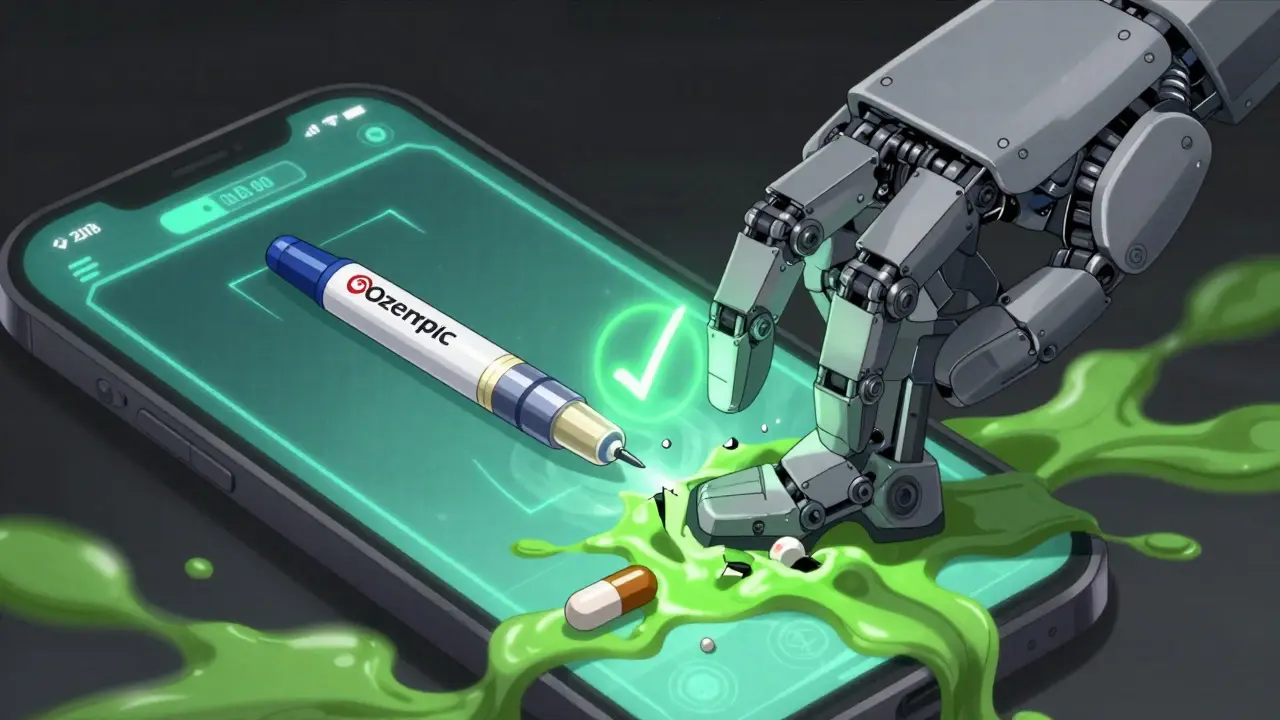
What Happens When You Take a Fake?
Taking a counterfeit drug isn’t just a waste of money. It can kill you. If you’re taking a fake antibiotic, you might not get better. The infection spreads. You end up in the hospital. Worse, you could develop antibiotic resistance-a global health crisis the Review on Antimicrobial Resistance says could cause 10 million deaths a year by 2050. Fake diabetes drugs like Ozempic don’t lower blood sugar. Patients report no improvement after months of use. One Reddit user, "MedSafety42," bought fake Ozempic from a "Canadian" pharmacy. After three months, their blood sugar didn’t drop. They didn’t lose weight. They just got sicker. In Nigeria, counterfeit malaria treatments caused liver damage. In South Africa, police seized R2.2 million worth of fake drugs in Gqeberha in August 2025. These weren’t just ineffective-they were poisoning people. Even cancer drugs aren’t safe. In May 2025, Colombia’s health agency found fake versions of Yervoy and Opdivo-life-saving cancer treatments-being sold as real. Patients got false hope. Their tumors kept growing.How to Buy Safe Generic Medications
You don’t have to risk your life to save money. Here’s how to stay safe:- Only buy from licensed pharmacies. Look for the VIPPS seal (Verified Internet Pharmacy Practice Sites). That’s the gold standard in the U.S.
- Avoid online pharmacies without a physical address. If you can’t find their street location, walk away.
- Use manufacturer verification tools. Novo Nordisk, Pfizer, and others have apps to check if your drug is real. Download them.
- Check the packaging. Compare it to images on the manufacturer’s official site. Look for tampering, missing seals, or odd smells.
- Ask your pharmacist. They know what’s in stock. If they seem unsure, get a second opinion.
- Report suspicious drugs. Use the FDA’s MedWatch program or call Pfizer’s Anti-Counterfeiting Hotline: 1-800-593-5685.
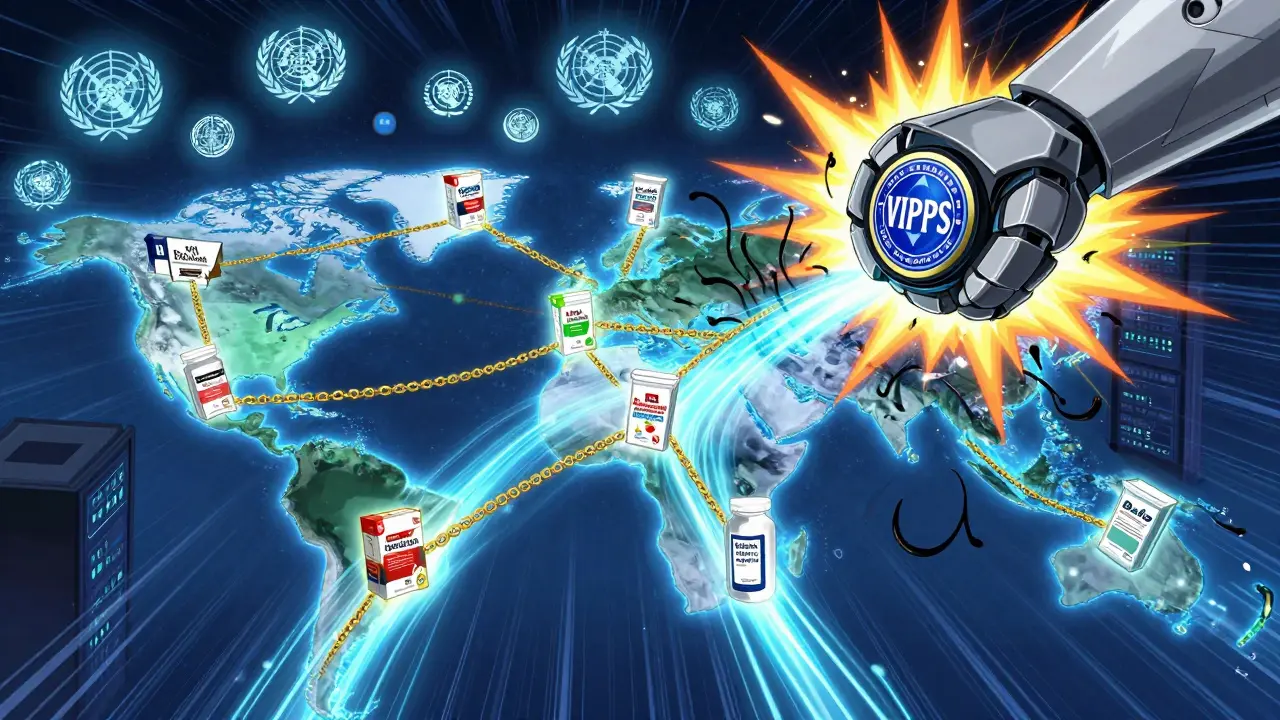
What’s Being Done to Stop This?
Governments and companies are fighting back. The EU requires safety features on all prescription packages since 2019. India now requires QR codes on every container of active ingredients. Blockchain tracking systems have reduced counterfeiting by 22% in pilot programs across 15 countries. Pfizer has trained authorities in 164 countries on how to spot fakes. They’ve stopped an estimated 302 million counterfeit doses from reaching patients since 2004. But the criminals are adapting. They’re using AI to generate fake packaging that looks perfect. They’re targeting telemedicine platforms, where prescriptions are issued quickly and without physical exams. In November 2025, the FDA released new guidance requiring stricter checks for high-risk generics like semaglutide. Thirty-eight state attorneys general pushed for this action after seeing the numbers climb. Still, only 32% of pharmacies in low-income countries have access to verification tools. Without more funding and global cooperation, the problem will keep growing.What You Can Do Right Now
Don’t wait for a government agency to fix this. Your life depends on your actions. If you’re taking a generic drug-especially for diabetes, heart disease, mental health, or weight loss-verify it. Use the manufacturer’s app. Check the packaging. Call your pharmacist. If something feels off, stop taking it. Talk to your doctor. Ask: "Is this generic approved? Where did it come from?" If they can’t answer, get a second opinion. Spread the word. Share this information with family, friends, and older relatives who might be buying drugs online to save money. They’re the most vulnerable. And if you find a fake? Report it. The system only works if people speak up.Final Thought: Your Health Isn’t a Bargain
Saving $20 on a bottle of pills isn’t worth risking your life. Real generics are safe. They’re tested. They work. Counterfeits aren’t just illegal-they’re deadly. You don’t need to pay full price for brand-name drugs. But you do need to make sure what you’re taking is real. The tools are there. The knowledge is out there. Now it’s up to you to use them.How can I tell if my generic medication is fake?
Check for spelling errors on the packaging, compare the pill’s color and size to images on the manufacturer’s website, verify the National Drug Code (NDC) online, and use the manufacturer’s authentication app if available. If the price seems too good to be true-like 50% cheaper than a legitimate generic-it probably is.
Can I trust online pharmacies that offer cheap generics?
Only trust pharmacies with the VIPPS seal from the National Association of Boards of Pharmacy. Avoid any site that doesn’t list a physical address, doesn’t require a prescription, or offers drugs at prices far below market value. Half of all online pharmacies hiding their location sell fake medications.
What should I do if I think I’ve taken a fake drug?
Stop taking it immediately. Contact your doctor or pharmacist. Report it to the FDA through MedWatch or call Pfizer’s Anti-Counterfeiting Hotline at 1-800-593-5685. Keep the packaging and pills as evidence. If you experience unusual symptoms, seek medical help right away.
Are counterfeit drugs only a problem in developing countries?
No. While 1 in 10 medicines in low- and middle-income countries are fake, counterfeit drugs are entering high-income countries too. In 2025, U.S. Customs intercepted fake Ozempic, Botox, and erectile dysfunction pills from Asia. Even licensed U.S. pharmacies have been caught selling fakes.
Why are counterfeit generics so common now?
Demand for affordable medications has surged, especially for weight-loss drugs like Ozempic and diabetes treatments. Criminal networks use AI to create convincing packaging and exploit weak online regulation. The pandemic exposed gaps in global supply chains, and criminals have filled them with fake drugs that are easy to ship and hard to trace.
Can I verify my medication with my phone?
Yes. Many manufacturers, including Novo Nordisk for Ozempic, offer free apps that let you scan packaging or enter batch codes to verify authenticity. TrueMed’s app, for example, has over 1,200 reviews and a 4.7-star rating on Google Play, with users reporting success verifying erectile dysfunction pills and weight-loss drugs.

Stop panicking. Most generics are fine. The FDA catches the bad ones before they hit shelves. You’re more likely to get food poisoning from a salad than a fake pill.
The systemic failure here is regulatory arbitrage. Supply chain opacity + AI-generated packaging + telemedicine loophole = perfect storm for pharma fraud. We’re not talking about rogue pharmacies anymore-we’re talking about orchestrated transnational counterfeiting syndicates exploiting jurisdictional fragmentation.
Been there. Bought Ozempic off a site that looked legit-had the logo, the shipping label, everything. Took it for 3 weeks. No weight loss. No energy change. Just felt weird. Called my doc, he said check the NDC. Turned out the code didn’t exist. Turns out the bottle had a typo: "Ozempic" spelled with two p’s. Rookie mistake. Now I only buy from CVS or Walgreens. Don’t be like me.
You got this. Knowing the signs is half the battle. If you’re reading this, you’re already ahead of 90% of people. Keep checking packaging, use the apps, talk to your pharmacist. Your health isn’t something to gamble on. You’re worth the extra 10 minutes to verify.
It is imperative that the citizenry recognize the existential peril posed by the commodification of pharmaceutical integrity. The erosion of regulatory oversight constitutes not merely a public health crisis, but a metaphysical betrayal of the social contract. One must ask: when the very substance meant to sustain life becomes a vector of death, what remains of our civilization?
Yeah but like… in Canada we got the same problem. Saw a guy at the pharmacy last week buying fake Botox from a "Mexican" website. He thought it was cheaper. He ended up with a droopy eyebrow and a $2k repair bill. We’re all just one bad Google search away from disaster.
So I’ve been on generic metformin for years and never checked the packaging cause I trust my pharmacy but now I’m kinda scared I should’ve been looking closer. I mean I’ve never had side effects but what if it was fake all along and I just got lucky? I don’t even know how to check the NDC code. Someone please tell me how without making me feel dumb
Let’s be real-this isn’t about counterfeit meds. It’s about capitalism turning healthcare into a loot box. Pharma giants price-gouge the originals, then sit back while criminals flood the market with knockoffs. The system is rigged. You’re not a fool for wanting to save money-you’re a victim of a broken economy.
Use the Novo Nordisk app. It’s free. Takes 10 seconds. Do it.
Why are we even talking about this? The real problem is that Americans are too lazy to go to a real doctor. If you’re buying meds online without a script, you’re asking for trouble. This isn’t a counterfeit issue-it’s a personal responsibility issue. Stop blaming the system and start taking care of yourself.
Perhaps the counterfeit drug epidemic is merely a symptom of a deeper epistemological collapse-where trust in institutions has been replaced by algorithmic convenience, and the body becomes a site of unverified data. We no longer know what is real, not even in our veins. The pill is a metaphor: a tiny vessel of false hope in a world that no longer believes in truth.
I think we all just need to chill and remember that most people aren’t trying to kill you. The system’s flawed, sure-but the real enemy is fear. If you’re worried, talk to your pharmacist. They’re trained for this. Don’t let a scary headline make you paranoid. Just be smart. Check the code. Use the app. You’re fine.
My grandma takes her diabetes meds from a local shop that’s been there 30 years. She doesn’t know what NDC means. She trusts the lady who hands her the bottle. Should I tell her to stop? Or should we fix the system so people like her don’t have to choose between safety and survival?