PE Treatment Comparison Tool
Treatment Details
Side Effect Profile
Personalized Recommendation
Based on your selected treatment and priority, we'll provide a tailored recommendation here.
Comparison Table
| Treatment | Mechanism | Frequency | Time to Effect | Prescription? | Side Effect Severity |
|---|
When it comes to treating premature ejaculation, Duratia is a brand‑name tablet that contains dapoxetine, a short‑acting selective serotonin reuptake inhibitor (SSRI). It was approved in several European markets in 2013 and is marketed specifically for on‑demand use before sexual activity.
Understanding whether Duratia is the right fit means looking at how it stacks up against the other options men typically consider. Below you’ll find a side‑by‑side review that covers the science, the practicalities, and the real‑world trade‑offs of each alternative.
How Duratia Works
Dapoxetine is the only SSRI designed for rapid absorption and elimination, making it suitable for use a few hours before intercourse. Once taken, it blocks the reuptake of serotonin in the central nervous system, which in turn raises the threshold for ejaculation. Clinical trials report an average increase of 2‑3 minutes in intravaginal ejaculation latency time (IELT) when the drug is taken 1‑3 hours prior to sex.
The short half‑life (about 1.5hours) means the drug clears quickly, reducing the risk of lingering side effects that are common with daily SSRIs. Because you only need to take it when you anticipate sexual activity, the pill fits into a “use‑as‑needed” lifestyle rather than a strict daily regimen.
Dapoxetine does carry typical SSRI‑related adverse events-nausea, dizziness, and occasional headache-but they usually fade within the first few doses as the body adjusts.
Key Alternatives at a Glance
Below is a quick snapshot of the most frequently discussed PE solutions. Each entry includes the core mechanism, how often you’d need to take it, and whether you need a prescription.
| Product | Mechanism | Typical Dose / Frequency | Time to Effect | Prescription? | Common Side Effects |
|---|---|---|---|---|---|
| Duratia (Dapoxetine) | Short‑acting SSRI | 30mg 1-3hrs before sex | 30-60min | Yes | Nausea, dizziness, headache |
| Priligy (Dapoxetine) | Short‑acting SSRI (same molecule) | 30mg or 60mg 1-3hrs before sex | 30-60min | Yes | Similar to Durata - nausea, insomnia |
| Sertraline | Long‑acting SSRI (daily) | 50mg daily | Several weeks to build effect | Yes | Sexual dysfunction, insomnia, GI upset |
| Paroxetine | Long‑acting SSRI (daily) | 20mg daily | 2-4weeks | Yes | Drowsiness, weight gain, sexual side effects |
| Lidocaine spray | Topical anesthetic | Apply 5‑10min before sex | Immediate | No (over‑the‑counter in many regions) | Reduced sensation, possible allergic reaction |
| Desensitizing condoms | Benzocaine‑coated barrier | Use during intercourse | Immediate | No | Reduced pleasure, latex allergy |
| Behavioral therapy | Psychological conditioning (stop‑start, squeeze) | Practice 1-2times weekly | Weeks to months | No | Requires partner cooperation, learning curve |
| Clomipramine | Tricyclic antidepressant | 25mg daily | 2-4weeks | Yes | Dry mouth, constipation, sedation |
Side‑Effect Profile Comparison
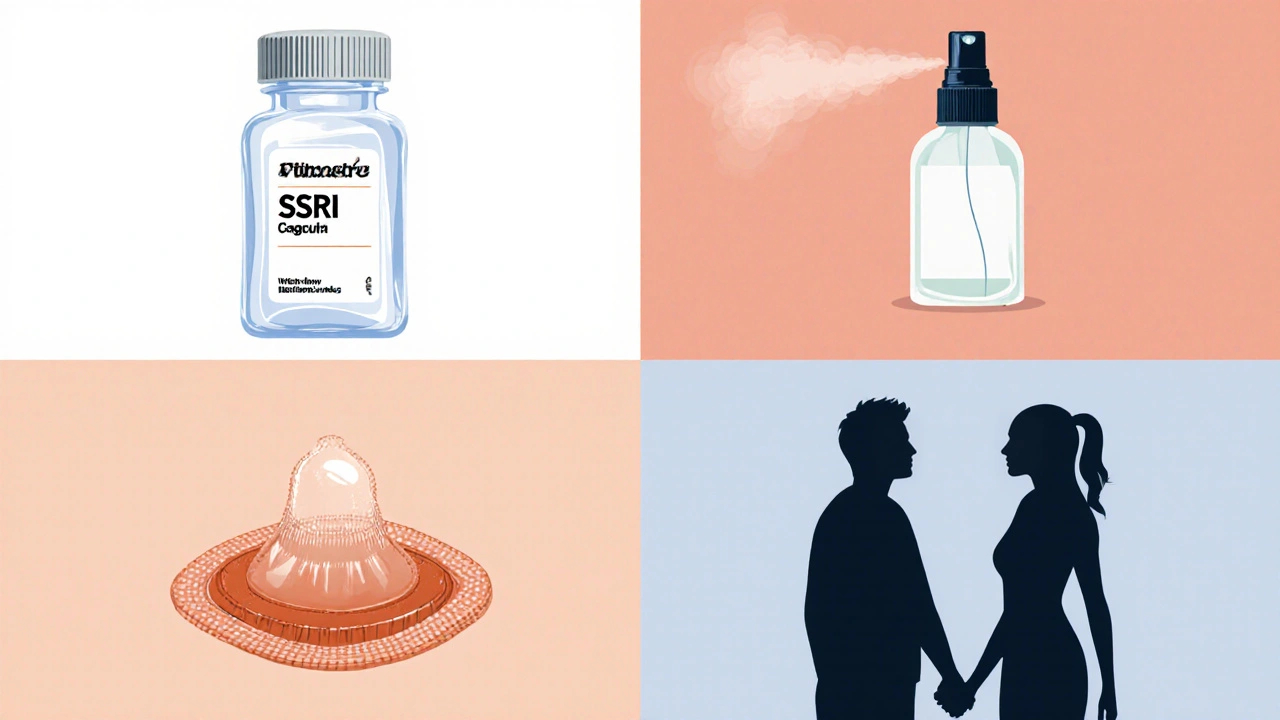
Understanding potential drawbacks helps you weigh convenience against comfort. Systemic drugs (Duratia, Priligy, Sertraline, Paroxetine, Clomipramine) share a class‑related side‑effect list: nausea, headache, and occasional dizziness. The key difference is duration. Durata’s short half‑life means most people feel the side effects for only a few hours, while daily SSRIs can cause persistent fatigue or sexual side effects that linger for weeks.
Topical options-Lidocaine spray and desensitizing condoms-avoid systemic exposure entirely. Their downside is localized numbness, which can dampen overall pleasure for both partners. Some users also report skin irritation if they’re sensitive to benzocaine or latex.
Behavioral therapy carries no pharmacologic risk, but it demands time, patience, and a cooperative partner. The “stop‑start” technique, for example, can feel awkward in the bedroom at first, and success rates improve only after several weeks of consistent practice.
Choosing the Right Approach
There isn’t a one‑size‑fits‑all answer. Here’s a quick decision tree you can apply to your own situation:
- Do you prefer a pill you only take when you’re planning sex? If yes, Duratia or Priligy are the most convenient.
- Are you comfortable with a prescription and willing to try a daily regimen? Daily SSRIs (Sertraline, Paroxetine) or Clomipramine might give you steadier results, especially if you also experience anxiety or mood concerns.
- Do you want to avoid any systemic medication? Try Lidocaine spray, desensitizing condoms, or a combination of both.
- Is partner involvement possible? Behavioral therapy works best when both partners can practice the techniques together.
In practice, many men start with an on‑demand option (Duratia) to see how they respond, then either continue or switch to a daily medication if they need longer‑lasting control. Others pair a low‑dose SSRI with a topical spray to balance systemic and local effects.
Practical Tips for Using Duratia Safely
- Take the tablet with a light meal or on an empty stomach; heavy, fatty foods can delay absorption.
- Allow at least 24hours between doses. Taking Duratia more frequently can increase the risk of serotonin syndrome.
- Avoid alcohol or recreational drugs on the same day, as they can amplify dizziness and lower blood pressure.
- Discuss any current antidepressants or migraine medications with your physician-combining multiple serotonergic agents is contraindicated.
- Monitor your IELT over a few weeks. If you see less than a 2‑minute improvement, talk to your doctor about dosage adjustment or alternative therapy.
When to Seek Professional Guidance
If you notice persistent headaches, chest pain, fainting, or a sudden change in mood, stop the medication and contact a healthcare professional immediately. Those symptoms could signal a rare but serious interaction.
Because premature ejaculation can be linked to underlying health issues-such as thyroid disorders, prostatitis, or psychological stress-consider a full medical check‑up if the problem has lasted more than six months despite trying several treatments.
Frequently Asked Questions
How quickly does Duratia start working?
Most men feel the effect within 30‑60minutes after swallowing the tablet. Peak plasma levels are reached around the one‑hour mark.
Can I combine Duratia with a topical anesthetic?
Yes, many clinicians suggest using a small amount of lidocaine spray in addition to Duratia for extra control, as long as you don’t exceed the recommended spray dosage.
Is Duratia safe for men with heart conditions?
Because dapoxetine can lower blood pressure, men with uncontrolled hypertension or serious cardiac disease should avoid it or use it only under close medical supervision.
What’s the biggest advantage of a daily SSRI over Duratia?
Daily SSRIs provide a steady increase in IELT without the need to plan doses around sexual activity, which some men find more convenient for spontaneous encounters.
Do behavioral techniques work without medication?
For many men, consistent practice of the stop‑start or squeeze method can add 1‑2 minutes to IELT, and combined with mindfulness they can achieve lasting improvement.

Duratia? More like a pricey placebo for the gullible.
I’ve tried a few of these options, and honestly the on‑demand vibe of Duratia feels pretty chill. 🌿 It’s great when you can plan ahead, and the side‑effects seem manageable for most folks.
Okay, so the article says Duratia is the magic bullet, but that’s kinda overhyped.
I’ve read some studies that show the gain in IELT is only a couple of minutes, which isn’t enough for most of us.
Plus, the side effects like nausea and dizziness can totally wreck the mood before you even get started.
If you’re lookin for something that actually changes the game, daily SSRIs or even behavioral tricks might do the job better.
And don’t forget, you gotta get a prescription, which ain’t exactly “on‑the‑fly” convenience.
So yeah, maybe give it a shot, but keep your expectations real.
Totally get where you’re coming from, the side‑effects can be a buzzkill.
Yo, love the breakdown! I’m curious how cultural attitudes affect willingness to try on‑demand meds like Duratia. In some places men still see PE as a taboo, so they might shy away from any pharmaceutical solution. Have you seen any data on acceptance rates across different countries? Would be cool to know.
Listen, stop whining about stigma – if you want results, you’ve got to grab the prescription and use it properly. No excuses, just follow the dosing schedule and you’ll see the benefits.
The comparative analysis of premature ejaculation treatments presented in the article offers a comprehensive overview of pharmacologic and non‑pharmacologic options.
It correctly identifies dapoxetine, marketed as Duratia, as a short‑acting selective serotonin reuptake inhibitor designed for on‑demand use.
The pharmacokinetic profile, characterized by a half‑life of approximately 1.5 hours, distinguishes it from traditional daily SSRIs.
Clinical trials have consistently demonstrated an average increase of 2 to 3 minutes in intravaginal ejaculation latency time when dosed 1–3 hours prior to intercourse.
Such an improvement, while modest, is statistically significant relative to placebo controls.
The article also appropriately highlights the side‑effect spectrum, noting nausea, dizziness, and headache as the most frequently reported adverse events.
Importantly, these effects tend to resolve within a few hours owing to the drug’s rapid clearance.
In contrast, daily SSRIs such as sertraline and paroxetine exhibit a delayed onset of efficacy, often requiring four to six weeks to achieve therapeutic benefit.
These agents, however, are associated with a broader range of systemic side effects, including sexual dysfunction, weight gain, and insomnia.
Topical anesthetics, exemplified by lidocaine spray, provide immediate desensitization without systemic exposure, yet they may diminish tactile pleasure for both partners.
Desensitizing condoms share this trade‑off, offering convenience at the expense of reduced sensation.
Behavioral therapies, while free of pharmacologic risk, demand sustained commitment and active partner involvement, factors that can limit real‑world adherence.
From a cost‑effectiveness perspective, over‑the‑counter options such as lidocaine spray and desensitizing condoms generally present lower financial barriers compared with prescription medications.
Nevertheless, the durability of therapeutic effect for these topical agents is typically limited to the duration of a single sexual encounter.
Consequently, clinicians often adopt a stepped‑care approach, initiating treatment with behavioral techniques, progressing to topical agents, and reserving short‑acting SSRIs for cases refractory to first‑line interventions.
Overall, the article provides a balanced synthesis, yet readers should remain cognizant of individual variability in response and the necessity of physician oversight when combining pharmacologic modalities.
Great summary man, really helpful
Honestly, the whole “Duratia is the be‑all and end‑all” narrative is nothing short of marketing hype masquerading as science. You’d think the author dug up some groundbreaking data, but it’s basically the same old 2‑minute IELT bump tossed around like a miracle cure. Meanwhile, the side‑effect disclaimer reads like a footnote that most readers will skim over while day‑dreaming about instant performance. Let’s be real: a half‑hour of nausea isn’t a small price to pay for a fleeting boost that disappears faster than your confidence after a bad night. And the comparison table? It’s a sloppy copy‑paste job that ignores the nuances of patient comorbidities and real‑world adherence issues. If you’re going to recommend a drug, at least acknowledge that many men quit after the first few doses because the “convenient” on‑demand schedule just adds another layer of anxiety. The article also pretends that topical anesthetics are a silver bullet, overlooking the fact that reduced sensation can turn intimacy into a mechanical exercise. Bottom line: read the fine print, talk to a qualified professional, and stop buying into the shiny hype.
Wow you really think that’s all there is? I’ve seen guys keep this stuff hidden from partners for years and it ruins trust.
When we examine premature ejaculation through a philosophical lens, we uncover a deeper discourse on control, expectation, and the societal constructs of masculinity. The pharmacologic interventions, such as Duratia, are merely external attempts to modulate an internal narrative that has been shaped by cultural pressures. By focusing solely on the physiological mechanisms, we risk neglecting the existential dimension of desire and satisfaction. It is worth contemplating whether true improvement lies in altering the bodily response or in reframing the personal meaning attached to sexual performance. In any case, an integrated approach that respects both the mind and the body may offer a more holistic path forward.
Oh great, another lecture on “deep meaning” while the guy in the bedroom sweats. Sure, let’s solve PE by pondering the meaning of life – brilliant strategy.
Hey all, just wanted to add a quick tip: if you opt for Duratia, take it with a light snack and avoid alcohol that night – it really cuts down the nausea. Also, keep a log of your IELT improvements; seeing the numbers can boost confidence and guide future dosing. For those on a budget, the generic version works just as well and saves you a few bucks. Stay safe and happy practicing!