
Switching from brand-name medications to generics is common for older adults trying to save money. But for seniors, this change isn’t just about cost-it’s about safety, how the body changes with age, and whether the medicine still works the same way. Many elderly patients worry that generics aren’t as good, and their concerns aren’t always irrational. While science says generics are equivalent, real-life experiences and physiological changes in aging bodies make this decision more complicated than it seems.
Why Seniors Are Switching to Generics
Medicare Part D beneficiaries filled over 527 million generic prescriptions in 2022-nearly 9 out of every 10 prescriptions. That’s up from just 72% in 2010. The reason? Cost. A typical senior on multiple medications can save around $327 a year per drug by switching to generics. For those living on fixed incomes, that adds up fast. The average Medicare beneficiary saves $602 annually just by using generics instead of brand-name versions. But savings come with a catch. Seniors often take five or more medications daily. Nearly half of all Medicare beneficiaries over 65 are on polypharmacy, meaning they’re juggling multiple pills. That increases the risk of side effects, interactions, and mistakes-especially if they don’t fully understand what they’re taking.What Seniors Believe About Generics
Despite the numbers, many older adults still don’t trust generics. A 2023 study of 315 Medicare patients found fewer than half believed generics were as safe or effective as brand-name drugs. That’s not just fear-it’s based on experience. Some patients report feeling worse after switching. One Reddit thread with 147 comments from seniors on r/geriatrics showed 73% said symptoms like fatigue, brain fog, or heart palpitations returned after switching from Synthroid (brand levothyroxine) to generic versions. A 2017 NIH study of low-income seniors found one in four thought generics were less effective, and one in five thought they were less safe. Even more troubling: 20 to 40% were unsure about whether generics matched brand drugs in strength, shape, color, or how they worked. These doubts aren’t just about misinformation. They’re tied to how people experience medicine.How Aging Changes the Way Drugs Work
The body doesn’t process medicine the same way after 65. Kidneys slow down. Liver function drops. Body fat increases while muscle mass declines. These changes affect how drugs are absorbed, distributed, and cleared from the system. For example, creatinine clearance-a measure of kidney function-often falls below 50 mL/min in people over 85. That means drugs like digoxin, lithium, or certain antibiotics build up in the body faster. Even tiny differences in how a generic is made can tip the balance. While the FDA requires generics to be within 80-125% of the brand’s absorption rate, that margin matters more for seniors with narrow therapeutic windows. Drugs like warfarin, used to prevent blood clots, are especially sensitive. A 2021 Canadian study of nearly 135,000 patients found switching warfarin formulations led to an 18.3% higher chance of an emergency room visit within 30 days. The American Geriatrics Society now advises against automatic substitution of brand warfarin for generics unless doctors closely monitor INR levels. Low body weight also plays a role. Over 32% of adults 85 and older have a low BMI. That means the same dose of a drug can hit harder. A pill designed for a 160-pound person might be too strong for someone who weighs 110.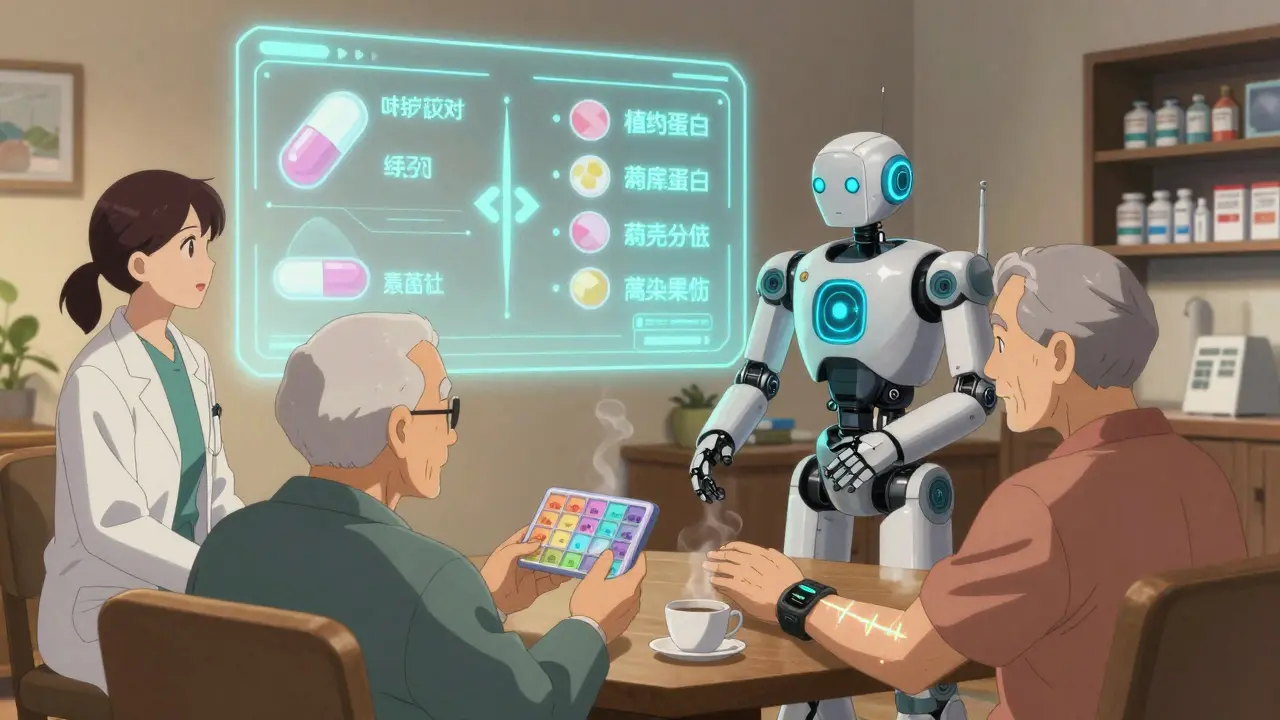
High-Risk Medications for Seniors
Not all generics are created equal when it comes to seniors. Certain drugs need extra caution:- Warfarin - Small changes in blood levels can cause dangerous bleeding or clots.
- Levothyroxine - Used for thyroid disorders. Even minor shifts can cause fatigue, weight gain, or heart rhythm issues.
- Phenytoin - An anti-seizure drug with a narrow safety range. Generic versions have been linked to breakthrough seizures in older patients.
- Lithium - Used for bipolar disorder. Kidney changes make toxicity more likely.
- Antibiotics like vancomycin - Dosing must be precise in seniors with reduced kidney function.
Perception vs. Reality: When Generics Work Just Fine
It’s not all risk. For many seniors, generics work perfectly. A 2023 AARP survey found 82% of Medicare users reported no difference when switching generics for high blood pressure, cholesterol, or diabetes medications. These are drugs with wide therapeutic windows-meaning small changes in absorption don’t matter much. The FDA has approved over 10,000 generic drugs. For most, the difference between brand and generic is no greater than what happens when you switch batches of the same brand. But seniors don’t see it that way. They notice the pill looks different-smaller, differently colored, or shaped. That alone can make them think it’s weaker. A 2022 Pharmacy Times analysis found that among seniors with low health literacy, half believed generics were less effective. Many couldn’t tell the difference between their brand and generic pills. That’s not ignorance-it’s a communication failure.How Doctors and Pharmacists Can Help
The key to safe switching isn’t just prescribing generics-it’s supporting patients through the transition. Multidisciplinary teams that include clinical pharmacists reduce inappropriate medications by 37% in elderly patients, according to a 2024 JAMA study. These teams review all meds, cut unnecessary ones, and explain what’s being changed. One proven method? The “teach-back” technique. Instead of saying, “This is the same as before,” ask the patient: “Can you tell me why you’re taking this pill and how it’s different from what you used to take?” Studies show this improves adherence by 42%. Visual aids help too. Showing side-by-side photos of brand and generic pills, pointing out the same active ingredient listed on the label, and writing out the name of the drug in big letters on a card makes a difference. Computerized systems that alert doctors when a senior is being switched to a high-risk generic also help. One study showed these tools improved safe prescribing by nearly 30%.
What Seniors Should Do Before Switching
If you’re an older adult being switched to a generic:- Ask your doctor or pharmacist: “Is this a high-risk drug?” If it’s warfarin, levothyroxine, or lithium, don’t accept automatic substitution without a plan.
- Check the label. The active ingredient must match. Generic pills have the same chemical name-just a different brand name on the bottle.
- Watch for new symptoms. Fatigue, dizziness, confusion, or heart fluttering after a switch? Call your provider. Don’t assume it’s “just aging.”
- Use a pill organizer. It helps you track whether you’re taking the right pill and when you switched.
- Keep a medication list. Include names, doses, and when you switched. Bring it to every appointment.
The Bigger Picture: Why This Matters
By 2030, over 93% of Medicare prescriptions will be generic, according to the Congressional Budget Office. That’s good for the system. But if seniors stop taking their meds because they think the generic doesn’t work, the savings vanish-and health risks rise. The National Institute on Aging is funding three new studies right now to compare brand and generic outcomes in seniors with multiple chronic conditions. Results won’t be out until 2027. Until then, we work with what we know: generics are usually safe, but not always risk-free for older adults. The goal isn’t to stop generics. It’s to switch smarter. For seniors, medication isn’t just chemistry-it’s routine, memory, fear, trust, and survival. Getting it right means listening, checking, and never assuming.Are generic drugs really the same as brand-name drugs for elderly patients?
Yes, by FDA standards, generics must contain the same active ingredient, strength, dosage form, and route of administration as the brand-name drug. They must also be bioequivalent, meaning they’re absorbed into the bloodstream at a rate and amount that falls within 80-125% of the brand. For most medications-like those for high blood pressure or cholesterol-this means they work the same. But for drugs with narrow therapeutic windows-like warfarin or levothyroxine-even small differences can matter more in older adults due to changes in kidney and liver function.
Why do some seniors feel worse after switching to generics?
Some seniors report symptoms returning or worsening after switching, especially with drugs like levothyroxine or warfarin. This isn’t always due to the drug being less effective-it can be caused by changes in pill appearance, timing, or even placebo effects. But in high-risk cases, small differences in how the body absorbs the drug can matter. Seniors with reduced kidney function, low body weight, or multiple medications are more vulnerable. If symptoms appear after a switch, it’s important to report them to a doctor right away.
Which medications should seniors avoid switching to generics?
The American Geriatrics Society recommends caution with drugs that have a narrow therapeutic index-where the difference between a helpful dose and a harmful one is small. These include warfarin, levothyroxine, phenytoin, lithium, and some anti-seizure and antibiotic drugs. Automatic substitution without close monitoring (like regular blood tests for INR or thyroid levels) is not advised. Always ask your doctor if your medication falls into this category.
Can switching to generics cause dangerous drug interactions?
Switching to generics doesn’t cause new interactions-but seniors are already at high risk. Over 45% of Medicare beneficiaries take five or more medications. Adding a new generic can change how other drugs are absorbed or broken down, especially if kidney or liver function is reduced. The biggest danger comes from over-the-counter drugs like ibuprofen, aspirin, and acetaminophen, which are often taken in combination. Overdosing on these is common and can lead to kidney damage, bleeding, or liver failure.
How can seniors make sure they’re taking their generics correctly?
Use a pill organizer labeled with the drug name and time of day. Keep a written list of all medications-including brand and generic names-and bring it to every doctor visit. Ask your pharmacist to explain any changes in pill size, color, or shape. Use the “teach-back” method: repeat back what you’ve been told in your own words. If you notice new symptoms after a switch, call your doctor before stopping the medication. Never assume a change in how you feel is just part of aging.

I switched my mom to generic levothyroxine last year. She started feeling tired all the time and her hands shook. We didn’t think much of it-thought it was just aging. Then we went back to the brand, and within two weeks, she was herself again. I wish someone had told us to watch for that.
It’s not about trusting generics. It’s about trusting your body to tell you when something’s off.
As a geriatric pharmacist in rural Ohio, I’ve seen this play out a hundred times. The FDA’s bioequivalence standards are a mathematical abstraction-real human bodies don’t live in lab conditions.
Seniors aren’t ‘irrational’ for doubting generics-they’re observant. A pill that looks like a tiny blue pebble instead of a white oval? That triggers anxiety. Anxiety alters cortisol. Cortisol alters drug metabolism.
It’s not just chemistry. It’s psychology, ritual, trust. We need to treat medication switches like therapy sessions, not inventory updates.
And yes-I’ve had patients cry because their ‘new’ pill didn’t feel like home. That’s not a bug. That’s a feature of human care.
This article is a joke. The FDA approves generics. Period. End of story. If you can’t tell the difference between a $2 pill and a $120 pill, maybe you shouldn’t be taking pills at all. Seniors are just lazy, scared of change, and addicted to brand-name marketing. Stop coddling them. The system is broke because people like you treat seniors like fragile porcelain dolls. Get over it. Generics work. Period. End. Stop the fear-mongering.
Bro. I work at a pharmacy. Every week, some grandpa comes in screaming because his new pill is green instead of blue. I show him the label: same active ingredient. Same dose. Same damn thing. He still says ‘it don’t feel right.’
So I give him a lollipop and tell him it’s magic. He leaves happy. The system works. Sometimes you gotta play the game.
The philosophical underpinning of this issue lies not in pharmacokinetics, but in epistemology: how do we know what we know about efficacy?
Scientific equivalence is a statistical consensus. But lived experience is a phenomenological truth. To dismiss the former as ‘irrational’ is to commit the same epistemic violence that once labeled women’s pain as hysteria.
Generics are not inherently unsafe-but the system that deploys them without contextual awareness is dangerously reductive. We have reduced human physiology to a line item on a balance sheet. That is not progress. That is commodification.
And when we do this to the elderly-who have already given so much-we are not saving money. We are stealing dignity.
lol why are we even talking about this? everyone knows generics are just as good. the only people who think otherwise are the ones who get their news from facebook and think the moon landing was fake. also why does every article about seniors have to sound like a ted talk? just say it plainly: if you’re on warfarin, don’t switch without blood tests. done.
My grandma takes her meds at 7am sharp. Every. Single. Day. She switched to generic lisinopril and didn’t say a word. But now she sits on the porch longer. Smiles more. Says she ‘feels lighter.’
Maybe the pill didn’t change. Maybe she just stopped worrying about it.
Let me tell you something from India-where we’ve been using generics for decades and still manage to keep our elders alive and mostly happy. Here’s the secret: it’s not about the pill. It’s about the person holding it.
When my uncle got his generic metformin, he didn’t care if it was blue or white. He cared that his daughter sat with him every morning and said, ‘Beta, take your medicine now.’ That’s the real treatment.
Doctors in the U.S. are so busy they don’t even look up from their screens. But in villages, we still teach. We still hold hands. We still say, ‘This is for your heart, not for the pharmacy’s profit.’
Generics are fine. But if you don’t teach, if you don’t listen, if you don’t care-you’re not saving money. You’re just making people feel alone with their pills.
I’m a nurse in a senior living community. We had a woman who refused to take her generic warfarin because the pill was round instead of oval. We spent three days showing her the label, the ingredient list, even calling the manufacturer. She still didn’t trust it.
So we got her the brand-name. Same dose. Same results. But she cried and said, ‘I feel like I’m not being heard.’
Turns out, it wasn’t the pill. It was the feeling that no one cared enough to ask.
My dad switched to generic and got dizzy. We called the doc. They said it was fine. He kept taking it. Three weeks later he fell. Broke his hip. Turned out the generic had a different filler that messed with his stomach acid. He’s fine now. But I’ll never trust a generic without asking ‘what’s in it?’ first.