
Statins & Grapefruit Interaction Checker
Is Your Statin Safe with Grapefruit?
Select your statin medication to see if grapefruit is safe to consume
Every year, millions of people take statins to lower their cholesterol and protect their heart. But if you love grapefruit - whether it’s the juice, the segments, or even the zest - you might be putting yourself at risk without even knowing it. This isn’t just a myth or an old wives’ tale. It’s a real, well-documented interaction that can turn a safe medication into a dangerous one.
What Happens When Grapefruit Meets Statins?
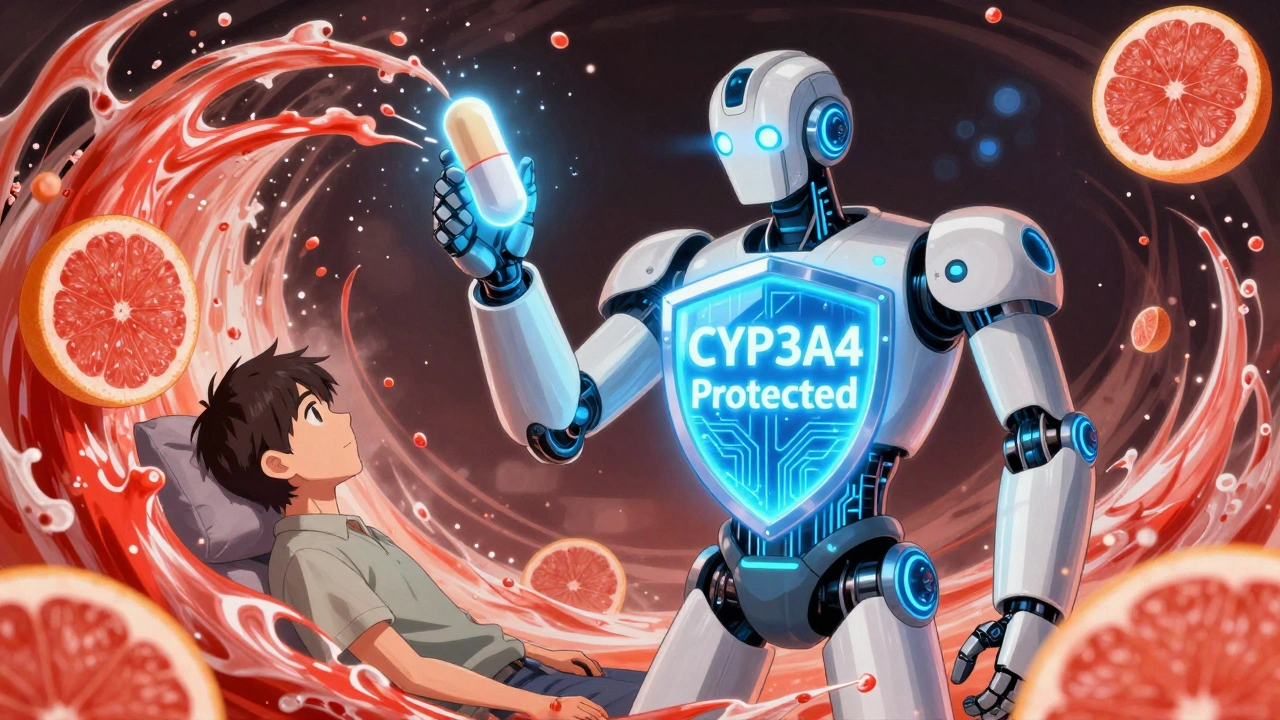
Statins like simvastatin, lovastatin, and atorvastatin work by blocking an enzyme your liver needs to make cholesterol. But here’s the catch: your body also uses a different enzyme, called CYP3A4, to break down these same statins so they don’t build up to toxic levels. This enzyme lives mostly in your small intestine and liver. It’s your body’s natural filter for many drugs.
Grapefruit contains chemicals called furanocoumarins. These aren’t sugar or acid - they’re powerful blockers. When you drink grapefruit juice or eat the fruit, these compounds shut down CYP3A4 in your gut. That means your body can’t break down the statin properly. Instead of being filtered out, the drug floods into your bloodstream. The result? Blood levels of the statin can jump by 3 to 5 times higher than normal.
It’s not just about how much you eat. One small glass (about 200 mL) of grapefruit juice can do this. And the effect doesn’t go away after a few hours. Studies show the enzyme stays blocked for up to 72 hours. So even if you take your statin at night and drink grapefruit juice in the morning, you’re still at risk.
Which Statins Are Most Affected?
Not all statins react the same way. It all depends on how your body processes them.
- High risk: Simvastatin, lovastatin, and atorvastatin. These are broken down almost entirely by CYP3A4. Simvastatin is the worst offender - research shows grapefruit juice can spike its levels by over 300%.
- Low or no risk: Pravastatin, rosuvastatin, fluvastatin, and pitavastatin. These use different enzymes or barely rely on CYP3A4 at all. You can usually enjoy grapefruit with these without worry.
That’s why your doctor might switch you from simvastatin to rosuvastatin if you love citrus. It’s not about being ‘weaker’ - it’s about matching the drug to your lifestyle.
What Are the Real Risks?
Most people on statins feel fine. Muscle aches? Maybe. But when grapefruit boosts the statin level, the risk of serious muscle damage goes up.
The most common problem is myalgia - muscle pain or weakness. It affects 5-10% of users normally. With grapefruit, that number climbs. But the real danger is rhabdomyolysis. This is when muscle tissue breaks down so badly that it releases a protein called myoglobin into your blood. Your kidneys can’t handle it. That leads to kidney failure, electrolyte imbalances, and in rare cases, death.
It’s rare - only about 1 in 200,000 statin users get rhabdomyolysis. But when grapefruit is involved, case reports show it can happen even at low doses. One documented case involved a 40-year-old woman taking 20 mg of simvastatin daily. She drank grapefruit juice every day for 10 days. Then she woke up with severe muscle pain and dark, tea-colored urine. She ended up in the hospital with kidney damage.
Symptoms to watch for:
- Unexplained muscle pain, tenderness, or weakness
- Dark or cola-colored urine
- Fatigue or nausea
If you feel this way, stop the grapefruit and call your doctor. Don’t wait.
What Do Experts Really Say?
The FDA updated its guidance in 2021. Here’s what they recommend:
- Simvastatin: Avoid grapefruit completely.
- Atorvastatin: Limit to no more than one small glass (200 mL) of juice per day.
- Other statins: No restrictions needed.
But here’s the twist: not all experts agree. Dr. Stanley Hazen from the Cleveland Clinic says the real danger comes from large amounts - not occasional use. He points out that millions of people take statins and eat grapefruit without issues - especially if they’re on pravastatin or rosuvastatin.
Still, the European Medicines Agency takes a harder line. They say: no grapefruit at all if you’re on simvastatin or lovastatin. Why? Because the consequences are too severe to risk.
And here’s something most people don’t know: it doesn’t matter if you drink juice, eat the fruit, or take grapefruit extract. All forms contain the same harmful compounds. Even grapefruit-flavored sodas or candies can be risky if they contain real grapefruit oil.
What Should You Do?
If you’re on a statin and you like grapefruit, here’s your simple action plan:
- Check your statin name. Look at your prescription bottle. Is it simvastatin, lovastatin, or atorvastatin? If yes, you need to be careful.
- Ask your pharmacist or doctor. Don’t assume. Not all providers bring this up. Bring it up yourself.
- If you’re on high-risk statins: Switch to a safer one. Pravastatin and rosuvastatin work just as well and don’t interact with grapefruit. Many patients feel better after the switch - not just because of the grapefruit, but because they’re no longer worried.
- If you’re on a low-risk statin: You can enjoy grapefruit in moderation - one glass a day is fine. But don’t go overboard.
- Don’t rely on timing. Taking your statin at night and grapefruit in the morning won’t help. The enzyme stays blocked for days.
A 2021 survey found only 38% of statin users knew about this interaction. That’s shocking. But it’s fixable. A simple conversation with your pharmacist can prevent hospitalization.

Is It Worth Giving Up Grapefruit?
Grapefruit is packed with vitamin C, antioxidants, and fiber. It’s healthy. But so are oranges, tangerines, and pomelos - none of which block CYP3A4. If you love citrus, switch to those. You won’t miss out.
And here’s the big picture: stopping your statin because you’re scared of grapefruit is far more dangerous than avoiding the fruit. Statins reduce heart attacks and strokes by 25-35% in people who need them. The risk of rhabdomyolysis from grapefruit? Less than 1 in 10,000, even with high-risk statins.
It’s not about fear. It’s about smart choices. You don’t have to give up grapefruit forever - you just need to know which statin you’re on, and whether it’s safe to keep eating it.
Final Takeaway
Statins save lives. Grapefruit is a healthy fruit. But together, they can create a hidden danger - especially with simvastatin and lovastatin. You don’t need to panic. You just need to know your medication, talk to your provider, and make a simple swap if needed. Your muscles - and your heart - will thank you.

So let me get this straight - if I’m on simvastatin, even one glass of grapefruit juice at breakfast can wreck my muscle tissue by noon? And it lasts THREE DAYS? That’s not a warning, that’s a landmine. I switched to rosuvastatin last year after my cousin ended up in the ER. No more grapefruit. No regrets. Oranges are fine. Life’s too short for surprise kidney failure.
Also - why do pharmacies still not print this on the bottle? My pharmacist didn’t mention it. I found out from a Reddit thread. That’s terrifying.
Actually… I think this is all overblown. I’ve been taking simvastatin for 8 years and drinking grapefruit juice every morning. No muscle pain. No dark urine. No hospital visits. Maybe it’s just genetics? Or maybe the FDA is just being overly cautious because someone sued them once? People panic over drug interactions like it’s witchcraft. I’ll keep my juice.
Also, I’m Indian. We’ve been eating grapefruit with every meal for centuries. No one’s dropping dead from statins here.
LMAO so now we gotta ban grapefruit because some lab rats in white coats say so? Next they’ll say coffee kills statins or something. I’m a proud American. I eat what I want. Grapefruit juice is my morning ritual. If I get rhabdo? Cool. At least I died tasting freedom. Also - rosuvastatin? That’s just a fancy name for expensive placebo. Stick with the cheap stuff. And stop listening to big pharma.
Also - I don’t spell right. Sue me.
USA FTW.
PS: I’m not even on statins. Just saying.
PPS: I hate Europeans. They ban everything.
Listen here, you westerners - you think you invented medicine? We’ve been using citrus with herbs for 5,000 years in Ayurveda! Grapefruit? It’s just a fruit! You people turn every food into a poison because you’re scared of your own shadows! My uncle took simvastatin for 12 years - drank grapefruit juice daily - lived to 89! He didn’t die from rhabdo - he died from eating too much butter chicken! So stop this fear-mongering! And yes, I’m a doctor. I know what I’m talking about. Also - CYP3A4? That’s a lab term. Real people eat food. Not molecules.
And if you’re scared - go to India. We don’t have this problem. Because we’re not weak.
Also - I use ALL the punctuation. Because I’m passionate. And you should be too.
This article is, frankly, irresponsible. You present a complex pharmacokinetic interaction as if it were a simple binary choice - ‘avoid grapefruit’ or ‘die’. But you omit the critical context: the absolute risk remains vanishingly small, even with high-risk statins. The FDA’s guidance is based on precautionary principle, not epidemiological evidence. The fact that only 38% of patients are aware of this interaction suggests a systemic failure in patient education - not a crisis. To suggest that switching statins is a ‘simple swap’ is misleading. Rosuvastatin is not universally superior - it’s more expensive, and for many, the benefit-risk profile is identical. This article weaponizes fear to drive behavioral change without acknowledging the autonomy of the patient. It is, in essence, medical paternalism dressed as public health advice.
And yes - I do believe in informed consent. Even if it means someone drinks grapefruit juice and lives.
gave up grapefruit after reading this. not because i’m scared. because i realized i don’t even like it that much. switched to oranges. now i feel like i’m living in a zen garden. also my muscles don’t ache. weird.
My heart is breaking. 🥺 I used to love grapefruit. Now I can’t even smell it without crying. My dad had a heart attack at 52. He was on simvastatin. He drank grapefruit juice every day. I found his empty bottle in the fridge after he passed. I didn’t know. No one told us. I’m so angry. Not at the doctor. Not at the fruit. At the silence. Why didn’t anyone say anything? I’m not even on statins. But I’ll never touch grapefruit again. Not because of science. Because of grief.
💔
PS: I still drink orange juice. It tastes like hope now.
Let me tell you something - this whole grapefruit thing? It’s a distraction. The real problem is that Big Pharma wants you to switch to pricier statins so they can make more money. Rosuvastatin costs 3x more than simvastatin. Coincidence? I think not. And let’s be real - how many people even drink grapefruit juice? It’s bitter. It’s for rich people who think they’re healthy. Meanwhile, your real risk is sitting on the couch eating chips and watching Netflix. That’s what’s killing you. Not fruit. Not enzymes. Laziness. And now you’re scared of a fruit because some guy in a lab coat said so? Pathetic.
I’m not switching statins. I’m switching lifestyles. And if I die? At least I died eating what I wanted.
Also - I don’t believe in ‘72-hour enzyme block’. That’s lab fiction. My body doesn’t work like a spreadsheet.
While the pharmacological mechanism described is accurate, the article’s conclusion is dangerously reductive. It implies that patient autonomy can be resolved through a binary substitution - ‘switch statin’ - without addressing the broader context of polypharmacy, socioeconomic access to alternatives, or cultural dietary practices. In India, where grapefruit is consumed seasonally and often in conjunction with traditional herbal preparations, the interaction may be modulated by co-ingested phytochemicals absent in Western diets. Furthermore, the article fails to acknowledge that the 2021 FDA guidance was issued without peer-reviewed meta-analysis on population-level risk. The assertion that ‘you just need to know your medication’ assumes universal healthcare literacy - a privilege not afforded to the majority of global statin users. This is not a simple fix. It is a systemic failure of pharmaceutical communication. And yet, the tone of the article remains patronizingly optimistic - as if a conversation with a pharmacist is a panacea. It is not. It is a Band-Aid on a hemorrhage.
For the record: I am a clinical pharmacologist. I have reviewed the CYP3A4 inhibition kinetics. The data is robust. But the narrative? It is incomplete. And incomplete narratives kill - not through grapefruit - but through misplaced trust.