
Every year, hundreds of thousands of people are harmed by medication mistakes-not because the drugs are dangerous, but because something went wrong in how they were given, taken, or tracked. And here’s the hard truth: medication safety doesn’t just depend on doctors and pharmacists. It depends on you.
Why Your Role Matters More Than You Think
You might think your job is just to take the pills as told. But research shows patients catch nearly half of all medication errors that clinicians miss. A 2018 study from the National Academy of Medicine found that patients detected 41% of errors that healthcare teams didn’t notice. That’s not luck. It’s because you’re the one who sees the pill every day, notices when it looks different, feels side effects first, and remembers every supplement you’re taking-even the ones you think don’t matter. The World Health Organization calls this Medication Without Harm. Their goal? Cut severe, avoidable harm by 50% by 2025. And the key to hitting that target? Patients who know what they’re taking and aren’t afraid to speak up.Seven Things You Can Do Right Now
You don’t need a medical degree to make a difference. These seven simple actions have been proven to cut your risk of harm:- Know your meds by name and why you take them. Don’t just say “the blue pill.” Know it’s metformin for diabetes, or lisinopril for blood pressure. If you can’t explain why you’re taking it, ask. Patients who know their medication purposes reduce error risk by 35%.
- Keep a live list of everything you take. That includes prescriptions, over-the-counter drugs, vitamins, herbs, and even patches or inhalers. Update it every time something changes. People who use a personal medication list have 42% fewer mistakes during hospital transfers.
- Check the pill before you swallow it. Does it look like the last one? Is the label right? A 2022 study found that simply verifying appearance catches 19% of dispensing errors. If it looks wrong, say so.
- Ask about changes. If your doctor suddenly switches your pill or adds a new one, ask: “Why this change? What should I expect?” Patients who question unexpected changes catch 15% of prescription errors before they happen.
- Tell your provider about everything-even “natural” stuff. Garlic supplements, St. John’s wort, or CBD oil can interact with blood thinners, antidepressants, or heart meds. Reporting all supplements reduces dangerous interactions by 22%.
- Learn your side effects. Know what’s normal (like mild nausea) and what’s dangerous (like swelling, chest pain, or confusion). Recognizing side effects early helps stop problems before they turn serious. In 63% of cases, catching side effects early prevents hospitalization.
- Join medication reconciliation. When you’re admitted to a hospital or discharged, ask for a full review of your meds. This process, where your list is compared to what’s ordered, cuts discrepancies by 50%. Don’t assume someone else is doing it-ask.
What If You Don’t Understand?
You’re not alone if prescriptions feel confusing. Nearly 90 million adults in the U.S. have trouble reading health materials. But confusion isn’t your fault-it’s a system problem. Ask for help. Say: “Can you explain this in simpler terms?” or “Can you show me how to take this?” The “teach-back” method works: your provider asks you to repeat the instructions back in your own words. Studies show this boosts correct understanding from 31% to 67%. Use the Universal Medication Schedule. It’s a simple system that groups doses into four daily times: morning, noon, evening, and bedtime. No more guessing “twice daily” or “every 8 hours.” If your prescription doesn’t use this format, ask for it.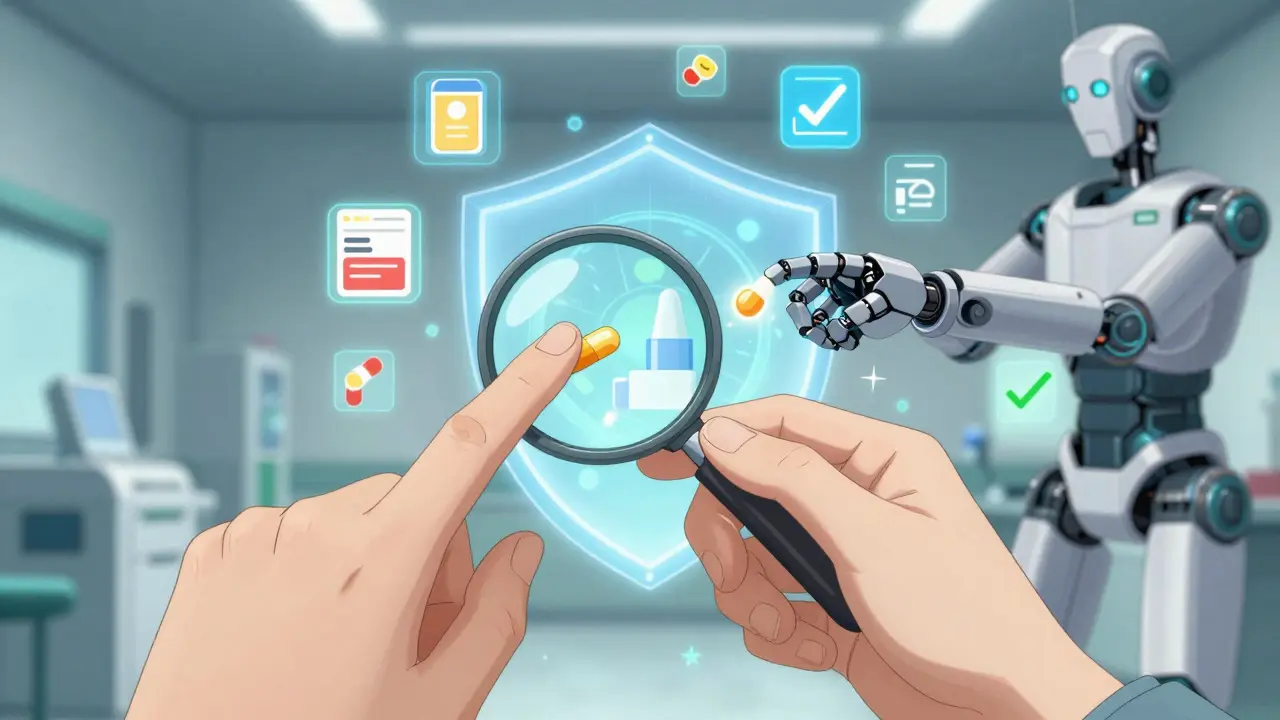
What About Digital Tools?
Apps like MyMedSchedule help people track doses, set reminders, and flag interactions. They’re rated 4.2 out of 5. But they’re not for everyone. Only 44% of people over 65 use digital tools regularly. If apps feel overwhelming, stick to paper. A printed list, kept in your wallet or purse, works just as well. The goal isn’t tech-it’s accuracy. If you do use an app, make sure it lets you add all your meds, including supplements. And always double-check what the app says against your actual prescriptions.When Speaking Up Feels Hard
Many people don’t ask questions because they fear being seen as difficult, annoying, or disrespectful. But here’s what doctors won’t always tell you: the best patients are the ones who ask. One Reddit user, u/MedSafetyMom, caught a 10-fold overdose in her child’s antibiotic because she noticed the dose didn’t match what the pharmacist said. Another, u/NurseJenNY, says 70% of her near-misses were caught because a patient said, “That doesn’t look right.” But not everyone is heard. Some patients report being dismissed. One person on r/PatientsLikeMe said they were called “difficult” after questioning a new medication-then had a serious allergic reaction days later. You have the right to be safe. If you’re ignored, ask to speak to a pharmacist, nurse, or patient advocate. Hospitals have them for exactly this reason.
Barriers Are Real-But Fixable
Not everyone can easily participate. Older adults, people with low literacy, or those with cognitive issues face bigger challenges. But solutions exist:- Ask for large-print labels.
- Request a caregiver be included in the conversation.
- Use color-coded pill boxes.
- Ask your pharmacy to call you when refills are ready.
It’s Not Just About You
Medication safety isn’t just a personal habit. It’s a team sport. Your doctor, pharmacist, and nurse need you to be part of the team. And when you are, outcomes improve dramatically. Diabetics who manage their meds actively have 39% fewer dangerous low-blood-sugar events. People on blood thinners who track their meds have fewer hospital stays. Even in nursing homes, patients who ask questions have fewer falls and infections linked to drug side effects. The system is changing. By 2026, 90% of U.S. hospitals will be required to give every patient standardized safety education. By 2027, 85% will have formal “patient as partner” programs.Start Today. One Step at a Time.
You don’t need to do everything at once. Pick one thing:- Write down your current meds tonight.
- Next time you pick up a prescription, check the pill.
- Ask your next doctor: “What’s this for?”
What if I don’t remember all my medications?
Start by checking your pill bottles, pharmacy labels, or recent prescriptions. If you’re unsure, call your pharmacy-they have a full list. You can also bring all your meds in a bag to your next appointment. The goal isn’t perfection-it’s getting close enough to spot big mistakes.
Can I trust my pharmacist to catch errors?
Pharmacists are trained to spot problems, but they can’t know your full history unless you tell them. They may not know you’re taking a supplement, or that your doctor just changed your dose. Always share your complete list-even if you think they already have it.
What if I’m afraid to ask questions because I don’t want to bother my doctor?
Doctors expect questions. In fact, they’re more likely to miss something if you don’t speak up. If you’re nervous, try saying, “I want to make sure I understand this correctly.” That shifts the tone from challenge to collaboration. Most providers appreciate patients who are engaged.
Are there free tools to help me track my meds?
Yes. The CDC offers a free printable medication list. Many pharmacies have apps with basic tracking features. Medicare and Medicaid plans often provide free medication reviews. Ask your provider or pharmacist for a copy of the “Universal Medication Schedule” form-it’s simple and free.
What should I do if I think I had a medication error?
If you feel something’s wrong-like sudden dizziness, rash, or confusion after a new med-call your doctor or pharmacist right away. If it’s serious, go to urgent care or call emergency services. Then, report it: hospitals have safety reporting systems, and you can also report to the FDA’s MedWatch program. Your report helps prevent others from being harmed.

Just started keeping a little notebook with all my meds and supplements. Took me 10 minutes. Best 10 minutes I’ve ever spent. Seriously, do it.
Man, I wish I’d known this when my grandma got hospitalized last year. She was on like 14 different things and nobody asked her what she was actually taking. She ended up with a bad reaction to an herb she thought was ‘harmless.’
Now I make her write everything down every time she sees a doctor. Even the turmeric capsules. Even the cough syrup she hides in the cabinet. She rolls her eyes but she does it. And she’s been fine since.
You don’t need to be a doctor to save a life. You just need to care enough to ask. And write it down. And check the damn pill.
Just dropped off my mom’s meds at the pharmacy today and asked for the Universal Medication Schedule form. They handed it to me like I was the 12th person today to ask. 🙌
They even printed it in big font. I’m crying. Not because it’s emotional-it’s just that this should be standard. Everyone deserves this. No one should have to beg for clarity.
Everyone’s acting like this is some revolutionary insight. Nah. This is just basic hygiene. You don’t let a stranger hand you a random pill and swallow it without checking. That’s not empowerment. That’s not being a patient. That’s being a walking target.
Also, ‘natural’ supplements? Most of them are unregulated garbage. Stop pretending they’re safe. CBD? Garlic? You think your ‘holistic’ tea isn’t interacting with your blood thinner? Wake up.
My aunt in Puerto Rico doesn’t speak English. She takes 5 pills. Her son translates. That’s it. No apps. No forms. Just love and repetition.
She’s 82. Still alive. Still sharp. Because someone shows up.
Med errors? More like systemic failure. Doctors are overworked. Pharmacies rushed. Patients are treated like numbers. This list is nice but it’s band-aid on a bullet wound. The real fix? Reduce workload. Pay staff more. Stop treating healthcare like a startup.
Let’s be crystal clear: if you don’t know the pharmacokinetics of your own medications, you are not a responsible adult. You are a liability. And if you’re using ‘I’m just not good with details’ as an excuse, you’re not entitled to complain when things go wrong. This isn’t about empathy-it’s about accountability.
They’re telling us to ‘speak up’ but what if your doctor just laughs? What if your pharmacist ignores you? What if your insurance won’t cover the apps? What if you’re on Medicaid and your doctor won’t even look you in the eye? This whole post feels like a corporate PR stunt. ‘Here’s your checklist, poor people. Now go fix the system yourself.’
While the suggestions presented are commendable and grounded in empirical research, one must acknowledge the structural impediments that render individual agency insufficient in many contexts. In resource-constrained environments, the onus placed upon the patient to maintain exhaustive records, question clinical authority, and navigate digital platforms is not merely burdensome-it is inequitable. Systemic reform must precede individual responsibility.
Just got back from my dad’s discharge. They gave him a new script for blood pressure meds. I asked for the reconciliation checklist. Nurse pulled it up on her tablet. We went through every single one. He had three meds wrong.
She said, ‘You’re the reason we have this system.’
That’s the moment I realized: you’re not just a patient. You’re the last line of defense. And you’re not annoying-you’re essential. 🙏❤️
It’s funny how we blame patients for not speaking up, but we never ask why they’re afraid. Fear isn’t irrational-it’s learned. I’ve seen people get shut down, ignored, even scolded for asking. So they stop. That’s not failure of will. That’s failure of culture.
Maybe the real question isn’t ‘Why don’t patients speak up?’
It’s ‘Why don’t we listen?’
Everyone’s so proud of their ‘med list.’ But how many of you actually update it? How many of you bring it to every single appointment? How many of you cross-check it with the pharmacy’s record? No one does. You think you’re doing the work? You’re just checking a box. Real safety? It’s relentless. It’s daily. It’s exhausting. And most people? They’re too lazy to even try.
Used to think I was just ‘bad with meds’ until I started using a pillbox with AM/PM/night slots. No apps. Just colors. Now I haven’t missed a dose in 8 months. 🤝
Also, I asked my doc why I was on that weird heart pill. Turns out it was for a test I did 3 years ago. I didn’t even need it anymore. They just forgot to take me off.
So yeah. Ask. Even if you’re chill. Even if you’re not ‘the type.’ Just ask.