
When you pick up a prescription, you might not think about why one drug costs $10 and another costs $100-even if they treat the same condition. The reason? Your health plan’s drug formulary. It’s not a secret list, but it’s often hidden in fine print. And if you don’t understand it, you could be paying way more than you need to-or worse, getting denied coverage for a medication your doctor prescribed.
What Exactly Is a Drug Formulary?
A drug formulary is simply a list of medications your health insurance plan will pay for, either fully or partially. Think of it as a shopping list your insurer has approved. Not every drug is on it. Some are excluded because they’re too expensive, have cheaper alternatives, or lack strong evidence they work better than other options. Formularies are created by Pharmacy Benefit Managers (PBMs), companies hired by insurers to manage prescription drug benefits. These groups work with doctors, pharmacists, and drug makers to decide which medicines make the cut. The goal isn’t just to save money-it’s to make sure you get safe, effective drugs without overspending on ones that don’t offer real benefits. Nearly every health plan in the U.S. uses a formulary today. That includes Medicare Part D, Medicaid, and private insurance from employers. If you’re taking any prescription meds, your formulary affects what you pay out of pocket.How Formularies Are Organized: The Tier System
Most formularies use a tier system to show how much you’ll pay for each drug. The higher the tier, the more you pay. Most plans have 3 to 5 tiers:- Tier 1: Generic Drugs - These are the cheapest. They contain the same active ingredients as brand-name drugs but cost far less. You’ll typically pay $0-$10 for a 30-day supply. Most formularies require you to try generics first.
- Tier 2: Preferred Brand-Name Drugs - These are brand-name medications your plan prefers because they’re proven effective and priced reasonably. Your cost might be $25-$50 per prescription, or 15-25% of the total price.
- Tier 3: Non-Preferred Brand-Name Drugs - These are brand-name drugs your plan doesn’t push as much. They’re more expensive for you-$50-$100 per fill, or 25-35% coinsurance. Your doctor may need to justify why you need this one instead of a Tier 2 option.
- Tier 4: Specialty Drugs - Used for complex conditions like cancer, MS, or rheumatoid arthritis. These are high-cost drugs. You might pay 30-50% coinsurance, with minimum copays of $100 or more. Some plans split this into Tier 4 and Tier 5 for the most expensive treatments.
Here’s the catch: a drug in Tier 2 on one plan might be in Tier 3 on another. For example, the diabetes drug metformin might cost $10 on Plan A but $45 on Plan B if it’s classified differently. That’s why checking your formulary before filling a prescription matters.
What Happens If Your Drug Isn’t on the Formulary?
If your doctor prescribes a drug that’s not on your plan’s list, you’re looking at a non-formulary medication. That usually means one of two things: you pay full price (which could be hundreds or thousands of dollars), or your plan denies coverage entirely. But you’re not stuck. You can ask for a formulary exception. This is a formal request-usually filed by your doctor-that says, “This drug is medically necessary for this patient.” Your doctor needs to explain why cheaper alternatives won’t work. Maybe you had bad side effects. Maybe you’ve tried them already. Maybe your condition is too complex. The approval process takes about 72 hours for standard requests. If your situation is urgent-like you’re about to run out of a life-saving drug-you can ask for an expedited review, which must be decided within 24 hours. In 2023, about 67% of Medicare Part D exception requests were approved, according to the Medicare Payment Advisory Commission.Why Do Formularies Change? And How Often?
Formularies aren’t set in stone. They’re reviewed every few months by a Pharmacy and Therapeutics (P&T) committee made up of doctors and pharmacists. They look at new clinical studies, drug safety alerts, and price negotiations with manufacturers. Each January 1, most plans update their formularies. But changes can happen anytime. If a drug gets pulled from the market, has safety issues, or a cheaper generic becomes available, your plan can remove it-even mid-year. Federal rules require plans to give you 60 days’ notice before removing a drug you’re currently taking. That’s why checking your formulary every year during open enrollment (October 15 to December 7 for Medicare) is critical. A drug you’ve been on for years might move from Tier 2 to Tier 3, doubling your cost. One Reddit user, “MedicareMom2023,” shared that her diabetes drug jumped from $35 to $85 a month overnight. She had to switch-and it took weeks to adjust.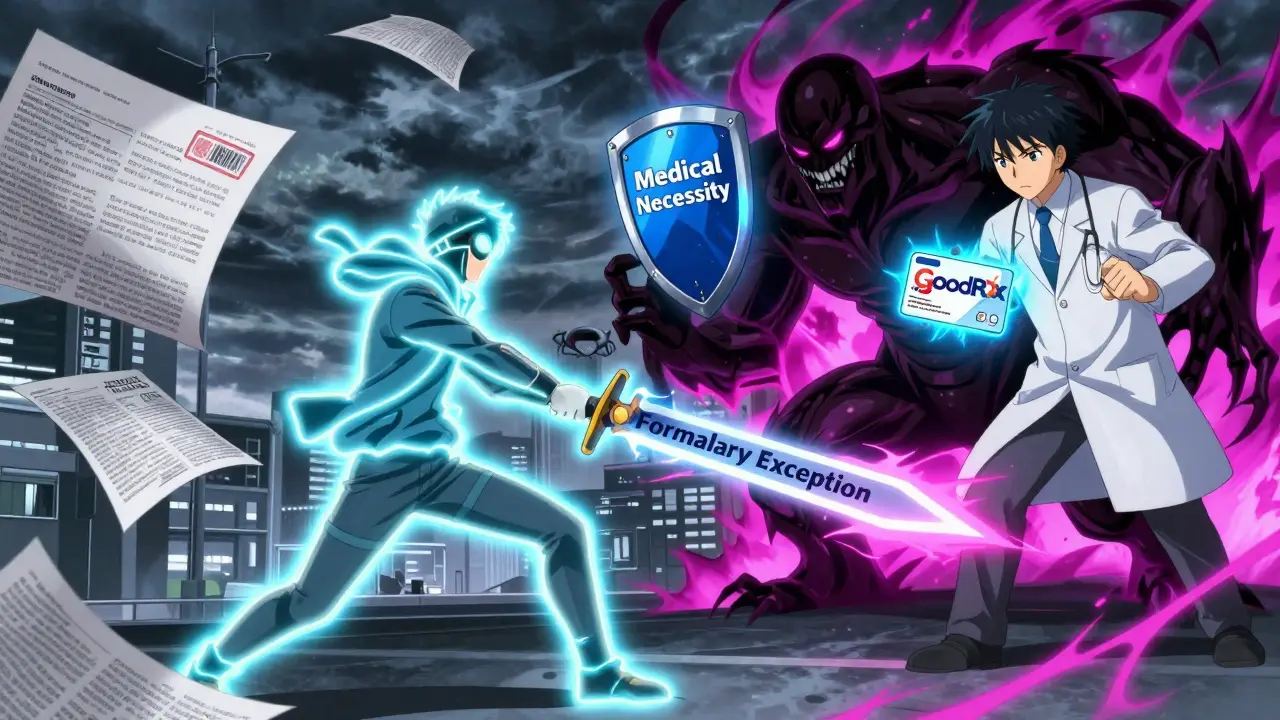
What Tools Can You Use to Check Your Formulary?
You don’t have to guess. Here’s how to find out what’s covered:- Medicare Part D: Use the Medicare Plan Finder. It lets you enter your drugs, pharmacy, and zip code to compare plans side by side.
- Private Insurance: Log in to your insurer’s website. Look for “Drug List,” “Formulary,” or “Prescription Benefits.” Most have a searchable database.
- GoodRx: While not official, GoodRx shows average cash prices and sometimes lists which tier a drug falls under on major plans.
- Call your pharmacy: Pharmacists have access to real-time formulary data. Ask them: “Is this drug covered under my plan, and what’s my copay?”
Pro tip: Always check your formulary before your doctor writes the prescription. If your doctor knows your plan’s formulary, they can choose a covered drug from the start.
What Are Prior Authorization, Step Therapy, and Quantity Limits?
Even if a drug is on your formulary, your plan might still put restrictions on it. These are called utilization management tools:- Prior Authorization - Your doctor must get approval from your insurer before the drug is covered. This often happens with expensive or high-risk meds. It’s not a denial-it’s a paperwork step.
- Step Therapy - You must try one or two cheaper drugs first. Only if those fail can you move to the one your doctor originally prescribed. For example, you might need to try three different painkillers before getting a stronger one.
- Quantity Limits - Your plan may limit how much you can get at once. For instance, only 30 pills per month, even if your doctor prescribes 60.
These rules frustrate patients-but they’re designed to prevent waste and overuse. Still, if your doctor says these rules are harming your care, they can request a waiver. Many patients don’t know they can fight back.
Real Patient Stories: Savings and Struggles
People’s experiences with formularies vary wildly:- One cancer patient on Facebook said their immunotherapy drug cost $5,000 without insurance-but only $95 with their plan’s Tier 4 coverage. “It saved my life financially,” they wrote.
- A 2023 Kaiser Family Foundation survey found that 42% of people switched medications because their plan changed the tier or removed coverage.
- Meanwhile, 31% of patients reported being surprised by a denial because their drug wasn’t on the formulary-even though their doctor prescribed it.
These stories show how formularies can be lifesavers-or roadblocks. It’s not about the drug being good or bad-it’s about whether your plan thinks it’s worth covering.

What’s Changing in 2025?
New rules are making formularies more patient-friendly:- Insulin cap: Since 2023, Medicare Part D plans must charge no more than $35 per month for insulin.
- Out-of-pocket cap: Starting in 2025, Medicare beneficiaries will pay no more than $2,000 per year for all covered drugs-no matter how expensive.
- Biosimilars: More generic versions of biologic drugs (like Humira or Enbrel) are hitting the market. These are cheaper and often get preferred formulary placement.
- AI tools: By 2027, insurers may use AI to recommend drugs based on your health history, not just cost.
These changes mean formularies are slowly shifting from pure cost-cutting to better care.
What You Should Do Now
Don’t wait until your prescription is denied. Take action:- Find your plan’s current formulary online-right now.
- Search for every drug you take. Note the tier and any restrictions.
- Ask your pharmacist or doctor: “Is there a lower-cost alternative on my formulary?”
- During open enrollment, compare plans based on your drugs-not just premiums.
- If a drug you need is off-formulary, start the exception process early. Don’t assume it’s impossible.
Your formulary isn’t just a list. It’s your roadmap to affordable care. Understand it, and you control your costs. Ignore it, and you risk paying more-or going without.
What happens if my drug gets removed from the formulary?
If your drug is removed, your plan must give you at least 60 days’ notice. During that time, you can switch to another covered drug, request a formulary exception, or pay out of pocket. If you’re on a long-term medication, your doctor can file an exception based on medical necessity. Many patients successfully appeal these changes.
Can I use a drug not on my formulary if I pay for it myself?
Yes. You can always buy any prescription drug out of pocket, even if it’s not on your formulary. But you won’t get any insurance coverage, so the cost could be very high. Sometimes, using a discount card like GoodRx can bring the price down significantly-even below your insurance copay.
Do all insurance plans have the same formulary?
No. Each plan creates its own formulary based on negotiations with drug makers and clinical guidelines. Two Medicare Part D plans in the same city might have completely different lists. A drug that’s free on one plan might cost $120 on another. Always compare formularies when choosing a plan.
Why do some drugs cost more even if they’re the same as others?
Even if two drugs have the same active ingredient, your plan may treat them differently. For example, a generic version might be on Tier 1, while a different brand of the same drug is on Tier 3. This happens because manufacturers negotiate separate deals with insurers. The drug itself is identical-but the price your plan pays isn’t.
How do I know if my doctor knows my formulary?
Many doctors use electronic prescribing systems that show formulary status in real time. But not all do. If you’re unsure, ask your doctor: “Is this drug covered under my plan?” or “Is there a similar drug that’s cheaper and covered?” Most doctors are happy to adjust prescriptions to help you save money.

Just found out my insulin went from $15 to $35 this year. I thought the cap was supposed to fix this. Turns out my plan found a loophole. Don't trust the system. Just check your formulary every month.
Man, in India we don’t even have formularies like this. You just pay what the pharmacy says. Sometimes the same drug costs 5x more in one city vs another. I wish we had transparency like this. But honestly? I’d kill for a tier system. At least then you know why you’re getting screwed.
My cousin’s on methotrexate for psoriasis. He pays out of pocket because his insurer says it’s ‘not cost-effective.’ Meanwhile, the same drug is $2 in Bangladesh. I don’t get how a country with so much tech can’t fix this.
Also-why do PBMs get rich off this? They’re middlemen. No doctors. No pharmacists. Just spreadsheets and profit margins. Someone needs to break these monopolies.
I used GoodRx last month and saved $80 on my asthma inhaler. Why isn’t that the default? Why do we have to be hackers just to afford medicine?
And don’t get me started on step therapy. I had to try five painkillers before they let me take the one my neurologist prescribed. I was in agony for six weeks. That’s not care. That’s bureaucratic cruelty.
My mom’s on Medicare. She switched plans last year because she didn’t check the formulary. Now her blood pressure med costs $120. She’s taking half pills. She’s scared to tell anyone. This system breaks people quietly.
Stop blaming doctors. They’re trapped too. They have 7 minutes per patient. They don’t have time to fight insurance bureaucracies. We need better tools. Not more blame.
Formularies aren’t evil. They’re just designed by people who’ve never had to choose between rent and refills.
Check your formulary. Now. Don’t wait for the bill to arrive.
Government is running this. That's why it's a mess. PBMs are just puppets. Big Pharma owns them. And now they want to cap insulin? What's next? Free cancer drugs? This is socialism creeping in. You think this is affordable? Wait till the feds take over. You'll be waiting 2 years for your meds.
Step therapy is the worst. I had to fail on two antidepressants before they’d cover the one that actually worked. Took me six months. I almost quit my job. My therapist said the delay made my anxiety worse. That’s not clinical. That’s cruelty disguised as cost control.
And don’t even get me started on prior auth. My migraine med requires a form signed by my neurologist, my PCP, and my therapist. All three have to fax it. One got lost. I went 17 days without meds. My boss thought I was slacking. I was in a dark room crying.
AI tools in 2027? Please. They’ll just optimize for profit. I bet they’ll start recommending cheaper drugs even if they’re less effective. We’re not data points. We’re humans.
Hey, I know this stuff is frustrating but you’re not alone. I’ve been there-my dad’s on a specialty drug for Parkinson’s. We fought the formulary for months. But we won. Took 3 letters, a doctor’s note, and a call to the plan’s ombudsman.
Don’t give up. Call your pharmacy. Ask for the formulary. Ask for exceptions. Write to your rep. It’s a grind but it works.
And if you’re on Medicare? Use the Plan Finder. It’s not perfect but it’s better than guessing.
You got this. One step at a time.
Formularies are necessary. Without them drug costs would be astronomical. PBMs save the system billions. The problem isn’t the system-it’s people who don’t take responsibility. If you can’t afford your meds, ask for generics. Use GoodRx. Stop expecting free stuff.
Also stop crying about step therapy. If a cheaper drug works why force the expensive one? It’s basic economics. If you want premium care pay premium prices.
And yes I know the insulin cap is good. But why should I pay for your insulin? You want affordability? Work harder. Don’t rely on government handouts.
I used to think formularies were just boring paperwork. Then my kid got diagnosed with asthma. We found out his inhaler was Tier 4. $180 a month. We cried. Then we used GoodRx. It dropped to $45. I didn’t even know that was a thing.
Now I tell everyone. Check your formulary. Ask your pharmacist. Don’t assume. Don’t wait. Just do it.
And if your doctor doesn’t know your plan? Tell them. They’ll adjust. I promise.
Ohhh so the formulary is just a tool... yeah right... like the IRS is just a "tool" for collecting taxes... and the DMV is just a "tool" for making you wait in line for 3 hours... this whole system is a rigged casino where the house always wins... and you? You’re just the sucker holding the last losing ticket...
And now they want to "use AI"? Oh perfect. So now algorithms will decide if your cancer drug is "worth it" based on your zip code and your credit score... brilliant... just brilliant...
Meanwhile in India... people are getting real generic drugs for $2... but here? We pay $120 because some PBM exec got a bonus for "cost containment"...
Don’t tell me to "own it"... I own a deadbeat system that owns me...
Did you know that in 2021, the top 10 PBMs controlled 82% of the U.S. prescription market? And that the CEO of one of them made $110 million last year? Meanwhile, seniors are skipping doses. This isn’t a formulary. It’s a corporate extraction machine. The tier system? A distraction. The real issue is consolidation. Monopoly power. And it’s all legal.
And now they’re pushing AI? That’s just the next layer of obfuscation. Soon, your drug will be denied because an algorithm says your genetic profile "doesn’t match optimal response patterns." You’ll be told it’s science. It’s not. It’s profit.
Formularies are not neutral. They’re weapons. And we’re the targets.
I used to hate formularies. Then I got laid off and lost my insurance. I had to buy my diabetes meds out of pocket. $400 a month. I cried in the parking lot of the pharmacy.
Then I found a nonprofit that gave me free samples. Then I switched to a cheaper generic. Then I started using GoodRx. Now I pay $12. It’s not perfect. But it’s livable.
Don’t wait for someone to fix it. Just find the workaround. Ask around. Talk to other patients. There are people out there who’ve been there. They’ll help.
You’re not broken. The system is.
It is imperative to underscore that the structural architecture of pharmaceutical benefit management is predicated upon a complex interplay of clinical efficacy, pharmacoeconomic modeling, and contractual negotiation dynamics between payers, manufacturers, and intermediaries. The tiered formulary system, while ostensibly designed to incentivize cost-effective therapeutic selection, frequently results in unintended consequences including therapeutic inertia, patient nonadherence, and clinically significant delays in access to optimal pharmacotherapy. The implementation of utilization management protocols-namely prior authorization, step therapy, and quantity restrictions-constitutes a form of administrative burden that disproportionately impacts vulnerable populations with chronic conditions. It is therefore incumbent upon stakeholders-including clinicians, patients, and policymakers-to advocate for greater transparency, equitable access, and patient-centered reform within the current paradigm.
Wait, so you’re telling me a drug that’s chemically identical to another costs 10x more just because the brand paid for a better marketing deal? That’s not capitalism. That’s fraud.
And step therapy? That’s not medical. That’s torture. If your doctor says you need a drug, you should get it. Not after failing on three cheaper ones that didn’t work. That’s not science. That’s insurance theater.
And GoodRx? That’s a band-aid. The real fix is breaking up PBMs. They’re the cancer. Not the drug companies. Not the doctors. The middlemen.
Also, why is insulin capped at $35 but my cancer drug is $10,000? That’s not fairness. That’s political theater.
Formularies are the modern-day alchemy of late-stage capitalism-turning human suffering into actuarial tables and shareholder dividends. We’ve turned medicine into a curated playlist curated by corporate algorithms that prioritize profit over pulse. The tier system? A dystopian Spotify for survival. You’re not choosing a drug-you’re choosing your level of dignity.
And when they say "AI will optimize care"? That’s just the velvet glove over the iron fist of predictive exclusion. Soon, your genetic code will be scanned, your income bracket analyzed, and your medication denied not because it’s unsafe-but because your life, statistically, isn’t worth the cost.
We’re not patients. We’re data points with expiration dates.
But hey-at least we have GoodRx. A digital opiate for the broken.
People keep saying "ask your doctor" but doctors don’t have time. They’re paid per visit, not per fight. If you want to change your formulary, you have to do the work yourself. Call your plan. File the exception. Send the letter. Don’t wait for someone to save you.