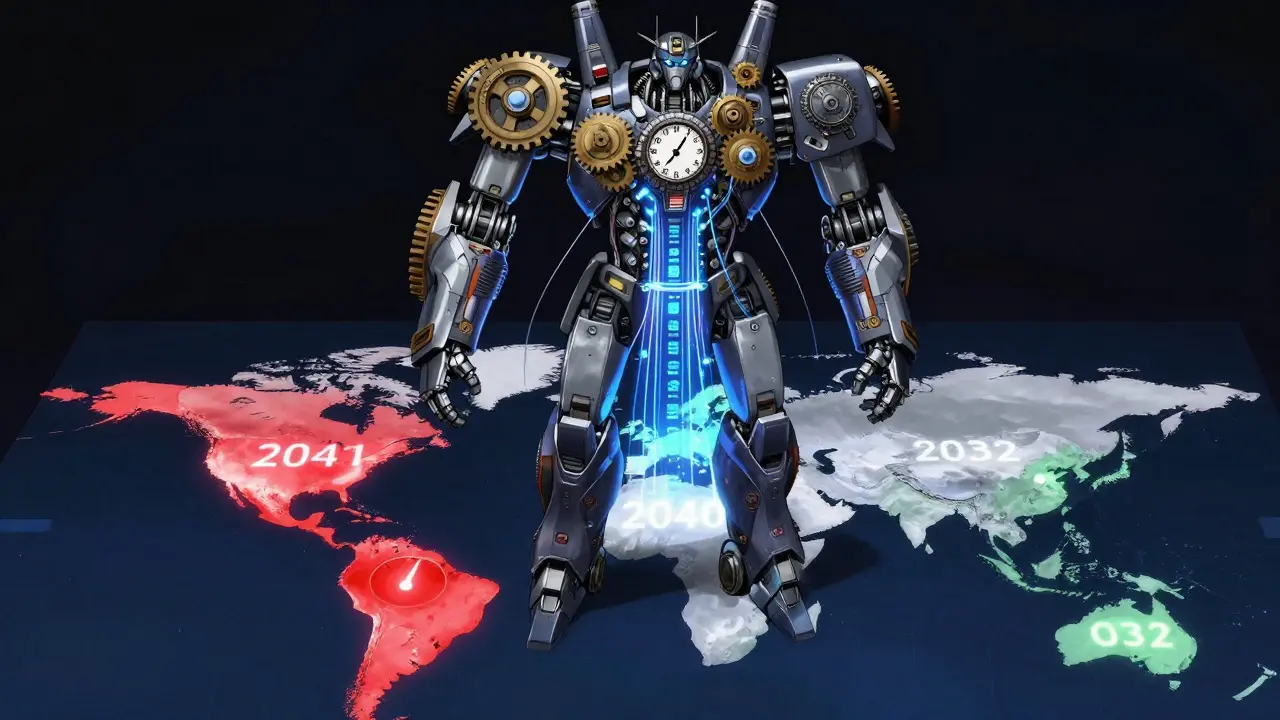
Most people think a patent lasts 20 years-simple, right? But if you’re managing a global product, like a new drug, medical device, or tech gadget, that 20-year clock doesn’t tick the same everywhere. In the U.S., it might expire in 2030. In Japan, it could drag on until 2032. In Brazil, it might die years early because of backlogs. This isn’t a glitch-it’s the system. And if you don’t understand how it works, you could lose market exclusivity without even realizing it.
The 20-Year Rule Isn’t Really a Rule
The global baseline for patent terms is 20 years from the filing date. That’s what the TRIPS Agreement, signed in 1994, set for all 164 WTO members. Before that, countries did whatever they wanted. The U.S. used to give patents 17 years from the grant date, not the filing date. That meant a patent could sit in the USPTO for years before being issued, and you’d still get 17 years of protection from that later date. It wasn’t fair to inventors abroad. TRIPS fixed that.
But here’s the catch: 20 years from filing is just the starting point. Every country adds its own twists. Some extend it. Some shorten it. Some don’t even enforce it properly. If you think your patent expires on the same day everywhere, you’re already behind.
What Starts the Clock? Priority Date Matters
The 20-year term doesn’t start when you file in Germany, Canada, or China. It starts from your earliest filing date-the one you made in your home country, under the Paris Convention. That’s the priority date. You have 12 months from that first filing to submit applications in other countries, and they’ll all treat it as if you filed on day one.
That’s why filing in the U.S. in January 2020 and then in Europe in December 2020 still means your European patent expires in January 2040, not December 2040. The priority date anchors the whole timeline. Skip this step, and you lose your place in line. No one will give you a second chance.
Patent Term Adjustments: The Hidden Extensions
In the U.S., if the Patent Office takes too long to examine your application, they owe you time back. That’s called a Patent Term Adjustment (PTA). In 2022, the average U.S. patent got 558 extra days-almost 1.5 years-added to its life because of delays. That’s not rare. It’s standard.
But outside the U.S., it’s different. Japan gives extensions if examination takes more than three years. China started doing the same in 2021. The European Union? No automatic PTA. You get the full 20 years, but if the EPO drags its feet, you don’t get extra time. Canada and Australia have limited adjustments. India? Nothing. Zero extensions. If the patent office is slow, you’re out of luck.
Pharmaceutical companies care most about this. A drug takes 10-12 years to get approved by regulators. That eats up half your patent life before you even sell a pill. That’s why the U.S. and EU have Patent Term Extensions (PTEs) or Supplementary Protection Certificates (SPCs). The U.S. lets you extend up to five years for regulatory delays. The EU lets you add up to five years, plus six more months if you test the drug in kids. In Brazil? No SPCs. In India? No extensions at all. Your patent expires when it expires-no matter how long the FDA took.
Maintenance Fees: The Silent Killer
Even if your patent is technically alive, it can die quietly. Most countries require you to pay maintenance fees at set intervals. In the U.S., you pay at 3.5, 7.5, and 11.5 years. Miss one? The patent expires. No warning. No second chance. Just gone.
Other countries are worse. Mexico requires payments at 5, 10, 15, and 20 years. Switzerland only wants one payment at grant-but if you miss it, you’re done. China has a three-tiered system with fees increasing over time. Japan charges annually after year 3.
Managing these across 30+ countries? That’s not a spreadsheet. That’s a full-time job. A single missed payment in Germany or South Korea can kill your rights there-even if your U.S. patent is still active. Companies like Pfizer and Johnson & Johnson hire teams just to track these dates. You don’t need to be them to need the same discipline.
Utility Models: The Short-Lived Alternative
Not every invention needs a 20-year patent. In countries like Germany, China, Japan, and South Korea, you can file for a utility model instead. These are cheaper, faster, and easier to get. But they last only 6 to 10 years. No extensions. No adjustments. Just a short burst of protection.
They’re perfect for products with fast innovation cycles-think kitchen gadgets, simple tools, or software interfaces. But if you’re protecting a life-saving drug or a complex semiconductor design? Skip it. Utility models won’t cut it.
The PCT: Your Global Lifeline
Applying for patents in 50 countries one by one? That’s expensive and slow. The Patent Cooperation Treaty (PCT) lets you file one application, pay one fee, and delay national filings for up to 30 or 31 months. That’s huge. You get 18 months of international publication, then 30-31 months to decide where to go next.
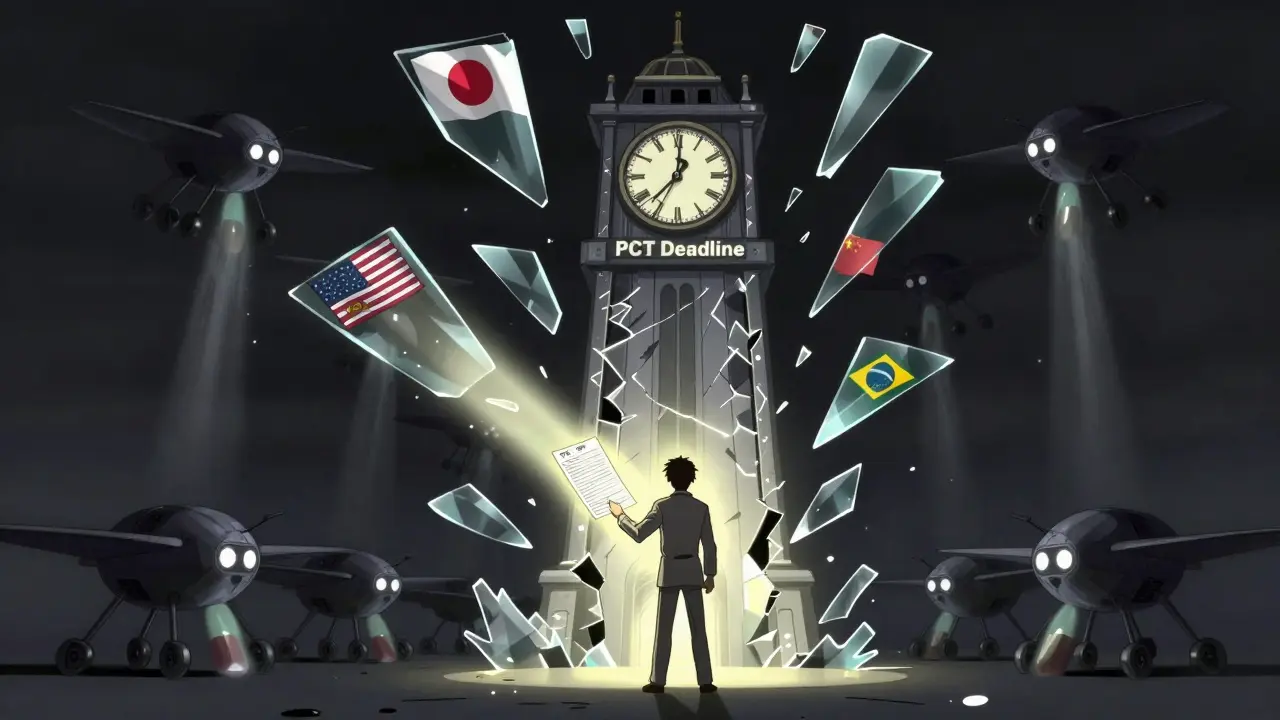
But here’s what people forget: the PCT doesn’t grant patents. It just buys you time. You still have to enter the national phase in each country before the deadline. The U.S. gives you 30 months. Canada, China, and most of Europe give you 31. Japan? You can stretch it to 32 months with a fee and justification. Miss the deadline? Your rights vanish in that country. No do-overs.
In 2022, over 278,000 PCT applications were filed worldwide. That’s up from 276,000 in 2021. More people are using it. But many still don’t understand the deadlines. Don’t be one of them.
Regional Changes: The EU’s Unitary Patent
In June 2023, the European Union launched its Unitary Patent system. Now, instead of validating a European patent in 20+ countries individually, you can get one patent that covers 17 participating EU states with a single fee. The term? Still 20 years from filing. No change there.
But the cost savings are massive. No more translation requirements in 15 countries. No more separate maintenance fees. It’s a big step toward simplification. But it’s not global. The U.K., Switzerland, and Norway aren’t in it. And it doesn’t touch the U.S., Japan, or China. So you still need a multi-track strategy.
Emerging Markets Are Catching Up
Five years ago, Indonesia had a 15-year patent term. Now? 20 years. Vietnam updated its IP law in 2022 to match the global standard. Brazil still struggles with patent office delays, but the law says 20 years. The gap between law and practice is shrinking.
That’s good news for inventors. But it also means more competition. When countries strengthen patent rules, local companies can’t copy your tech as easily. You gain protection-but so do your rivals. You need to move faster, file smarter, and track every deadline like your business depends on it.
Why This Matters for Real Businesses
Let’s say you’re launching a new diabetes monitor in the U.S. and Europe. Your patent was filed in 2020. You think it expires in 2040. But in the U.S., you got 700 days of PTA. So your real expiration is 2041. In Germany? No PTA. It expires in 2040. In Brazil? The patent office took 8 years to grant it. Your effective term is only 12 years. Your competitor in India files a generic version in 2035 because they know your patent expires there in 2040-no extensions. You lose market share without ever seeing it coming.
This isn’t hypothetical. It happens every day. Companies lose hundreds of millions because they treated patents like a single clock. They’re not. They’re dozens of clocks, ticking at different speeds, with different alarms, and different ways to turn them off.
What You Should Do Now
If you’re managing patents internationally, here’s what to do:
- Identify your priority date-the first filing, anywhere in the world.
- Map out every country where you plan to protect your invention.
- For each country, check: Do they have PTA? PTE? SPC? Maintenance fees? Utility model options?
- Use a patent management tool or service that tracks deadlines across jurisdictions-not just a calendar.
- Don’t assume your U.S. patent timeline applies anywhere else.
Patents aren’t just legal documents. They’re business assets. And like any asset, their value drops if you don’t manage them well.

So you're telling me my startup's gadget patent expires in 2040 in the US but 2038 in Brazil because the patent office there is stuck in 2005? Cool. So I just wait for the Brazilian market to catch up or just give up and sell my IP to a Chinese conglomerate? Either way I'm losing money before I even break even.
People forget that maintenance fees are basically a tax on innovation. Pay up or lose everything. I've seen small inventors get wiped out because they didn't know Japan charges annually after year 3. No grace period. No email reminder. Just poof. Gone. And then they cry on Reddit like it's a conspiracy.
I love how the US gives you extra time for bureaucracy but the EU just says 'tough luck' if they're slow. Makes me wonder if the whole system is designed to favor big pharma and crush indie devs. Not that I'm bitter or anything. Just saying.
Let’s be real - this whole patent system is a rigged casino where the house always wins. The TRIPS agreement? A corporate handshake disguised as international law. Countries like India and Brazil are forced to adopt Western IP norms while their own innovators get crushed under the weight of legal fees and bureaucratic delays. The 20-year rule isn’t about protecting invention - it’s about controlling access. And guess who controls it? The same billionaires who already own everything else. This isn’t innovation. It’s enclosure.
Utility models? That’s not a workaround - it’s a concession. A way to let small players have crumbs while the giants hoard the whole cake. And don’t even get me started on PCT delays. You think you’re buying time? No. You’re paying for the illusion of control. Meanwhile, your competitors in Vietnam are reverse-engineering your product while you’re still waiting for your 31-month window to open.
The Unitary Patent? A shiny new cage with better lighting. Still a cage. Still exclusionary. Still designed to keep the Global South out. You want to protect your invention? Fine. But don’t pretend this system is fair. It’s not. It’s a legal architecture built on asymmetry, privilege, and profit. And if you’re still believing in the myth of ‘equal protection under IP law,’ you haven’t been paying attention.
Every extension, every fee, every deadline - it’s a gate. And the people who built the gates? They never had to wait in line.
Interesting read. I work in a UK-based medtech firm and we’ve had to navigate this mess for years. The lack of PTA in the EU is brutal - we lost nearly 9 months of exclusivity on a device because the EPO took forever. We had to pivot to a utility model in Germany just to stay relevant. It’s not ideal, but it kept us alive.
So you’re telling me the US is the only country that actually respects inventors? Of course it is. We built this system. We pay the bills. The rest of the world just wants to copy and steal. If they can’t keep up with the rules, that’s their problem. America doesn’t owe anyone a patent extension. We lead. The rest follow. Or get left behind.
They’re hiding something. Why do only 17 EU countries use the Unitary Patent? Why are Switzerland and Norway out? Why does Japan get 32 months but everyone else gets 30? It’s not about law - it’s about control. The patent system is a front for geopolitical power plays. The US and EU are locking out emerging markets so they can monopolize drug pricing. You think Brazil’s delays are accidental? Nah. It’s intentional. They’re being punished for daring to want affordable medicine.
And don’t even get me started on maintenance fees. That’s how they kill off small inventors. You think Pfizer’s legal team misses a payment? No. But your cousin who invented a better insulin pen? Yeah. He’s dead in the water. This isn’t capitalism. It’s corporate feudalism.
Oh wow. A 700-day extension in the US? That’s like getting a free 2-year vacation for your patent while everyone else is sweating bullets. Of course the US gets special treatment. We’re the only country that thinks a patent is a sacred right handed down by Steve Jobs himself. Meanwhile, in India, some guy in Bangalore just reverse-engineered your whole drug and sold it for $2 a pill. But hey - at least your patent lasted 20 years. In theory.
And let’s talk about PCT. You think filing one application is a ‘lifeline’? Nah. It’s a trap. You pay $4k to delay the inevitable. Then you have to scramble to file in 30 countries before the clock runs out. And if you miss one? Congrats. You just handed your life’s work to a Chinese factory. This isn’t innovation. It’s a high-stakes game of Russian roulette with legal paperwork.
Just got my first patent approved after 6 years. Got 500 extra days from the USPTO. Meanwhile, my buddy in Brazil got his granted in 9 years and got zero extension. He’s basically got a 11-year patent. That’s not a system. That’s a glitch. And we’re supposed to play along like it’s fair?
One thing people don’t talk about: the human cost. I used to manage IP for a small medtech startup. We had one paralegal trying to track 40+ deadlines across 15 countries. She worked 70-hour weeks. Missed one fee in South Korea. Lost rights. Lost investor confidence. Lost her job. This isn’t just legal complexity - it’s emotional labor. And it’s not scalable for anyone who isn’t a Fortune 500.
Tools exist, but they’re expensive. Training? Rare. Support? Nonexistent. We need better systems - not just more rules. Inventors aren’t lawyers. They shouldn’t have to become one just to protect their work.
Patents are a government scam. The whole 20-year thing? Fake. They’re just using ‘intellectual property’ to keep you from making your own damn insulin. You think your drug patent is safe? Nah. The FDA and Big Pharma are in bed together. The delays? Intentional. To make you pay more. The extensions? A bribe. They’re not protecting innovation - they’re protecting profits. And you? You’re the sucker paying for it.