Why Generic Pills Change Color and Shape: A Patient Safety Guide
Explore why generic pill appearances change, how regulations shape them, and what patients can do to manage safety confidently.
Read MoreExplore why generic pill appearances change, how regulations shape them, and what patients can do to manage safety confidently.
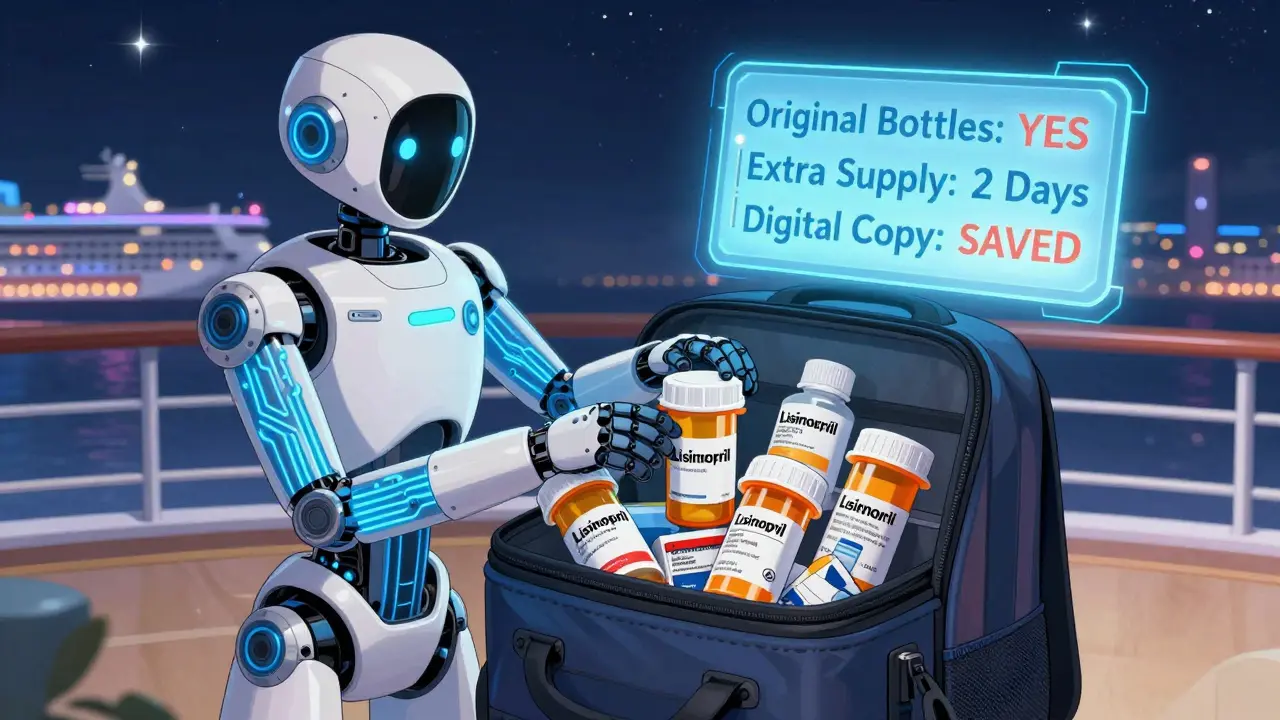
Read MoreLearn how to safely pack prescription and over-the-counter medications for road trips and cruises. Avoid lost meds, legal trouble, and emergencies with expert-backed tips on labeling, quantity, storage, and international rules.
Read MoreTelepharmacy delivers pharmacy services remotely, improving access in rural areas. Recent studies show it matches traditional pharmacies in safety, reduces medication errors, and cuts hospitalizations-when properly implemented.
Read MorePatients play a vital role in preventing medication errors. Learn the seven proven actions you can take today to stay safe, ask the right questions, and partner with your healthcare team.
Read MoreSharing your full medical history-including over-the-counter drugs and supplements-is essential to avoid dangerous medication errors. Learn how to prepare, communicate, and protect yourself during every healthcare visit.
Read MoreBeyond-use dates for compounded medications aren't expiration dates-they're science-based safety limits. Learn how they're set, why they matter, and how to make sure your medication is still safe to use.
Read MoreElderly patients switching to generics can save money, but age-related changes in metabolism, kidney function, and polypharmacy increase risks. Learn which drugs need caution, how to spot problems, and what to ask your doctor.
Read MoreAccurate documentation of drug allergies in medical records prevents life-threatening errors. Learn how to record reactions clearly, avoid common mistakes, and ensure your safety during every medical visit.
Read MoreLearn how to read medication labels correctly to avoid dangerous dosing errors. Discover proven strategies like the Universal Medication Schedule, pictograms, and teach-back methods that improve safety for everyone.
Read MoreLearn how medicines interact with your body at a molecular level and what makes them safe-or dangerous-to use. Understand mechanism of action, drug interactions, and how to recognize warning signs.
Read More